Lunar surface astronaut footprint
1344×768 · AVIF · CC BY 4.0
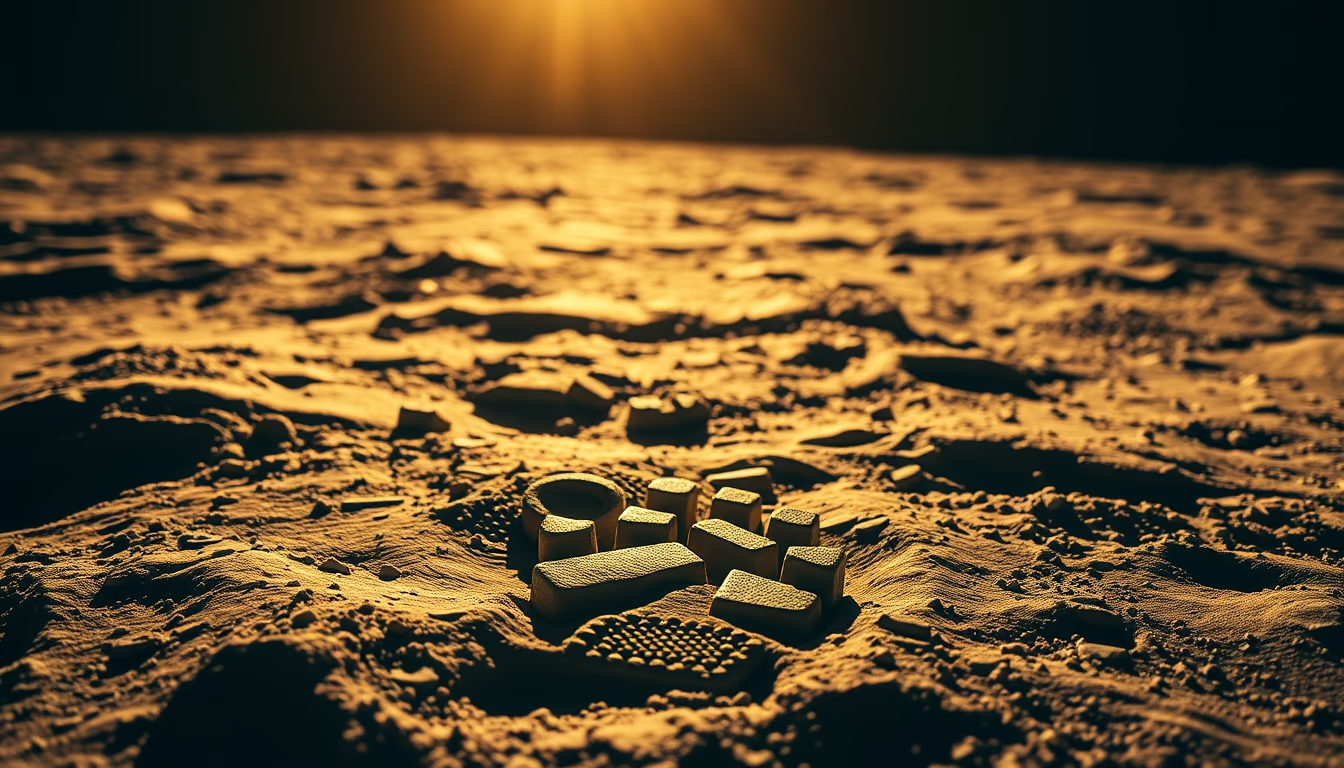
Astronaut footprint on the lunar surface, a symbol of human space exploration and historic milestone of the Apollo 11 mission.
About this subject
The footprint left by an astronaut on the lunar surface is one of the most iconic symbols of human space exploration. It was made during the Apollo 11 mission in July 1969, when Neil Armstrong and Buzz Aldrin first walked on the Moon. The lunar soil, composed of regolith (dust and rock fragments), is extremely fine and experiences no erosion from wind or water, allowing footprints to remain intact for millions of years. The absence of atmosphere and active geological processes on the Moon makes surface marks practically eternal. It is estimated that the most famous footprint, Buzz Aldrin's for the historic photo, remains exactly as it was left. This imprint became a symbol of humanity's ability to overcome limits and inspired generations of scientists and explorers. The footprint image is also used in discussions about preserving historic space sites, such as the Apollo 11 landing site, which NASA and other organizations consider humanity's heritage. Beyond historical value, the footprints provide scientific data on regolith compaction and how space boots interact with the lunar soil. Interestingly, the footprints are not deep, only a few centimeters, but their sharp outline is preserved due to the lack of weathering. The photograph of this particular footprint was taken by Neil Armstrong during the first moonwalk, using a Hasselblad camera mounted on his chest. It became one of the most reproduced images in history, representing the peak of the space race between the United States and the Soviet Union during the Cold War. Today, the exact location of the footprint can be observed by lunar satellites, such as the Lunar Reconnaissance Orbiter, which photographed Apollo landing sites, showing trails and footprints still visible.
Frequently Asked Questions
How long do footprints on the Moon last?
Footprints on the Moon can last millions of years because there is no wind, water, or geological activity to erase them. The only threat is micrometeorite impacts, which slowly wear down the surface.
Why don't astronauts' footprints get erased?
Because the Moon has no atmosphere, wind, or rain. The lunar regolith does not erode, so marks remain virtually unchanged for billions of years, unless disturbed by impacts.
Which astronaut left the first footprint on the Moon?
The first footprint on the Moon was made by Neil Armstrong as he stepped off the lunar module Eagle on July 20, 1969. However, the most famous photographed footprint is Buzz Aldrin's, taken by Armstrong.
Direct URL
https://pub-c7d6a6ea828543ac903a74a341ccb2e1.r2.dev/imagens/lunar-surface-astronaut-footprint-travel-photography-p4.avifHow to credit
Include a visible link back to UtilizAí. Copy one of the snippets below:
<a href="https://xn--utiliza-eza.com/en/midia/imagens/lunar-surface-astronaut-footprint-travel-photography-p4">Lunar surface astronaut footprint</a> by <a href="https://xn--utiliza-eza.com">UtilizAí</a>, licensed under <a href="https://creativecommons.org/licenses/by/4.0/">CC BY 4.0</a>.
[Lunar surface astronaut footprint](https://xn--utiliza-eza.com/en/midia/imagens/lunar-surface-astronaut-footprint-travel-photography-p4) by [UtilizAí](https://xn--utiliza-eza.com), CC BY 4.0
License: CC-BY-4.0