Lotus sutra japanese
1344×768 · AVIF · CC BY 4.0
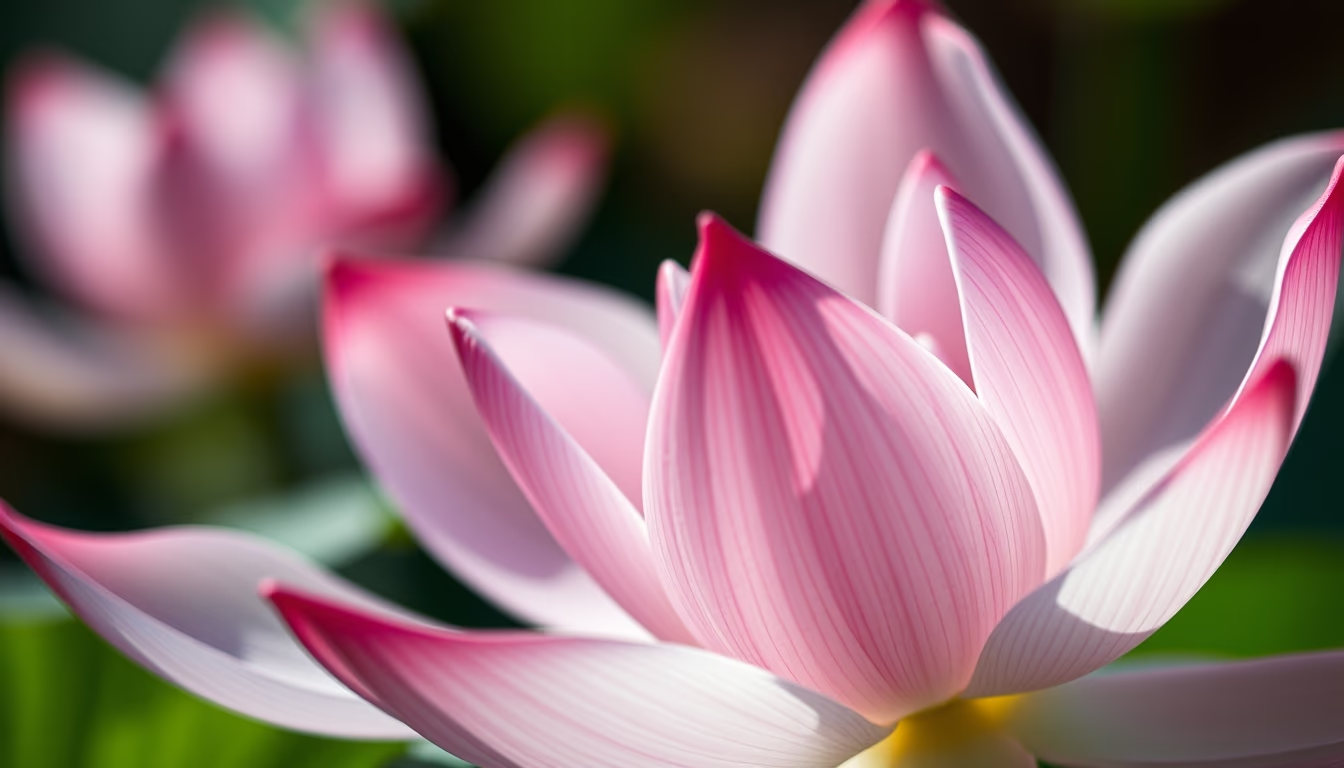
The Lotus Sutra is one of the most revered texts in Mahayana Buddhism, profoundly influential in Japan.
About this subject
The Lotus Sutra (Sanskrit: Saddharma Puṇḍarīka Sūtra) is one of the foundational texts of Mahayana Buddhism, revered for its emphasis on universal Buddhahood and the potential for enlightenment for all beings. Originally composed between the 1st century BCE and the 2nd century CE in India, it was translated into Chinese by Kumarajiva in the 5th century, becoming the most widespread version. In Japan, the sutra arrived with Buddhism in the 6th century and gained special prominence.
The sutra was central to the Tendai school (founded by Saichō) and the Nichiren school (founded by Nichiren). Tendai considered the Lotus Sutra as the highest expression of the Buddha's teachings, while Nichiren proclaimed that chanting the sutra's title (Nam Myōhō Renge Kyō) was the essential practice for salvation in this degenerate age. The text inspired vast artistic production, including handscroll paintings, sculptures, and mandalas.
Japanese manuscripts of the Lotus Sutra are often copied with exquisite calligraphy, using sumi ink on paper decorated with lotus motifs and gold. These manuscripts were seen as sacred objects capable of conveying spiritual merit. A macro close-up of such manuscripts reveals the beauty of the brush strokes and the devotion of the scribes, who dedicated hours to transcription as a religious practice.
To this day, the Lotus Sutra is chanted in Japanese temples, studied by scholars and practitioners, and continues to influence Japan's philosophy, literature, and arts. Its message of compassion and spiritual equality resonates in various contemporary cultural contexts.
Frequently Asked Questions
What is the Lotus Sutra?
It is one of the most important texts in Mahayana Buddhism, advocating universal enlightenment and the Buddha nature of all beings. It was composed in India between the 1st century BCE and 2nd century CE.
Why is the Lotus Sutra important in Japan?
It is central to the Tendai and Nichiren schools. Nichiren based his practice on chanting the sutra's title. The text deeply influenced Japanese art, literature, and culture.
How are Japanese manuscripts of the Lotus Sutra decorated?
They often feature exquisite calligraphy, sumi ink, and paper decorated with lotus motifs and gold. Transcription was a devotional practice and the manuscripts were considered sacred objects.
Direct URL
https://pub-c7d6a6ea828543ac903a74a341ccb2e1.r2.dev/imagens/lotus-sutra-japanese-macro-closeup-fresh8.avifHow to credit
Include a visible link back to UtilizAí. Copy one of the snippets below:
<a href="https://xn--utiliza-eza.com/en/midia/imagens/lotus-sutra-japanese-macro-closeup-fresh8">Lotus sutra japanese</a> by <a href="https://xn--utiliza-eza.com">UtilizAí</a>, licensed under <a href="https://creativecommons.org/licenses/by/4.0/">CC BY 4.0</a>.
[Lotus sutra japanese](https://xn--utiliza-eza.com/en/midia/imagens/lotus-sutra-japanese-macro-closeup-fresh8) by [UtilizAí](https://xn--utiliza-eza.com), CC BY 4.0
License: CC-BY-4.0