Lotus sutra japanese
1344×768 · AVIF · CC BY 4.0
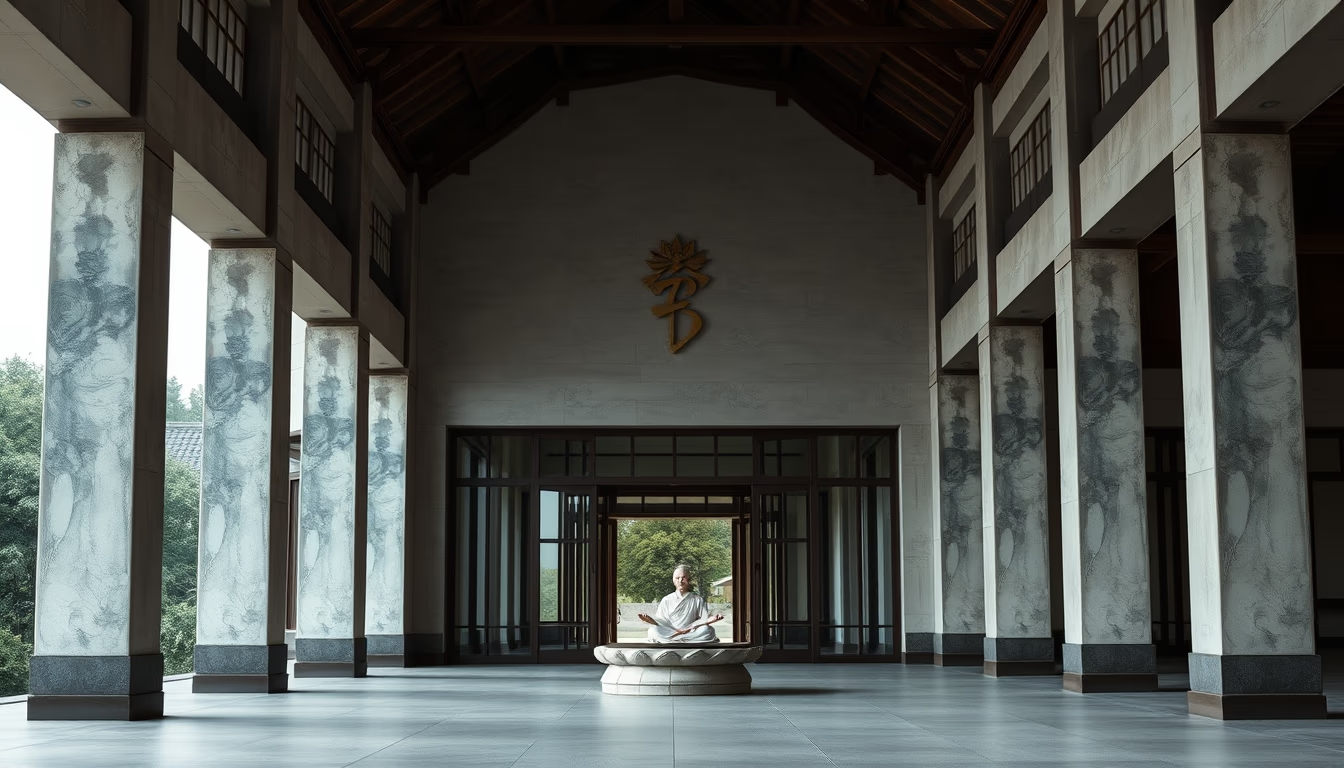
The Lotus Sutra is one of the most influential Mahayana Buddhist texts, with profound impact on Japanese culture and religious art.
About this subject
The Lotus Sutra (Sanskrit: Saddharma Puṇḍarīka Sūtra) is a foundational text of Mahayana Buddhism. Originally composed in India between the 1st century BCE and 2nd century CE, it was translated into Chinese by Kumārajīva in 406 CE, a version that became the most widespread in East Asia.
In Japan, the Lotus Sutra gained prominence from the 6th century onward, deeply influencing the Tendai school founded by Saichō on Mount Hiei, and later the Nichiren movement, which regards it as the sole correct teaching for the Age of Dharma Decline (Mappō). The sutra teaches that all beings can attain enlightenment and that the Buddha's skillful means (upaya) manifest in various ways to guide believers.
The Lotus Sutra's impact on Japanese culture is immense: it inspired artworks such as the 12th-century illustrated scrolls (emakimono) depicting its parables, as well as sculptures and temple architecture. Enryaku-ji Temple, headquarters of the Tendai school, and Kuon-ji Temple of the Nichiren school are examples of centers where the sutra is chanted daily. The phrase "Namu Myōhō Renge Kyō," meaning "Devotion to the Lotus Sutra of the Wonderful Law," is recited by millions of followers in Japan and worldwide.
Interestingly, the sutra contains passages advocating equality between men and women and the possibility of enlightenment even for evil beings, making it a progressive text for its time. Its message of universal salvation continues to resonate in contemporary Japanese Buddhism.
Frequently Asked Questions
Why is the Lotus Sutra important for the Nichiren school?
For the Nichiren school, the Lotus Sutra is the only valid teaching for the present age. Nichiren taught that reciting its title (Namu Myōhō Renge Kyō) is the central practice for attaining enlightenment.
Does the Lotus Sutra advocate gender equality?
Yes, the sutra includes passages affirming that both men and women can attain enlightenment. An example is the chapter of the Dragon King's daughter, who becomes a Buddha after offering a jewel to the Buddha.
Are there famous illustrated versions of the Lotus Sutra in Japan?
Yes, the 12th-century 'Illustrated Scroll of the Lotus Sutra' (Lotus Sūtra Emaki) is notable. It depicts several parables from the sutra and is considered a national treasure of Japan.
Direct URL
https://pub-c7d6a6ea828543ac903a74a341ccb2e1.r2.dev/imagens/lotus-sutra-japanese-architectural-photography-fresh15.avifHow to credit
Include a visible link back to UtilizAí. Copy one of the snippets below:
<a href="https://xn--utiliza-eza.com/en/midia/imagens/lotus-sutra-japanese-architectural-photography-fresh15">Lotus sutra japanese</a> by <a href="https://xn--utiliza-eza.com">UtilizAí</a>, licensed under <a href="https://creativecommons.org/licenses/by/4.0/">CC BY 4.0</a>.
[Lotus sutra japanese](https://xn--utiliza-eza.com/en/midia/imagens/lotus-sutra-japanese-architectural-photography-fresh15) by [UtilizAí](https://xn--utiliza-eza.com), CC BY 4.0
License: CC-BY-4.0