Liquid cooling loop
1344×768 · AVIF · CC BY 4.0
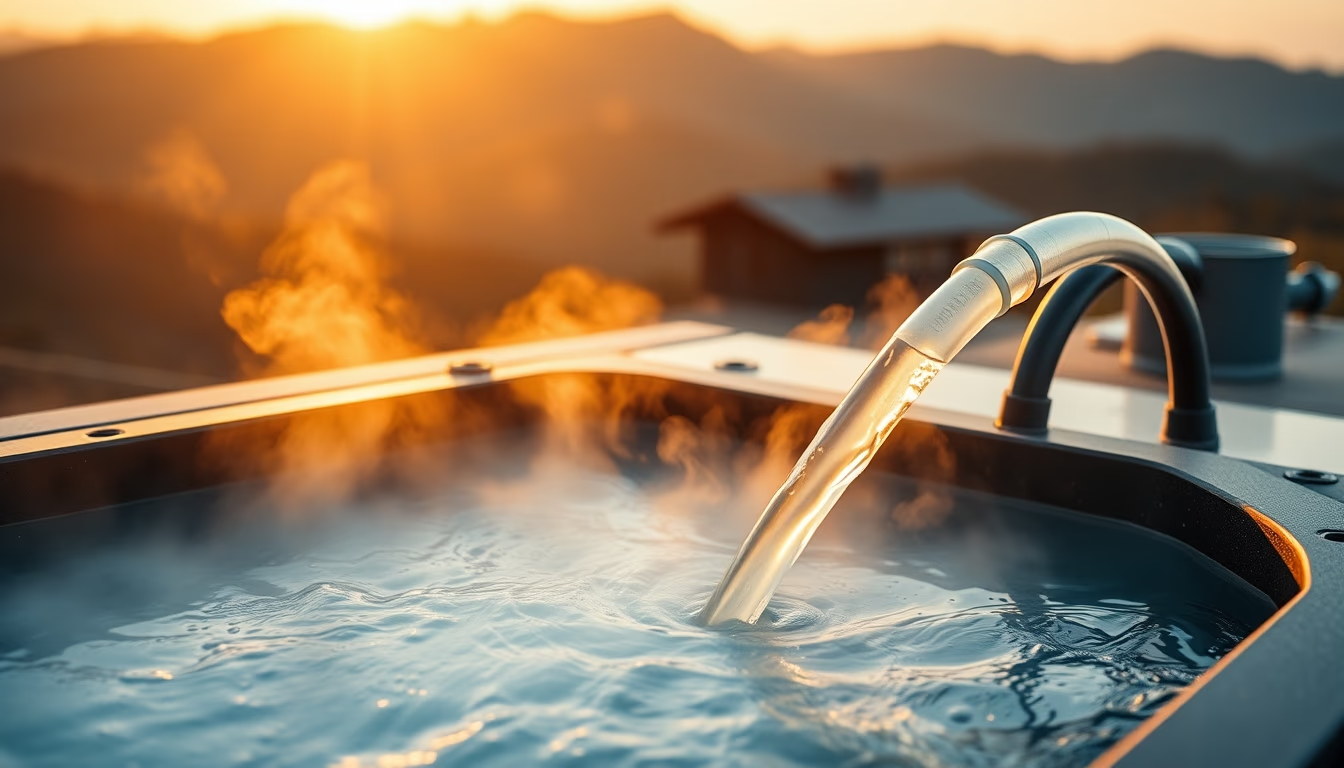
Liquid cooling systems dissipate heat from electronic components with superior efficiency, using water or dielectric fluids in closed loops.
About this subject
Liquid cooling systems, also known as watercooling, are used in high-performance computers to keep processors and graphics cards at safe temperatures. Unlike air coolers, which rely on fans and metal heatsinks, liquid cooling transfers heat via a coolant circulating in a closed loop. The coolant is typically distilled water mixed with anticorrosive additives and biocides.
A typical loop includes four main components: the pump that drives the fluid; the radiator that dissipates heat to the air; the water blocks that contact hot components; and tubes or hoses connecting everything. Some loops also have reservoirs to ease maintenance and prevent air bubbles. Thermal efficiency is much higher than air-based solutions, enabling more aggressive overclocking and lower noise under heavy loads.
Culturally, watercooling is popular among hardware enthusiasts and modders, who often customize loops with rigid acrylic tubing, colored fittings, and fluorescent coolants. Closed-loop systems (AIO, all-in-one) are pre-assembled and more accessible for average users. Historically, liquid cooling was first adopted in mainframes and supercomputers, but today it is common in gaming PCs and workstations.
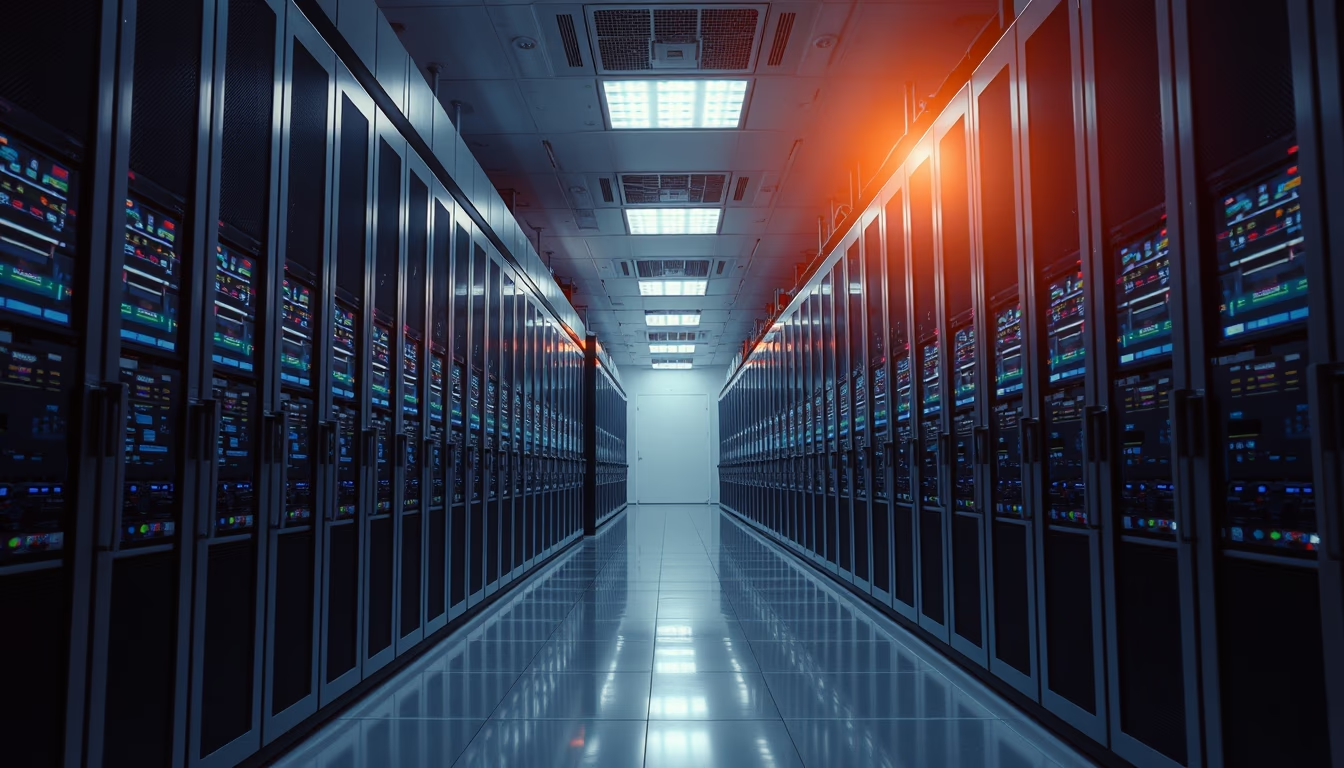
Interestingly, some dielectric fluids like 3M's Novec do not conduct electricity, allowing entire components to be submerged, a technique used in data centers for immersion cooling. However, for home use, conventional watercooling remains the most widespread option.
Frequently Asked Questions
Is liquid cooling better than air cooling?
Yes, in terms of thermal capacity and noise under load. Liquid dissipates heat more efficiently, allowing lower temperatures and higher overclocking. However, it is more expensive and requires maintenance, unlike air coolers which are plug-and-play.
What are the risks of watercooling?
The main risks are leaks, which can damage electronic components, and corrosion if the coolant is not properly treated. Well-assembled systems with appropriate coolant minimize these risks. AIO systems are sealed and have low leak risk.
Do I need to replace the liquid in a watercooling loop?
Yes, it is recommended to replace the coolant every 12 to 24 months, depending on the fluid type and usage. Over time, additives degrade and debris may accumulate, reducing efficiency. In AIO systems, replacement is not possible, but lifespan is 3 to 5 years.
Direct URL
https://pub-c7d6a6ea828543ac903a74a341ccb2e1.r2.dev/imagens/liquid-cooling-loop-travel-photography-p12.avifHow to credit
Include a visible link back to UtilizAí. Copy one of the snippets below:
<a href="https://xn--utiliza-eza.com/en/midia/imagens/liquid-cooling-loop-travel-photography-p12">Liquid cooling loop</a> by <a href="https://xn--utiliza-eza.com">UtilizAí</a>, licensed under <a href="https://creativecommons.org/licenses/by/4.0/">CC BY 4.0</a>.
[Liquid cooling loop](https://xn--utiliza-eza.com/en/midia/imagens/liquid-cooling-loop-travel-photography-p12) by [UtilizAí](https://xn--utiliza-eza.com), CC BY 4.0
License: CC-BY-4.0