Liquid cooling loop
1344×768 · AVIF · CC BY 4.0
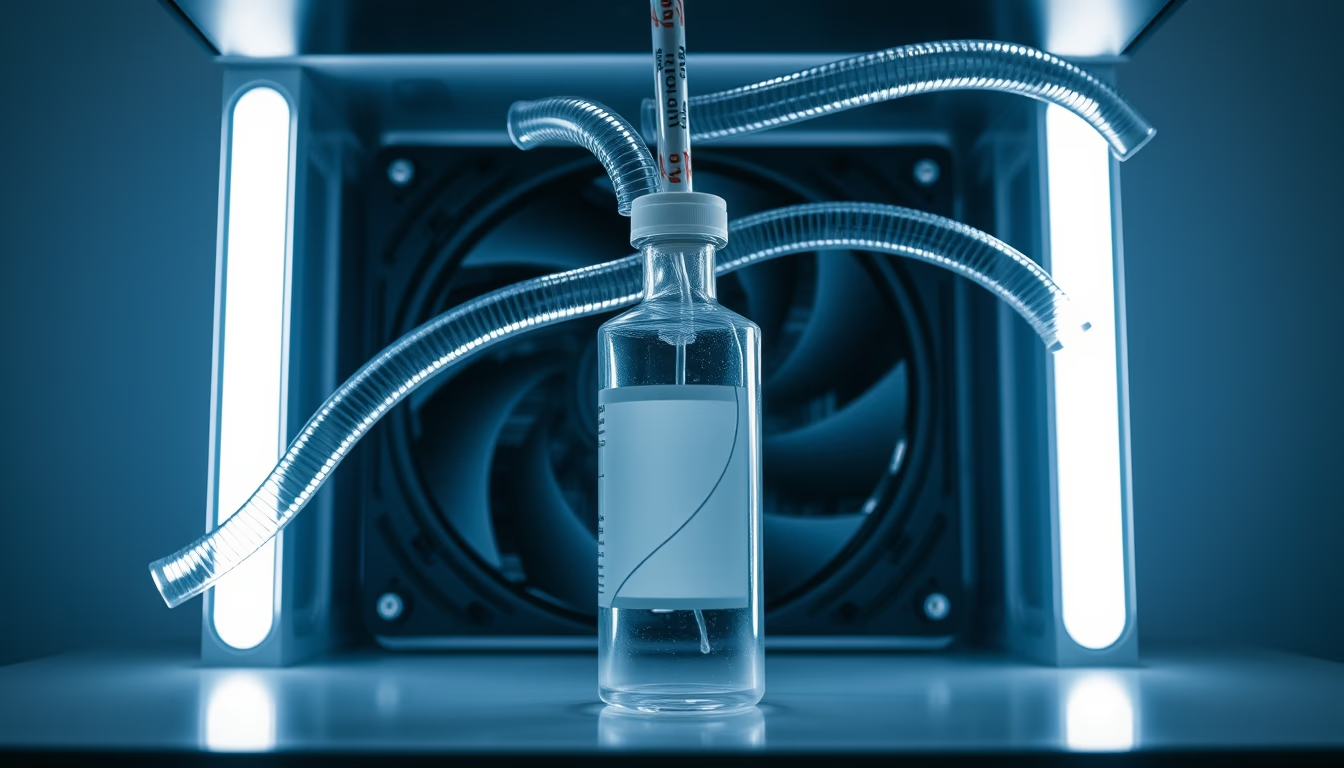
Liquid cooling system for computers, consisting of pump, radiator, water block and tubing, which removes heat from components like CPU and GPU with superior efficiency.
About this subject
A liquid cooling loop is a cooling system for computers that uses a fluid (typically distilled water with additives) to transfer heat from heated components to a radiator. The system consists of a water block mounted on the CPU or GPU, a pump that circulates the liquid, a radiator with fans that dissipates heat into the air, and tubing connecting everything. There are closed loops (AIO - All-In-One) that are pre-assembled and sealed, and custom loops that the user builds according to their needs.
The main advantage of liquid cooling over air cooling is its higher heat dissipation capacity, allowing lower temperatures even under high loads. This is especially beneficial for overclocking, where increased voltage generates more heat. Additionally, liquid systems are often quieter than high-performance air coolers because they can use lower fan speeds.
Historically, liquid cooling was limited to enthusiasts and researchers, but since the late 2000s, with the popularization of AIOs, it has become accessible to the general public. Major brands like Corsair, NZXT, and Cooler Master offer ready-made solutions. Custom loops, although more expensive and complex, allow aesthetic customization with rigid tubing, RGB lighting, and colored fluids.
An important aspect is maintenance: custom loops require periodic fluid changes and cleaning to prevent algae buildup or corrosion. AIOs are sealed and maintenance-free, but have a limited lifespan (usually 3-5 years). Leaks, although rare in quality products, can damage components, so it is essential to use proper fittings and check assembly.
Frequently Asked Questions
Is liquid cooling better than air cooling?
Yes, for high-end components and overclocking, because it dissipates more heat and is usually quieter. However, it is more expensive and complex to install.
Do I need to maintain a liquid cooling system?
It depends. Sealed AIOs are maintenance-free but have a limited lifespan. Custom loops require fluid changes and cleaning every 6-12 months.
Can a leak damage my computer?
Yes, leaks can cause short circuits and permanent damage. Use quality components and assemble properly to minimize risks.
Direct URL
https://pub-c7d6a6ea828543ac903a74a341ccb2e1.r2.dev/imagens/liquid-cooling-loop-magazine-editorial-p10.avifHow to credit
Include a visible link back to UtilizAí. Copy one of the snippets below:
<a href="https://xn--utiliza-eza.com/en/midia/imagens/liquid-cooling-loop-magazine-editorial-p10">Liquid cooling loop</a> by <a href="https://xn--utiliza-eza.com">UtilizAí</a>, licensed under <a href="https://creativecommons.org/licenses/by/4.0/">CC BY 4.0</a>.
[Liquid cooling loop](https://xn--utiliza-eza.com/en/midia/imagens/liquid-cooling-loop-magazine-editorial-p10) by [UtilizAí](https://xn--utiliza-eza.com), CC BY 4.0
License: CC-BY-4.0