Liquid cooling loop
1344×768 · AVIF · CC BY 4.0
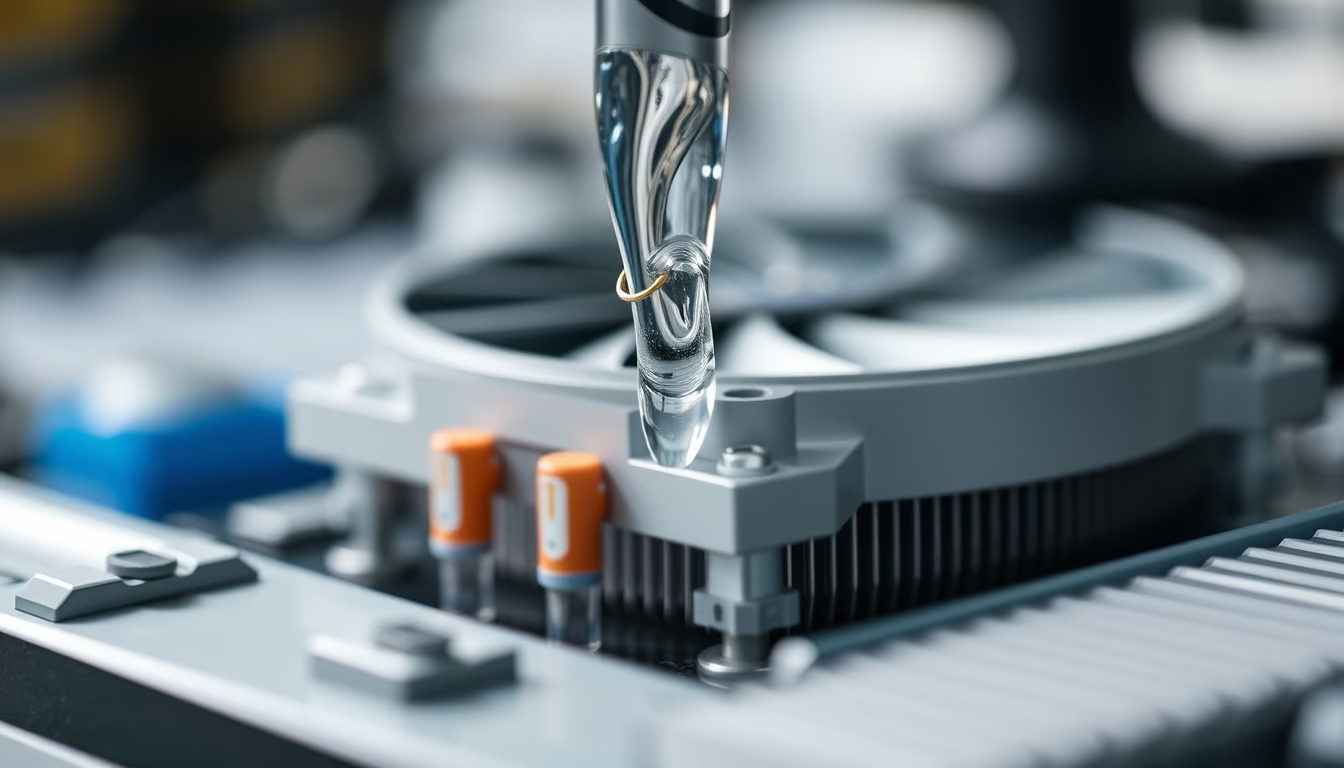
Detailed macro close-up of a liquid cooling loop, showing connections and coolant fluid in a hardware system.
About this subject
A liquid cooling loop is an essential component in high-performance systems such as gaming PCs, workstations, and servers. It operates by transferring heat through a coolant fluid, typically distilled water with additives, that circulates in a closed circuit. The typical system includes a pump, radiator, fans, reservoir, and water blocks that directly contact hot components like the CPU and GPU. The thermal efficiency of liquid cooling surpasses traditional air coolers, enabling lower temperatures and greater overclocking potential.
The physical principle is forced convection heat transfer. The fluid absorbs heat at the water blocks and carries it to the radiator, where it dissipates into the ambient air with help from fans. Unlike air cooling, which relies on direct contact with metal surfaces, liquid can reach hard-to-access areas and distribute heat more evenly. This technology is common in extreme overclocking setups or datacenter environments where silence and energy efficiency are priorities.
Maintenance of a liquid cooling loop requires special care: periodic leak checks, coolant replacement every 6, 12 months, and prevention of algae growth or metal corrosion (hence the use of anticorrosive additives and biocides). Many enthusiasts build custom loops with rigid acrylic or glass tubing, which not only function well but also offer aesthetic appeal through colored coolants and RGB lighting.
In the hardware context, All-in-One (AIO) liquid coolers are popular for their easy installation, while custom loops provide higher performance and personalization. The macro close-up image reveals details of tube texture, fittings, and fluid movement, highlighting the engineering behind this cooling solution.
Frequently Asked Questions
Is liquid cooling better than air cooling?
Yes, for high-performance systems liquid cooling generally offers better heat dissipation, lower temperatures, and less noise under heavy load. However, it is more expensive, complex to install, and requires periodic maintenance.
How often should I change the liquid in a water cooler?
It is recommended to replace the coolant every 6 to 12 months, depending on the fluid type and usage conditions. Changing it prevents particle buildup, algae growth, and corrosion on components.
Is it safe to use tap water in a liquid cooling loop?
No. Tap water contains minerals and impurities that can cause corrosion and clogs. Always use distilled or deionized water, along with anticorrosive and biocide additives designed for cooling systems.
Direct URL
https://pub-c7d6a6ea828543ac903a74a341ccb2e1.r2.dev/imagens/liquid-cooling-loop-macro-closeup-p7.avifHow to credit
Include a visible link back to UtilizAí. Copy one of the snippets below:
<a href="https://xn--utiliza-eza.com/en/midia/imagens/liquid-cooling-loop-macro-closeup-p7">Liquid cooling loop</a> by <a href="https://xn--utiliza-eza.com">UtilizAí</a>, licensed under <a href="https://creativecommons.org/licenses/by/4.0/">CC BY 4.0</a>.
[Liquid cooling loop](https://xn--utiliza-eza.com/en/midia/imagens/liquid-cooling-loop-macro-closeup-p7) by [UtilizAí](https://xn--utiliza-eza.com), CC BY 4.0
License: CC-BY-4.0