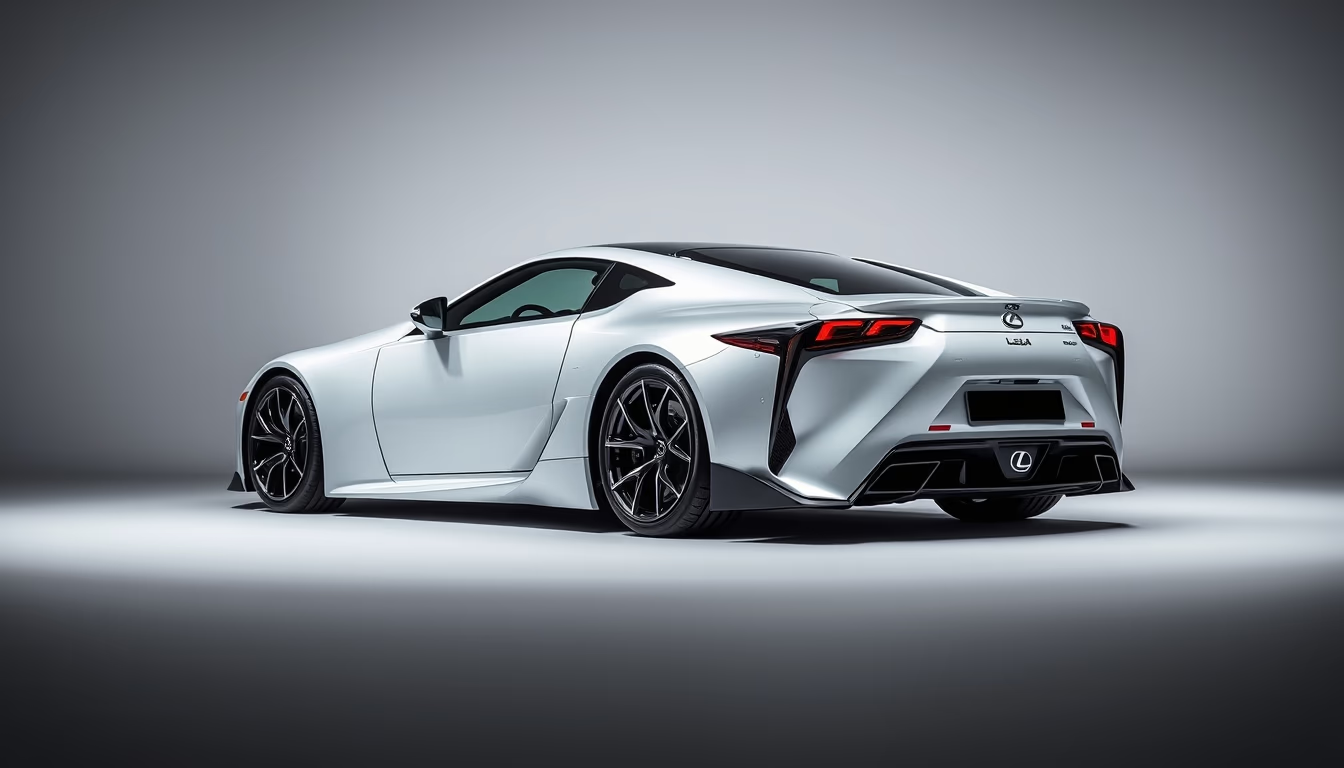
Lexus lfa carbon
1344×768 · AVIF · CC BY 4.0
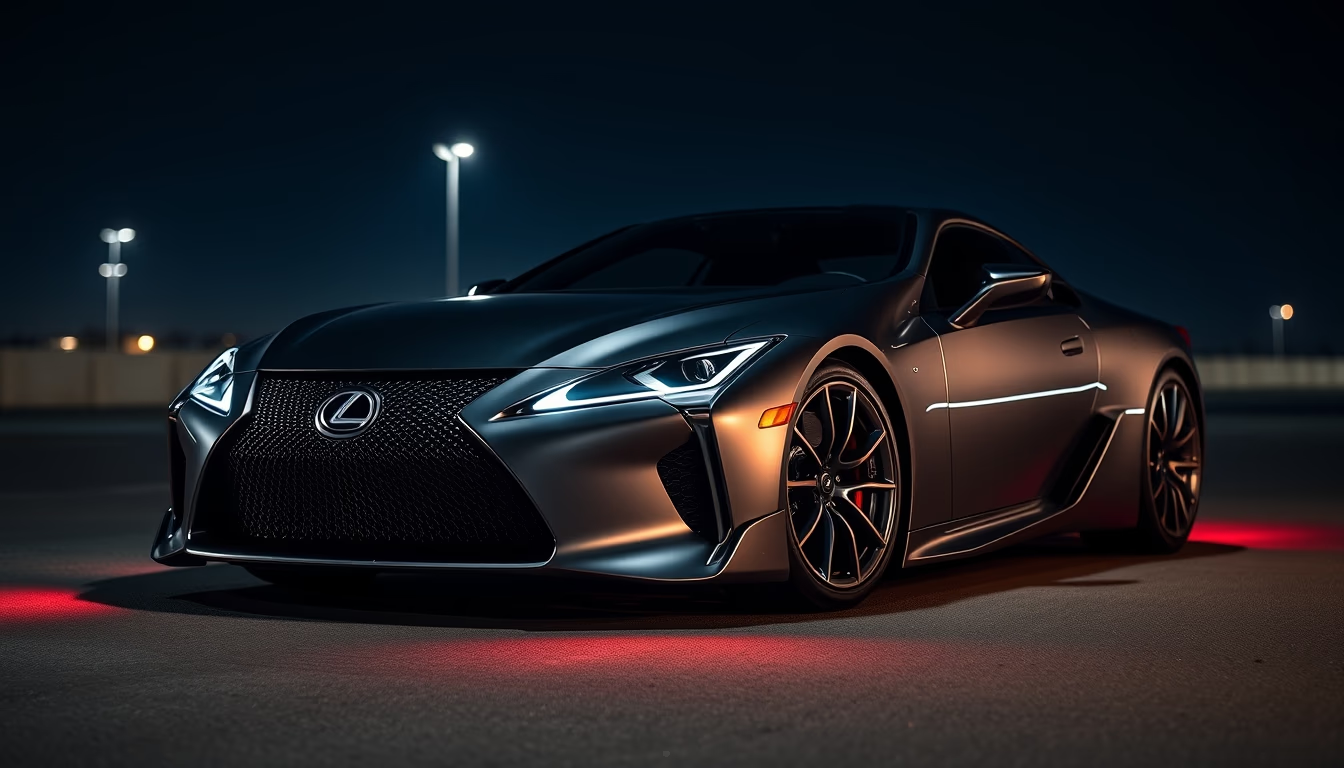
The Lexus LFA Carbon is a rare supercar that combines a naturally aspirated V10 engine with a carbon fiber monocoque, limited to only 500 units worldwide.
About this subject
The Lexus LFA is a landmark in automotive history, representing Lexus's first foray into the supercar segment. Developed over a decade, the model was launched in 2010 with a 4.8-liter V10 engine producing 560 horsepower. The Carbon variant, as the name suggests, extensively uses carbon fiber in its construction, including the monocoque, body panels, and structural components, resulting in a dry weight of just 1,480 kg. This weight reduction, combined with chassis tuning, improves agility and driving experience.
Production of the LFA was limited to 500 units, each individually numbered, and the Carbon model represents one of the most desirable variations. The V10 engine, developed in partnership with Yamaha, is one of the few naturally aspirated units of its era, delivering an unmistakable sound that revs to 9,000 rpm. Another highlight is the TFT instrument cluster inspired by the F-22 Raptor fighter jet, which changes layout according to the selected driving mode.
Culturally, the LFA cemented Lexus's reputation in high-performance engineering, leaving a legacy as one of the most authentic supercars focused on the art of driving. Even years after production ended, the LFA maintains high values in the collector market, often compared to models like the Ferrari 458 Italia and Lamborghini Gallardo. The extensive use of carbon fiber in the Carbon version not only reduces weight but also enhances exclusivity, as each panel displays the characteristic weave of the material.
Interestingly, the LFA's development began as a secret project at Toyota, codenamed 'Project T' (for Toyota), and was only later transferred to the Lexus division. The car also set lap records at the Nürburgring circuit, with the Nürburgring Package version completing the lap in 7 minutes 14 seconds. This performance cemented the LFA as a legitimate supercar capable of competing with the best from Europe.
Frequently Asked Questions
How many Lexus LFA units were produced?
Total production of the Lexus LFA was limited to 500 units, each individually numbered. A significant portion of these corresponds to the Carbon version.
What engine does the Lexus LFA have and how much power?
The LFA uses a naturally aspirated 4.8-liter V10 engine producing 560 horsepower at 8,700 rpm and 480 Nm of torque at 6,800 rpm. Developed with Yamaha, it revs up to 9,000 rpm.
Why is the Lexus LFA so special among supercars?
The LFA is special due to its ten-year development, carbon fiber construction, naturally aspirated V10, and instrument cluster inspired by fighter jets. Its rarity and engineering focused on driving pleasure make it a collector's icon.
Direct URL
https://pub-c7d6a6ea828543ac903a74a341ccb2e1.r2.dev/imagens/lexus-lfa-carbon-fine-art-photography-fresh10.avifHow to credit
Include a visible link back to UtilizAí. Copy one of the snippets below:
<a href="https://xn--utiliza-eza.com/en/midia/imagens/lexus-lfa-carbon-fine-art-photography-fresh10">Lexus lfa carbon</a> by <a href="https://xn--utiliza-eza.com">UtilizAí</a>, licensed under <a href="https://creativecommons.org/licenses/by/4.0/">CC BY 4.0</a>.
[Lexus lfa carbon](https://xn--utiliza-eza.com/en/midia/imagens/lexus-lfa-carbon-fine-art-photography-fresh10) by [UtilizAí](https://xn--utiliza-eza.com), CC BY 4.0
License: CC-BY-4.0