Level wooden brass
1344×768 · AVIF · CC BY 4.0
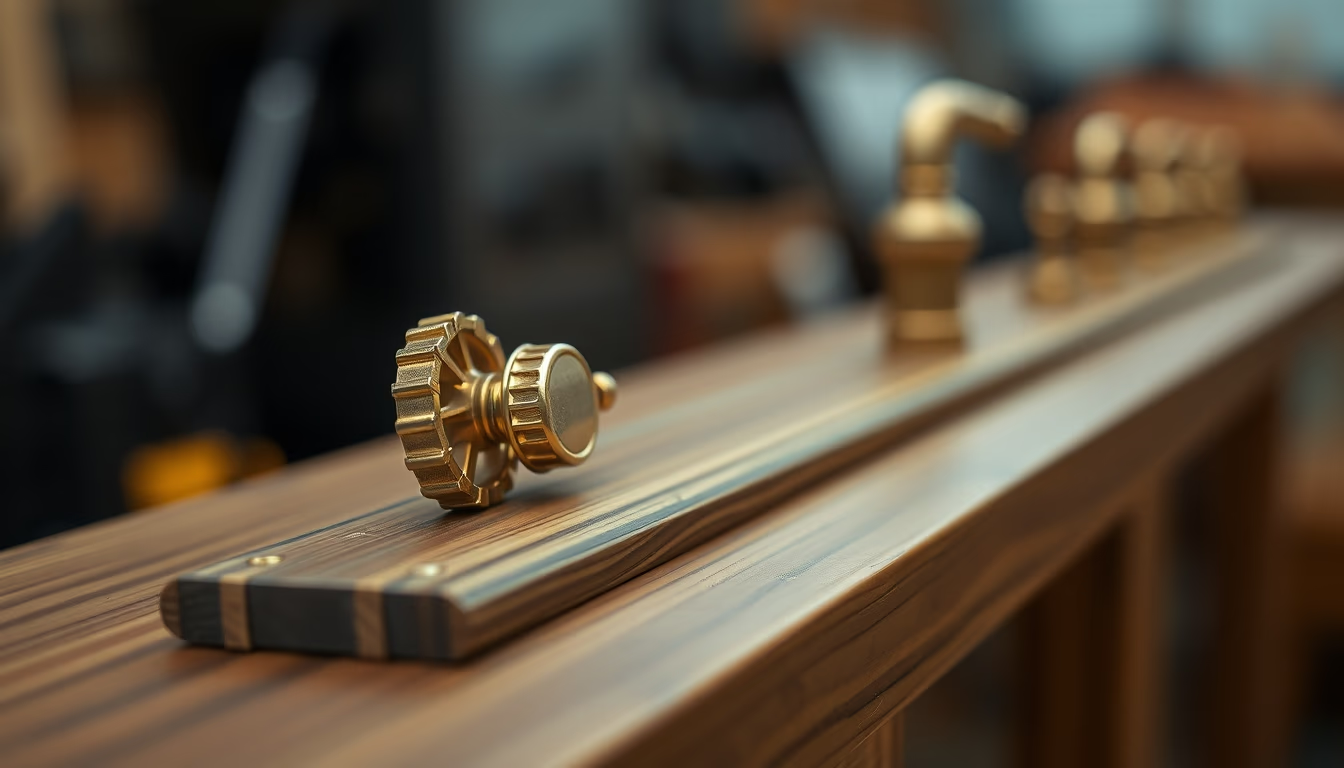
Classic carpenter's level in wood and brass, an essential tool in 19th and early 20th century construction.
About this subject
The wooden and brass carpenter's level is a precision instrument dating back to the period before mass industrialization. Before laser or digital levels, craftsmen relied on these tools to ensure surfaces were perfectly horizontal or vertical. The hardwood body, often rosewood or mahogany, was chosen for its dimensional stability and resistance to moisture. The brass fittings, such as edge guards and vial mounts, not only embellished but also reinforced the structure against impacts.
The glass vials, filled with liquid (alcohol or oil) and an air bubble, are the heart of the instrument. The tube curvature was manually calibrated so that the bubble would settle between the center marks when the surface was level. Renowned manufacturers like L.S. Starrett Company or Stanley Rule and Level Company produced thousands of these levels, many of which are now collector's items. An antique level in good condition can fetch hundreds of dollars, especially if it bears a prestigious brand or unusual design.
In Brazilian culture, these levels were widely used by carpenters and builders until the mid-20th century. Brass was preferred over iron because it does not rust and allows fine adjustments with screws. The scale in inches or millimeters, engraved on the wood, aided in measuring unevenness. With the advent of electronic and laser levels, wooden and brass models fell out of use, but they remain a testament to pre-industrial ingenuity and the functional aesthetics of tool design.
Frequently Asked Questions
How does a wooden and brass level work?
It has one or more curved glass vials filled with liquid and an air bubble. When the surface is level, the bubble centers between the marks on the vial. The vial's curvature ensures the bubble moves to the highest point, indicating unevenness.
What is the difference between an antique wooden level and a modern aluminum one?
Antique levels have hardwood bodies and brass fittings, offering less precision than modern ones due to potential warping, but they are valued as historical and decorative items. Modern aluminum or plastic levels are lighter, more precise, and moisture-resistant.
Are these levels still manufactured today?
Some companies produce handmade replicas for enthusiasts and collectors, but large-scale production has largely ceased. Most examples found in the antiques market date from the late 19th to mid-20th century.
Direct URL
https://pub-c7d6a6ea828543ac903a74a341ccb2e1.r2.dev/imagens/level-wooden-brass-tilt-shift-miniature-fresh14.avifHow to credit
Include a visible link back to UtilizAí. Copy one of the snippets below:
<a href="https://xn--utiliza-eza.com/en/midia/imagens/level-wooden-brass-tilt-shift-miniature-fresh14">Level wooden brass</a> by <a href="https://xn--utiliza-eza.com">UtilizAí</a>, licensed under <a href="https://creativecommons.org/licenses/by/4.0/">CC BY 4.0</a>.
[Level wooden brass](https://xn--utiliza-eza.com/en/midia/imagens/level-wooden-brass-tilt-shift-miniature-fresh14) by [UtilizAí](https://xn--utiliza-eza.com), CC BY 4.0
License: CC-BY-4.0