Level wooden brass
1344×768 · AVIF · CC BY 4.0

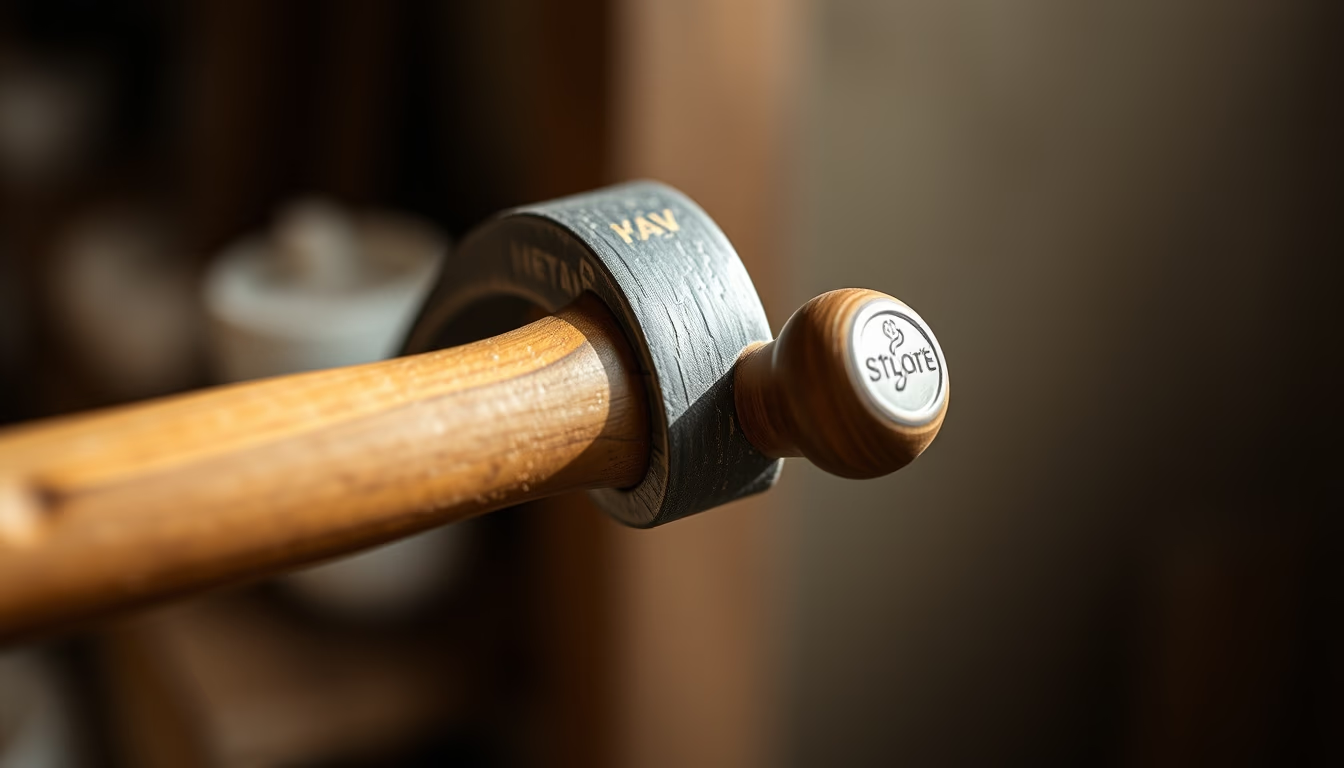
Wooden level with brass edge, a classic tool used by carpenters and masons worldwide for precise alignment.
About this subject
The wooden level with brass edging is a classic alignment tool dating back to the 19th century, when industrialization began standardizing construction instruments. Unlike modern aluminum or plastic levels, antique models were made from fine hardwoods (such as mahogany or oak) joined with precise dovetails and protected by brass corner plates. Brass was chosen for its corrosion resistance and low friction; it allowed the tool to be used in humid environments without rusting, while the wood dampened vibrations during handling.
The spirit vial, usually made of blown glass and filled with alcohol or ether, was calibrated by hand. High-quality levels, such as those from the Stanley Rule & Level Company (founded in 1857) or European artisans, could achieve an accuracy of 0.5 mm per meter. These tools were essential for building structures requiring strict alignment, such as bridges, roofs, and wooden floors.
Culturally, the wooden-and-brass level symbolized the technical knowledge of master builders and carpenters. In the Victorian era, levels often featured engraved scales in multiple systems (inches and millimeters) and even dual vials for checking both horizontal and vertical simultaneously. Today, these instruments are prized by antique tool collectors and restorers for their aesthetics and the durability of traditional materials.
Interestingly, the term “level” also gave rise to the phrase “spirit level,” which became synonymous with verifying horizontality. Wood and brass represent an era when tools were as beautiful as functional, blending art and precision.
Frequently Asked Questions
How does a wooden spirit level work?
The level contains a glass vial filled with liquid (alcohol or ether) and an air bubble. When placed on a surface, the bubble moves to the highest point; if the surface is level, the bubble centers between the marks on the vial.
Why were antique levels made of wood and brass?
Wood provided stability and vibration absorption, while brass protected edges from impact and resisted corrosion, extending the tool's life in damp construction environments.
What was the accuracy of old wooden levels?
High-quality handcrafted levels could achieve accuracy of up to 0.5 mm per meter, comparable to many modern levels. Calibration was done manually by skilled artisans.
Direct URL
https://pub-c7d6a6ea828543ac903a74a341ccb2e1.r2.dev/imagens/level-wooden-brass-architectural-photography-fresh7.avifHow to credit
Include a visible link back to UtilizAí. Copy one of the snippets below:
<a href="https://xn--utiliza-eza.com/en/midia/imagens/level-wooden-brass-architectural-photography-fresh7">Level wooden brass</a> by <a href="https://xn--utiliza-eza.com">UtilizAí</a>, licensed under <a href="https://creativecommons.org/licenses/by/4.0/">CC BY 4.0</a>.
[Level wooden brass](https://xn--utiliza-eza.com/en/midia/imagens/level-wooden-brass-architectural-photography-fresh7) by [UtilizAí](https://xn--utiliza-eza.com), CC BY 4.0
License: CC-BY-4.0