Leather workshop knives
1344×768 · AVIF · CC BY 4.0

Leather workshop knives: types, uses, and essential maintenance for artisans and professionals in the field.
About this subject
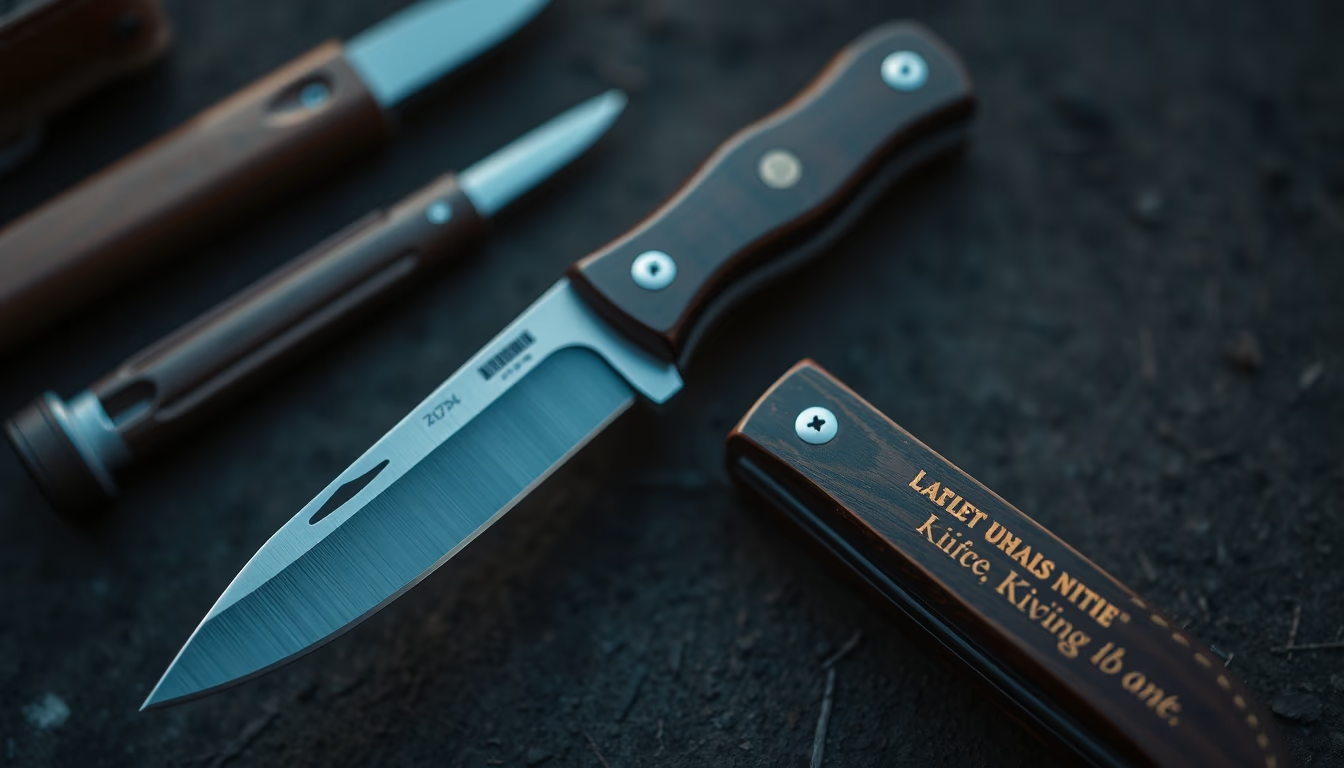
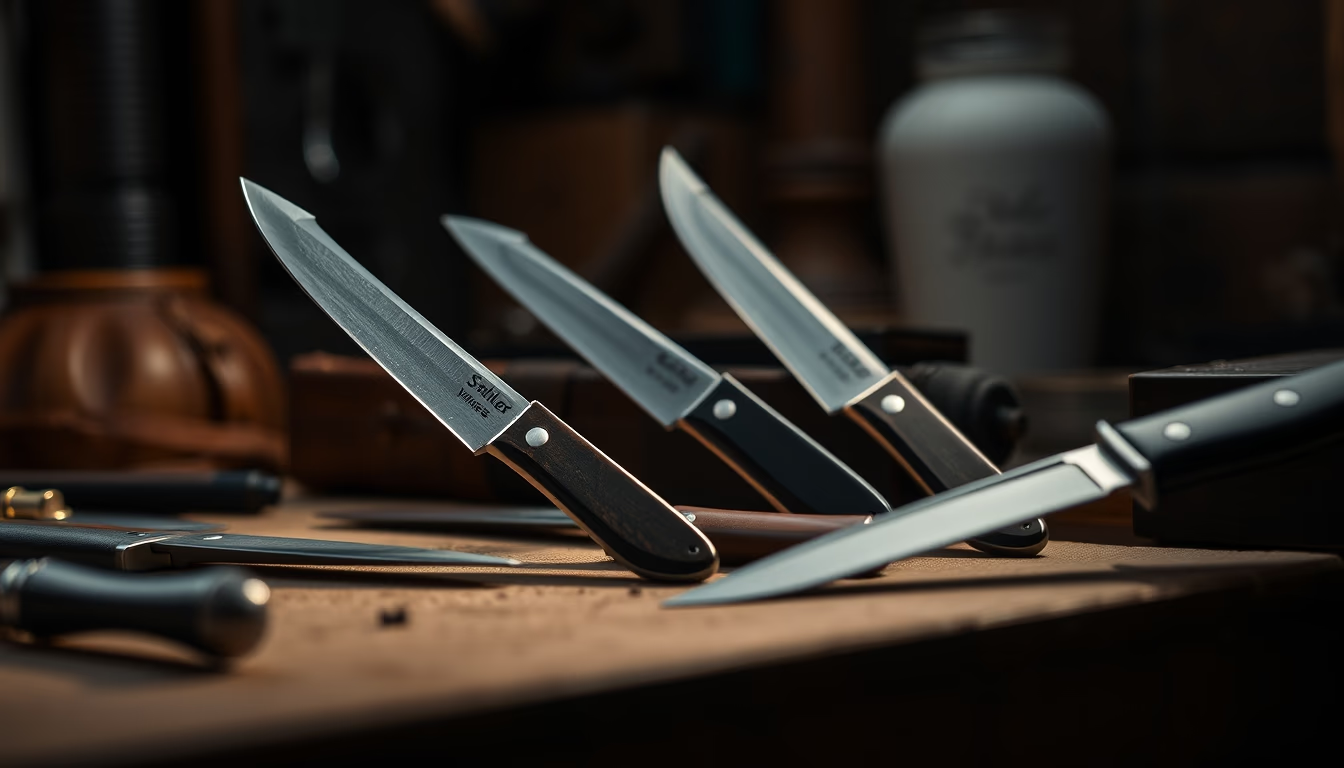
In leather craftsmanship, the choice of knife is as crucial as the quality of the leather itself. Leather workshop knives, such as the skiving knife, round knife, and head knife, are designed for precise and specific cuts. The skiving knife, with its beveled blade, allows thinning leather in areas for folds or stitching, ensuring a smooth finish. The round knife, traditional in shoemaking, is ideal for curved cuts and intricate details, while the head knife is robust for cutting thick leather in soles or belts.
Proper maintenance is vital: blades must be kept extremely sharp through water stone sharpening and stropping on leather. A dull knife not only makes work harder but increases accident risk due to extra force required. Historically, leather knives date back to ancient civilizations like the Egyptians, who used them for sandals and armor. In Brazil, leather tradition is strong in Rio Grande do Sul, with artisans producing items like boots and horse tack.
Interestingly, the half-moon shaped knife, also called a sole knife, has a circular blade and is used with a rocking motion, allowing uniform cuts on large pieces. Straight-blade knives with ergonomic handles are preferred for carving and modeling. Many artisans personalize their tools, choosing carbon steel (easy to sharpen) or stainless steel (corrosion resistant).
Frequently Asked Questions
What is the main difference between a skiving knife and a round knife?
A skiving knife has a beveled blade to reduce leather thickness in specific areas, while a round knife has a curved blade, ideal for circular cuts and fine detail work in shoemaking and leathercraft.
How to keep a leather knife blade always sharp?
Use water stones (1000 to 6000 grit) for sharpening and finish with a leather strop and abrasive compound. Avoid electric sharpeners that can overheat and damage the steel.
Carbon steel or stainless steel: which one to choose for leather workshop knives?
Carbon steel (e.g., 1095) holds an edge longer and is easy to sharpen, but can rust. Stainless steel (e.g., 440C) resists corrosion but is harder to sharpen. The choice depends on work environment and personal preference.
Direct URL
https://pub-c7d6a6ea828543ac903a74a341ccb2e1.r2.dev/imagens/leather-workshop-knives-film-grain-authentic-fresh11.avifHow to credit
Include a visible link back to UtilizAí. Copy one of the snippets below:
<a href="https://xn--utiliza-eza.com/en/midia/imagens/leather-workshop-knives-film-grain-authentic-fresh11">Leather workshop knives</a> by <a href="https://xn--utiliza-eza.com">UtilizAí</a>, licensed under <a href="https://creativecommons.org/licenses/by/4.0/">CC BY 4.0</a>.
[Leather workshop knives](https://xn--utiliza-eza.com/en/midia/imagens/leather-workshop-knives-film-grain-authentic-fresh11) by [UtilizAí](https://xn--utiliza-eza.com), CC BY 4.0
License: CC-BY-4.0