Leather dyeing vat
1344×768 · AVIF · CC BY 4.0
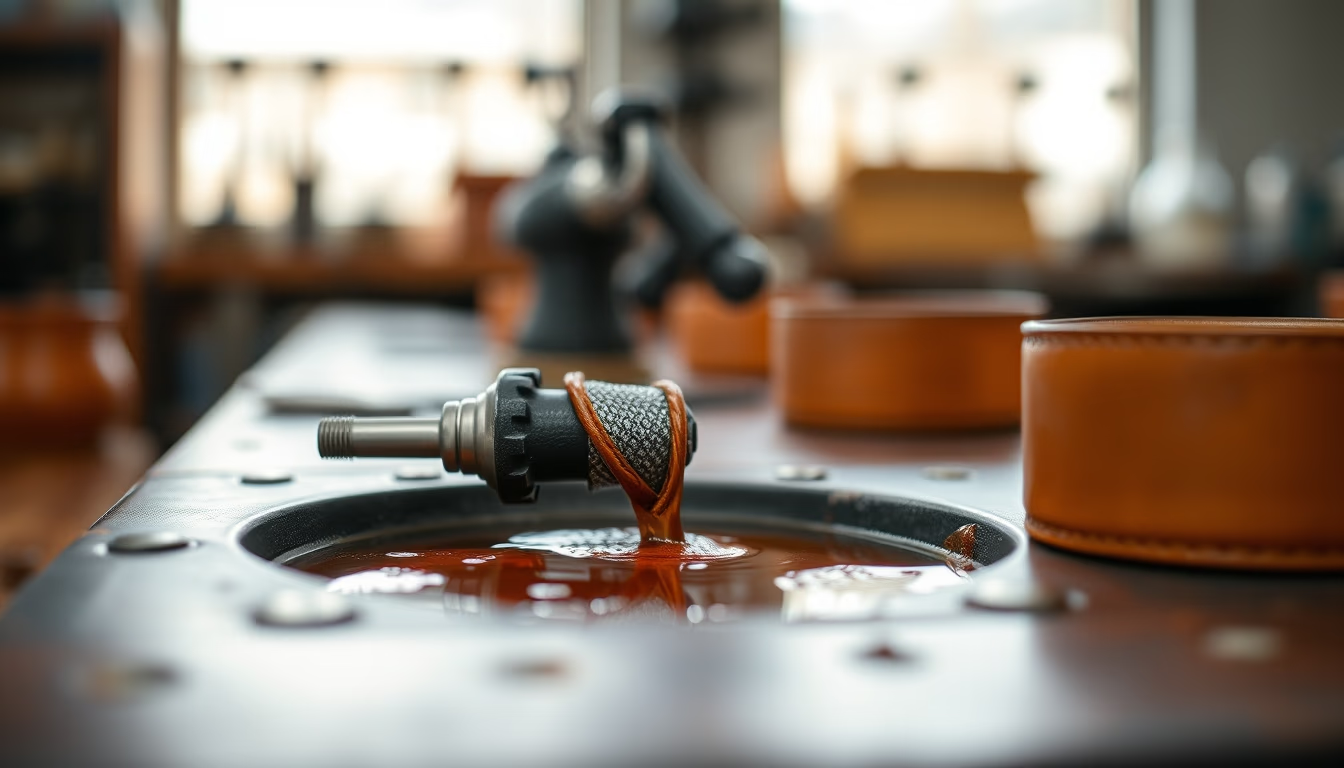
The leather dyeing vat is an essential piece of equipment in the leather industry, used to apply dyes evenly to hides and leathers.
About this subject
The leather dyeing vat, also known as a dyeing drum, is a rotating cylinder used in the leather finishing process. During tanning, hides undergo several chemical and mechanical steps to become usable leather. Dyeing is one of the most critical phases, as it defines the final color and uniformity of the material. Inside the vat, hides are subjected to a bath of dyes and chemicals while the drum rotates slowly, ensuring each fiber absorbs the color homogeneously. This motion prevents spots and guarantees deep pigment penetration.
Historically, leather dyeing dates back to ancient civilizations like the Egyptians and Mesopotamians, who used natural dyes from plants and minerals. With the Industrial Revolution, manual vats gave way to mechanized equipment, increasing efficiency and production capacity. Modern vats are made of stainless steel or coated wood, with automated controls for temperature, rotation, and immersion time. The Brazilian leather industry, one of the largest in the world, uses state-of-the-art dyeing vats in major production hubs like Rio Grande do Sul and São Paulo.
A technical curiosity is that dyeing can occur at different stages: before or after chrome tanning. Each method yields different properties, such as colorfastness and leather feel. Dyes can be anilines, pigments, or blends, depending on the desired effect. Controlling drum load, liquor-to-hide ratio, and pH are crucial to avoid waste and ensure quality. Sustainability is also gaining attention, with the development of eco-friendlier dyes and water reuse systems in vats.
Frequently Asked Questions
What is the difference between drum dyeing and immersion dyeing?
Drum dyeing uses a rotating cylinder that moves the hides within the dye bath, ensuring better homogeneity and penetration. Static immersion may result in spots and less uniformity.
What types of dyes are used in leather dyeing?
The main types are anilines (synthetic dyes that penetrate deeply) and pigments (which remain on the surface). Natural dyes are also used but less common in modern industry.
Can dyeing damage leather?
Yes, if poorly controlled. Improper pH, excessive temperature, or prolonged immersion can affect the leather's strength and feel. Therefore, the process requires strict monitoring.
Direct URL
https://pub-c7d6a6ea828543ac903a74a341ccb2e1.r2.dev/imagens/leather-dyeing-vat-tilt-shift-miniature-fresh16.avifHow to credit
Include a visible link back to UtilizAí. Copy one of the snippets below:
<a href="https://xn--utiliza-eza.com/en/midia/imagens/leather-dyeing-vat-tilt-shift-miniature-fresh16">Leather dyeing vat</a> by <a href="https://xn--utiliza-eza.com">UtilizAí</a>, licensed under <a href="https://creativecommons.org/licenses/by/4.0/">CC BY 4.0</a>.
[Leather dyeing vat](https://xn--utiliza-eza.com/en/midia/imagens/leather-dyeing-vat-tilt-shift-miniature-fresh16) by [UtilizAí](https://xn--utiliza-eza.com), CC BY 4.0
License: CC-BY-4.0