Leather dyeing vat
1344×768 · AVIF · CC BY 4.0
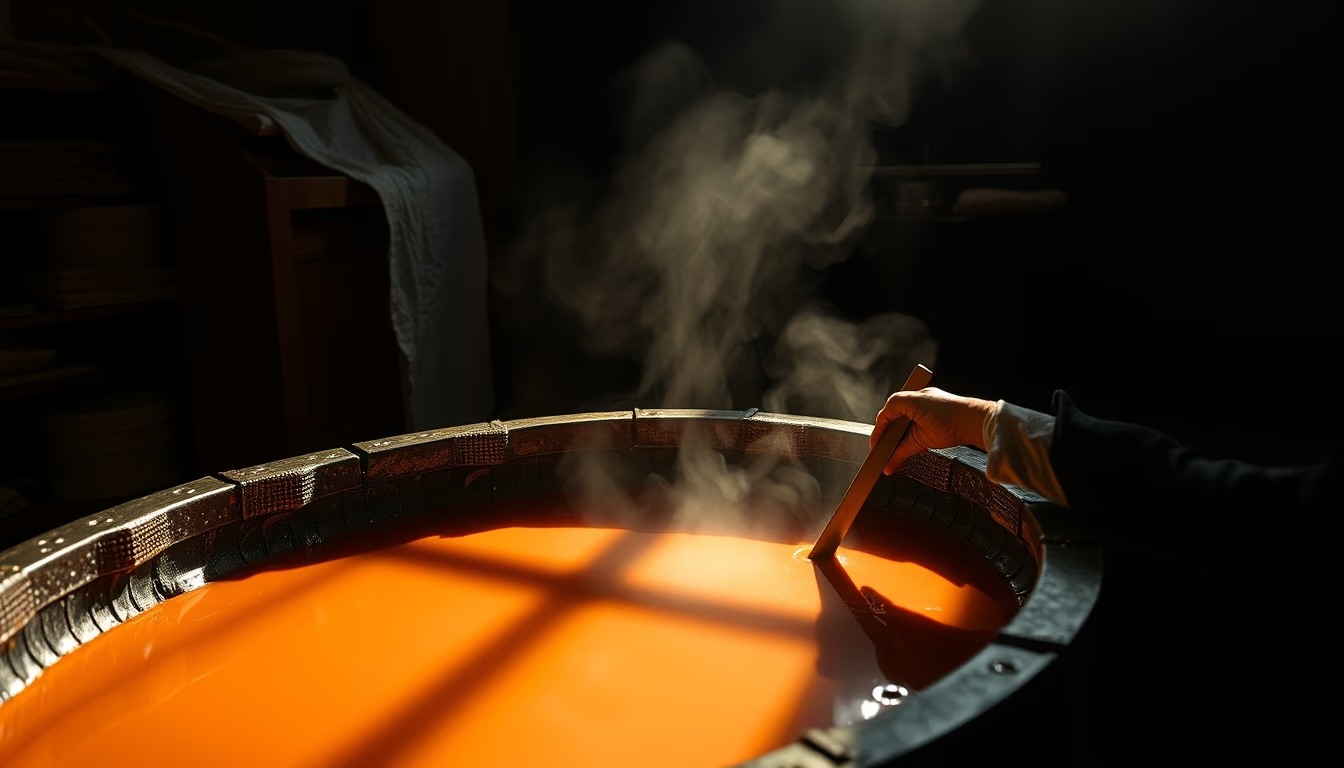
Leather dyeing vat, essential in processing to give uniform and durable color to the material. Equipment used in modern and artisanal tanneries.
About this subject
Leather dyeing is a critical step in tanning, performed in vats or rotating drums. Vats can be open for manual immersion or closed and rotating, made of wood or stainless steel. The process involves submerging leather in a dye solution, aniline or synthetic pigments, for hours to days depending on desired penetration.
Historically, dyeing was done in pits or barrels with natural dyes like tree bark and insects. The Industrial Revolution brought mechanical drums, enabling better control and uniformity. Today, modern tanneries use automated drums with controlled temperature and pH, ensuring color consistency in large batches. Open vats are still used for artisanal pieces or special dyeing like wet-blue leather.
The choice of vat type directly influences leather quality. Rotating drums ensure uniform dye penetration, while static vats may require manual agitation. Aniline-dyed leather, valued for its natural appearance and color depth, requires well-sealed vats to prevent oxidation. Pigment dyeing covers the surface, being more fade-resistant but less flexible.
Interestingly, vat sizes range from small 50-liter tubs for artisans to massive 20,000-liter drums in industries. Maintenance is key: stainless steel vats are preferred for resistance to acidic dyes. In some countries, concrete vats coated with epoxy are traditional for large-scale dyeing.
Frequently Asked Questions
How long does leather dyeing in a vat take?
It can range from 2 to 48 hours depending on leather thickness, dye type, and desired penetration. Thicker leathers require longer immersion.
What is the difference between rotating drum and static vat dyeing?
Rotating drums provide continuous agitation, resulting in uniform color and reduced time. Static vats are more manual and used for special pieces or dyeing that requires less movement.
What is aniline-dyed leather?
It is leather colored with aniline dyes that penetrate deeply into the fibers. It maintains natural texture and markings but is more sensitive to light and moisture.
Direct URL
https://pub-c7d6a6ea828543ac903a74a341ccb2e1.r2.dev/imagens/leather-dyeing-vat-rembrandt-lighting-dramatic-shadows-fresh17.avifHow to credit
Include a visible link back to UtilizAí. Copy one of the snippets below:
<a href="https://xn--utiliza-eza.com/en/midia/imagens/leather-dyeing-vat-rembrandt-lighting-dramatic-shadows-fresh17">Leather dyeing vat</a> by <a href="https://xn--utiliza-eza.com">UtilizAí</a>, licensed under <a href="https://creativecommons.org/licenses/by/4.0/">CC BY 4.0</a>.
[Leather dyeing vat](https://xn--utiliza-eza.com/en/midia/imagens/leather-dyeing-vat-rembrandt-lighting-dramatic-shadows-fresh17) by [UtilizAí](https://xn--utiliza-eza.com), CC BY 4.0
License: CC-BY-4.0