Leather craft tools
1344×768 · AVIF · CC BY 4.0

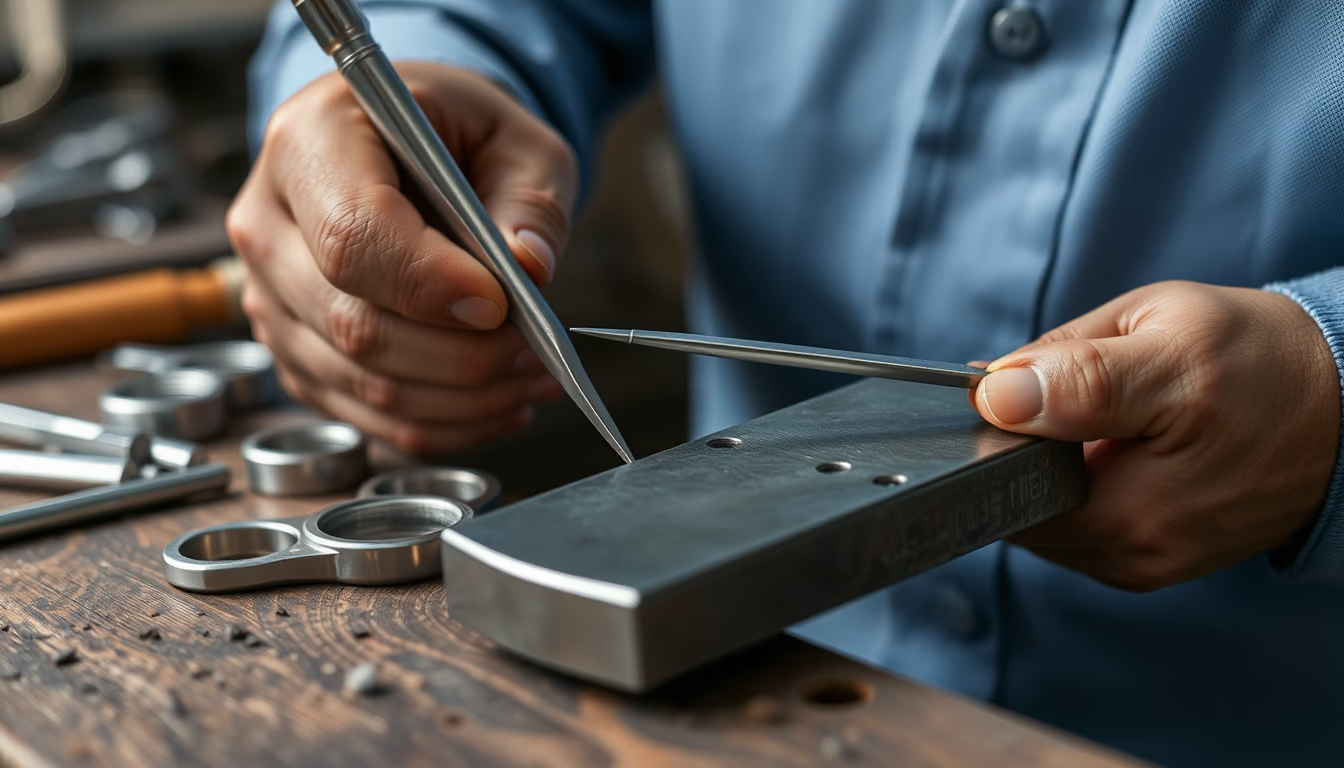
Leather craft tools such as punches, knives, awls, and needles are essential for high-quality handmade work.
About this subject
Leather crafting is a millennia-old tradition covering everything from shoes and belts to bags and book covers. The tools used in this craft are diverse, each with a specific function. Half-moon knives are used for straight cuts, while utility knives and pointed knives handle finer details. Punches of various diameters create holes for stitching, and awls help widen those holes. Leather needles, usually curved or straight, are robust enough to penetrate the material without damaging it.
In Brazil, leather crafting is strong in the Northeast and South regions. In the Northeast, the focus is on utilitarian items like harnesses and saddles, often decorated with carvings and reliefs typical of the cowboy culture. In the South, particularly in Rio Grande do Sul, leather is used in traditional clothing such as bombachas and boots. Techniques like braiding, hot stamping, and hand stitching are passed down through generations.
Choosing the right tool directly affects the final result. For instance, using a dull punch can ruin the leather, creating unwanted tears. Therefore, artisans invest in high-carbon steel tools that hold an edge longer. Maintenance is also crucial: sharpening blades periodically and lubricating scissors joints extends their lifespan.
Interesting fact: for raw leather (without tanning), tools need to be even more resistant. For vegetable-tanned leather, which is softer, the artisan can use tools of lower hardness. The global trend of valuing handmade items, expected to peak in 2026, has boosted demand for courses and leather tool kits, reviving a skill that combines precision and creativity.
Frequently Asked Questions
What are the basic tools to start leather crafting?
For beginners, a utility knife, a half-moon knife, punches, an awl, leather needles, waxed thread, and a cutting mat are recommended. These tools allow you to cut, punch, and stitch simple pieces.
How to maintain leather tools for longer life?
Keep blades sharp and store tools in a dry place. Lubricate moving parts with mineral oil and clean leather residue with a dry cloth. Avoid dropping tools to prevent damage to tips and edges.
What is the difference between vegetable-tanned and chrome-tanned leather?
Vegetable-tanned leather uses natural tannins, is firmer, and ideal for carving and stamping. Chrome-tanned leather is processed with chromium salts, softer and more flexible, common in clothing and upholstery. Each type requires specific tools and techniques.
Direct URL
https://pub-c7d6a6ea828543ac903a74a341ccb2e1.r2.dev/imagens/leather-craft-tools-studio-editorial-portrait-p2.avifHow to credit
Include a visible link back to UtilizAí. Copy one of the snippets below:
<a href="https://xn--utiliza-eza.com/en/midia/imagens/leather-craft-tools-studio-editorial-portrait-p2">Leather craft tools</a> by <a href="https://xn--utiliza-eza.com">UtilizAí</a>, licensed under <a href="https://creativecommons.org/licenses/by/4.0/">CC BY 4.0</a>.
[Leather craft tools](https://xn--utiliza-eza.com/en/midia/imagens/leather-craft-tools-studio-editorial-portrait-p2) by [UtilizAí](https://xn--utiliza-eza.com), CC BY 4.0
License: CC-BY-4.0