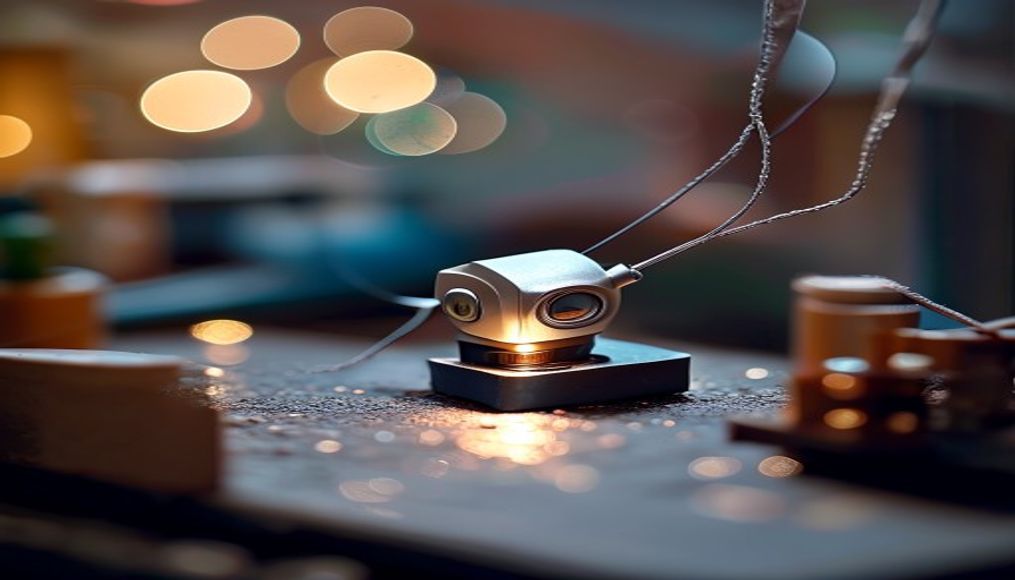
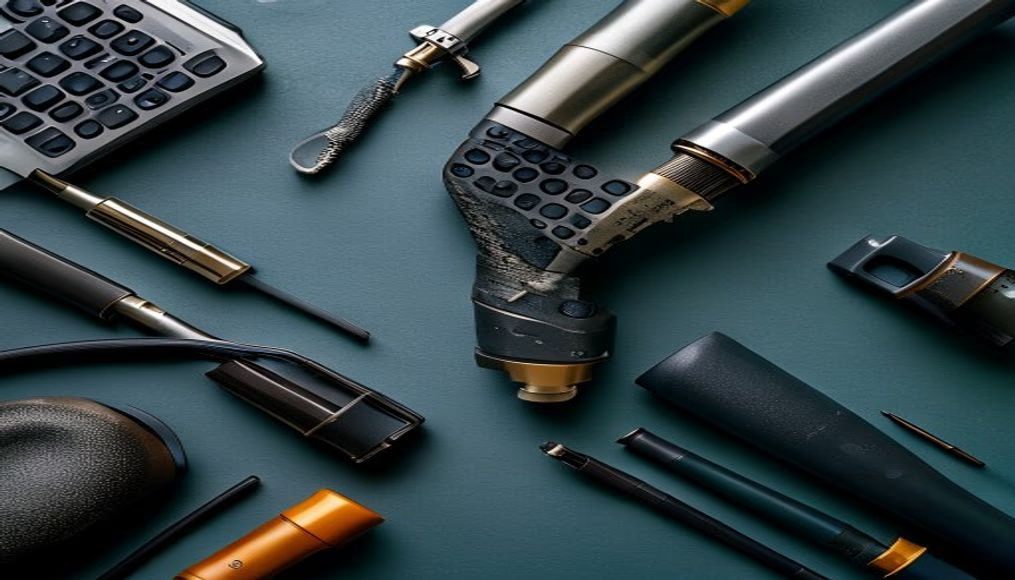
Lead came soldering
1344×768 · AVIF · CC BY 4.0
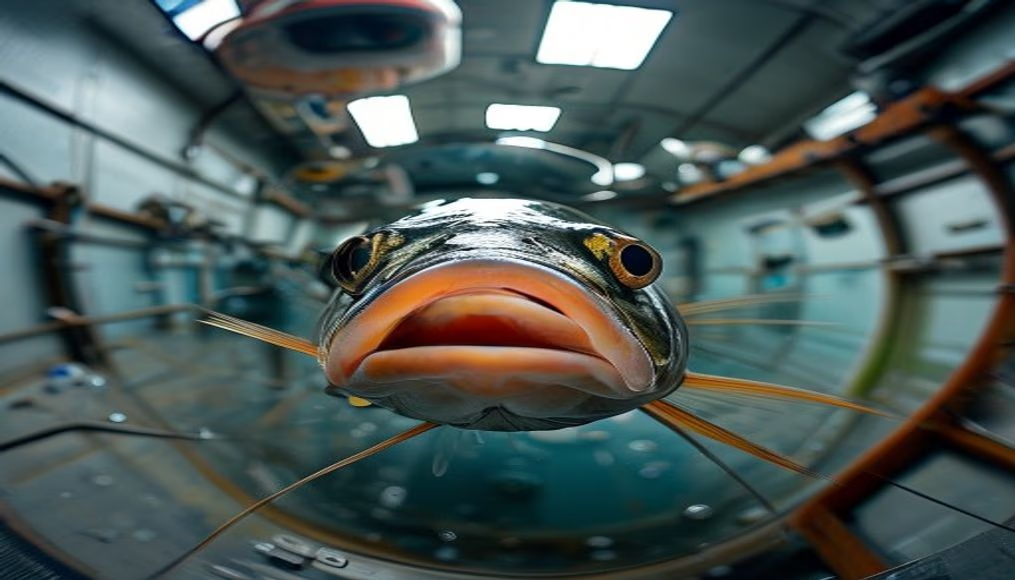
Lead came soldering is the technique of joining lead profiles in stained glass, essential for constructing artistic windows since the Middle Ages.
About this subject
Lead came soldering is a craft process used in stained glass fabrication. Lead profiles, called came, are shaped and fitted around pieces of colored glass. The joints are then soldered with a tin-lead alloy, creating a rigid, waterproof structure. This technique originated in medieval Europe, reaching its peak in Gothic cathedrals such as Sainte-Chapelle in Paris and Chartres Cathedral, where enormous stained glass windows depicted biblical scenes and daily life.
The process requires precision: the artisan cleans the joints with acid, applies flux to prevent oxidation, and uses a soldering iron heated to about 350°C to melt the alloy. After soldering, glazing putty is applied to seal and stabilize the glass. Although lead is toxic, many artists still prefer lead came for its malleability and the traditional look it gives to the work. Safety measures such as ventilation and gloves are mandatory.
Historically, lead came soldering was the primary stained glass technique until the 19th century, when Louis Comfort Tiffany popularized the copper foil method for smaller pieces. However, for large architectural windows, lead came remains the standard. The tag "wave-pollinations" suggests a contemporary approach, possibly from an artist exploring organic patterns inspired by pollination, blending tradition and innovation.
Frequently Asked Questions
What is lead came?
Lead came is a grooved lead profile used to wrap and join pieces of glass in stained glass work. It is flexible and allows for complex designs.
Is lead soldering safe?
Lead is toxic, so it is essential to work in a ventilated area, wear gloves and a mask, and wash hands after handling. Many artists use lead-free solders to reduce risks.
What is the difference between lead came and copper foil?
Lead came uses pre-grooved lead profiles that hold the glass; it is ideal for large windows and straight lines. Copper foil (Tiffany method) wraps each piece of glass with copper tape and solders them, better for fine details and three-dimensional pieces.
Direct URL
https://pub-c7d6a6ea828543ac903a74a341ccb2e1.r2.dev/imagens/lead-came-soldering-fish-eye-wide-angle-p3.avifHow to credit
Include a visible link back to UtilizAí. Copy one of the snippets below:
<a href="https://xn--utiliza-eza.com/en/midia/imagens/lead-came-soldering-fish-eye-wide-angle-p3">Lead came soldering</a> by <a href="https://xn--utiliza-eza.com">UtilizAí</a>, licensed under <a href="https://creativecommons.org/licenses/by/4.0/">CC BY 4.0</a>.
[Lead came soldering](https://xn--utiliza-eza.com/en/midia/imagens/lead-came-soldering-fish-eye-wide-angle-p3) by [UtilizAí](https://xn--utiliza-eza.com), CC BY 4.0
License: CC-BY-4.0