Knitting needles wool
1344×768 · AVIF · CC BY 4.0
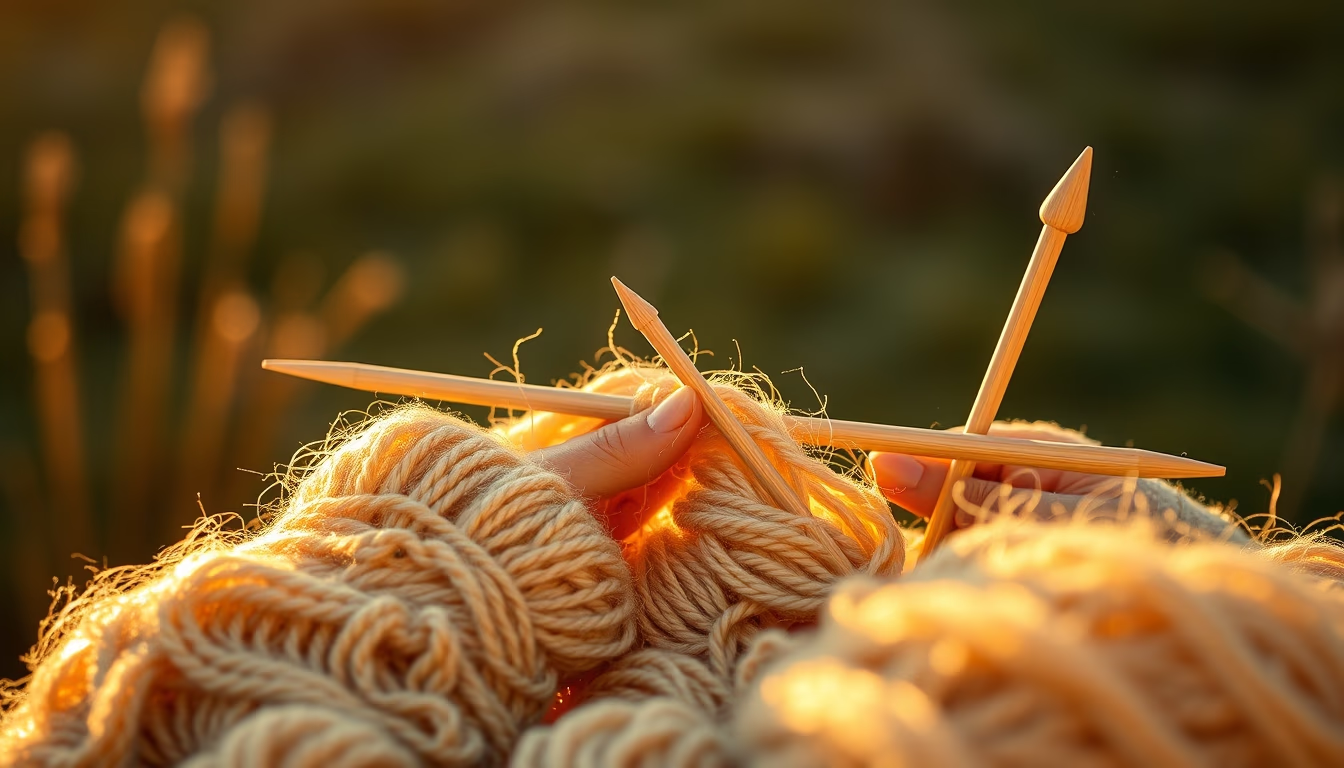
Knitting needles and wool: essential tools that turn yarn into art, with history tracing back to ancient Egypt and global traditions.
About this subject
Knitting needles, typically made of bamboo, metal, or plastic, are ancient tools whose exact origin is uncertain, but the earliest known examples date from 11th-century Egypt. They come in various sizes (measured in millimeters) and types (straight, circular, double-pointed), each suited to different techniques and projects. Wool, the most popular knitting fiber, is obtained from sheep breeds such as Merino (known for softness) or Corriedale (durable and versatile). Besides sheep wool, fibers like alpaca, cashmere, and mohair offer unique textures and properties.
Globally, knitting carries strong cultural traditions. In Scotland's Fair Isle, colorful patterns emerged in the 19th century; in the Peruvian Andes, alpaca wool knitting is an ancient heritage. In Scandinavia, sweaters with geometric patterns (such as Norwegian designs) are national symbols. Knitting also played a key economic role in regions like Ireland, where fishermen wore coarse wool Aran sweaters with specific stitches for identification in case of shipwreck. Travelers and photographers often document artisans in markets or villages, capturing the continuity of these skills.
Today, knitting is experiencing a global revival, fueled by the maker movement and the search for stress-reducing manual activities. Travel photography explores this theme by showing close-ups of needles intertwining colorful yarns, or scenes in rural porches with elderly women knitting in rocking chairs. These images not only document the craft but evoke feelings of comfort, tradition, and creativity, elements that make knitting a universal subject in cultural iconography.
Frequently Asked Questions
What is the historical origin of knitting?
The earliest known evidence of knitting comes from Egypt, around the 11th century, with cotton socks. The technique spread across Europe in the Middle Ages, gaining popularity with the use of wool.
How to choose the correct knitting needle size?
The ideal size depends on the yarn used and the desired tension. The yarn label typically suggests a needle size (in mm). For beginners, medium-sized needles (5 mm) with bulky wool yarn are recommended.
What are the most common types of wool for knitting?
The most popular include Merino wool (soft), Corriedale wool (durable), alpaca (light and warm), cashmere (luxurious), and Shetland sheep wool (ideal for colorwork patterns).
Direct URL
https://pub-c7d6a6ea828543ac903a74a341ccb2e1.r2.dev/imagens/knitting-needles-wool-travel-photography-p2.avifHow to credit
Include a visible link back to UtilizAí. Copy one of the snippets below:
<a href="https://xn--utiliza-eza.com/en/midia/imagens/knitting-needles-wool-travel-photography-p2">Knitting needles wool</a> by <a href="https://xn--utiliza-eza.com">UtilizAí</a>, licensed under <a href="https://creativecommons.org/licenses/by/4.0/">CC BY 4.0</a>.
[Knitting needles wool](https://xn--utiliza-eza.com/en/midia/imagens/knitting-needles-wool-travel-photography-p2) by [UtilizAí](https://xn--utiliza-eza.com), CC BY 4.0
License: CC-BY-4.0