Kirigami snowflake
1344×768 · AVIF · CC BY 4.0
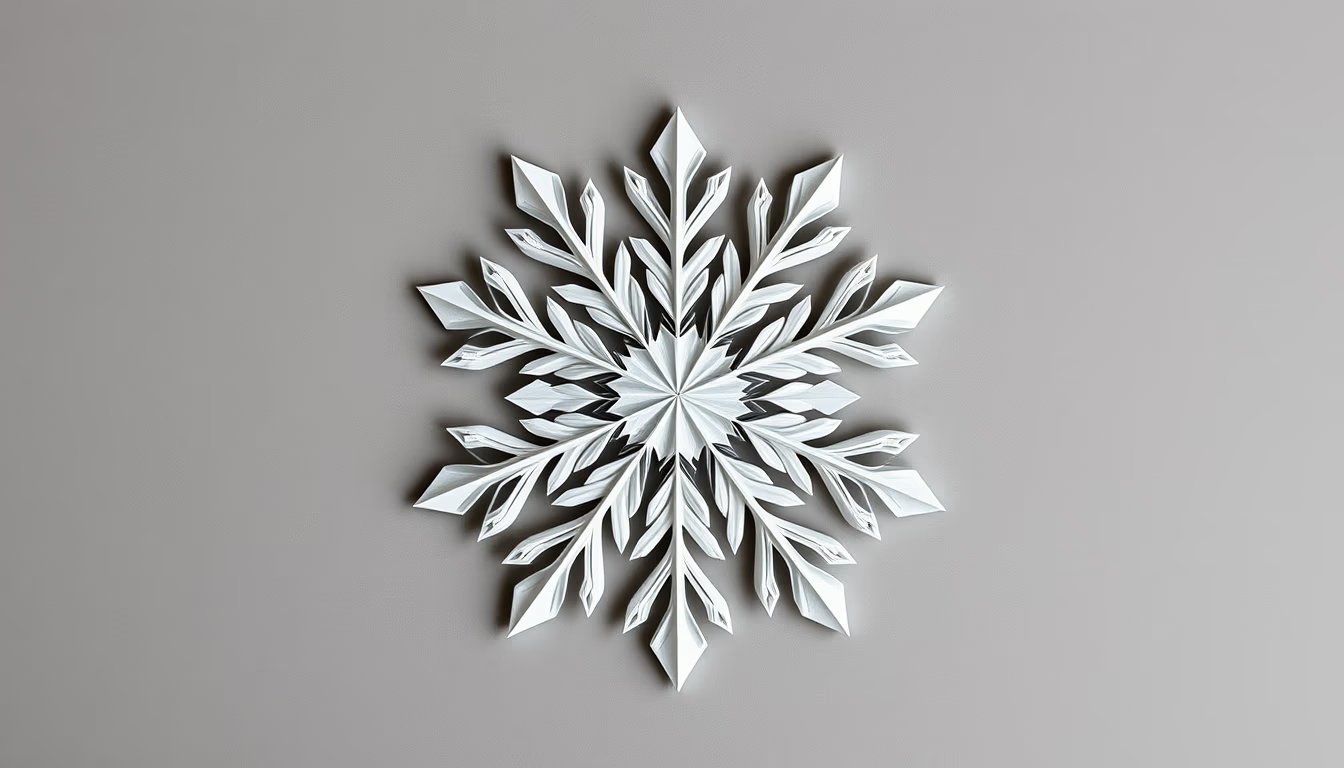
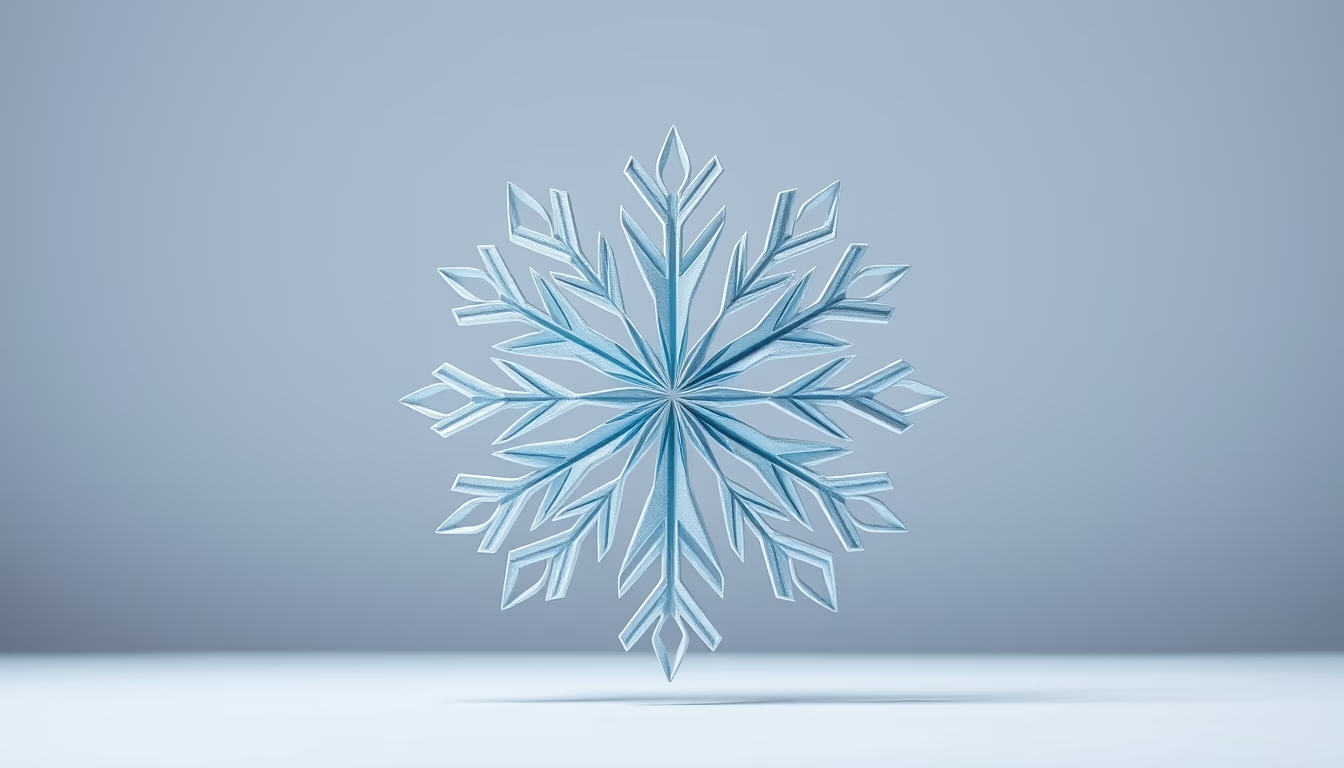
The kirigami snowflake is a cut-and-fold technique that creates three-dimensional geometric structures, blending Japanese paper art with natural symmetry.
About this subject
Kirigami, from the Japanese words "kiru" (to cut) and "kami" (paper), is a variation of origami that allows cutting in addition to folding. Unlike traditional origami, which uses only folds, kirigami enables cut-out shapes and openings, resulting in more complex and detailed pieces. In the case of kirigami snowflakes, the technique exploits the hexagonal symmetry characteristic of real ice crystals, producing delicate and realistic decorations.
Kirigami snowflakes are often used as seasonal ornaments, especially during winter or Christmas celebrations. The planar paper structure, when cut and folded, gains volume and texture, mimicking the complexity of real snowflakes. A single square sheet of paper can be transformed into a three-dimensional snowflake with six identical points using strategic cuts and precise folds.
The popularity of this art has grown with online tutorials and craft books, as kirigami is accessible to beginners and yields impressive results with minimal materials. Moreover, the process involves concepts of geometry, symmetry, and design, making it useful in educational activities to teach mathematical patterns and creativity. Kirigami snowflakes are also a form of contemporary art, with artists creating increasingly intricate pieces.
Frequently Asked Questions
What is the difference between kirigami and origami?
In origami, only folding is allowed; in kirigami, the paper can also be cut, enabling openings and cut-out shapes not possible with folds alone.
What type of paper is recommended for kirigami snowflakes?
Light, easy-to-cut papers like copy paper or origami paper work well. Very thick or brittle paper can make precise cuts and folds difficult.
Do kirigami snowflakes have to have six points?
Most designs follow the natural hexagonal symmetry of real snowflakes, but creative variations may have 4, 8, or other numbers of points, though they do not represent the actual crystal structure of ice.
Direct URL
https://pub-c7d6a6ea828543ac903a74a341ccb2e1.r2.dev/imagens/kirigami-snowflake-isometric-flat-lay-fresh0.avifHow to credit
Include a visible link back to UtilizAí. Copy one of the snippets below:
<a href="https://xn--utiliza-eza.com/en/midia/imagens/kirigami-snowflake-isometric-flat-lay-fresh0">Kirigami snowflake</a> by <a href="https://xn--utiliza-eza.com">UtilizAí</a>, licensed under <a href="https://creativecommons.org/licenses/by/4.0/">CC BY 4.0</a>.
[Kirigami snowflake](https://xn--utiliza-eza.com/en/midia/imagens/kirigami-snowflake-isometric-flat-lay-fresh0) by [UtilizAí](https://xn--utiliza-eza.com), CC BY 4.0
License: CC-BY-4.0