Kimchi fermented korean
1344×768 · AVIF · CC BY 4.0
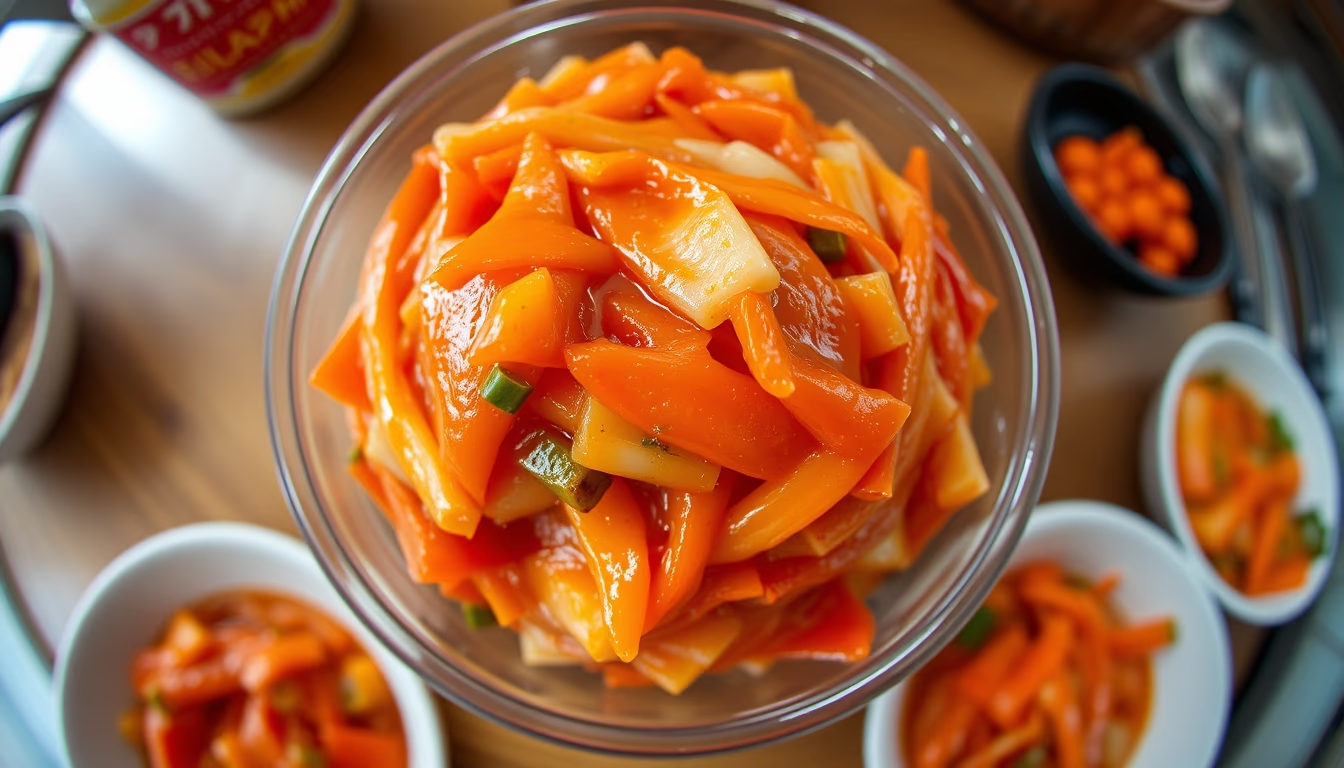
Kimchi is a Korean fermented dish, typically made with napa cabbage and chili, essential to Korean cuisine and culture.
About this subject
Kimchi is a traditional Korean side dish of fermented vegetables, most commonly made with napa cabbage (baechu) seasoned with Korean chili powder (gochugaru), garlic, ginger, scallions, and fish sauce or brine. Its origins date back to the Three Kingdoms period (c. 57 BC, 668 AD), when fermentation was used to preserve vegetables through harsh winters. The spicy version with red chili emerged only after chili peppers were introduced to Korea in the 16th century by Portuguese and Japanese traders.
Natural fermentation by lactic acid bacteria, such as Lactobacillus, gives kimchi its tangy flavor and health benefits. Hundreds of regional and seasonal variations exist: cubed radish kimchi (kkakdugi), cucumber kimchi (oi sobagi), scallion kimchi (pa kimchi), and mild non-spicy white kimchi (baek kimchi). Kimchi is so central to Korean culture that Seoul has a Kimchi Museum, and the country celebrates Kimchi Day annually on November 22.
Nutritionally, kimchi is rich in vitamins A, B, and C, fiber, and probiotics. Studies suggest benefits like improved digestion, reduced cholesterol, and antioxidant effects. During the COVID-19 pandemic, global kimchi sales surged as people sought fermented foods to boost immunity. UNESCO recognized kimchi as an Intangible Cultural Heritage of Humanity in 2013, highlighting the communal kimjang tradition.
Frequently Asked Questions
What are the main ingredients in kimchi?
The basic ingredients are napa cabbage (or Korean cabbage), salt, Korean chili powder (gochugaru), garlic, ginger, scallions, and fish sauce or fermented shrimp. Other vegetables like radish and cucumber are also common.
Is kimchi healthy?
Yes, because it is naturally fermented, it contains probiotics that benefit gut health. It is rich in vitamins and fiber, but can be high in sodium due to the salt used in the process.
What is the difference between kimchi and sauerkraut?
Both are fermented, but kimchi uses chili and Korean seasonings, while sauerkraut is basically fermented cabbage with salt and caraway seeds. Kimchi also involves a more diverse bacterial fermentation.
Direct URL
https://pub-c7d6a6ea828543ac903a74a341ccb2e1.r2.dev/imagens/kimchi-fermented-korean-fish-eye-wide-angle-fresh10.avifHow to credit
Include a visible link back to UtilizAí. Copy one of the snippets below:
<a href="https://xn--utiliza-eza.com/en/midia/imagens/kimchi-fermented-korean-fish-eye-wide-angle-fresh10">Kimchi fermented korean</a> by <a href="https://xn--utiliza-eza.com">UtilizAí</a>, licensed under <a href="https://creativecommons.org/licenses/by/4.0/">CC BY 4.0</a>.
[Kimchi fermented korean](https://xn--utiliza-eza.com/en/midia/imagens/kimchi-fermented-korean-fish-eye-wide-angle-fresh10) by [UtilizAí](https://xn--utiliza-eza.com), CC BY 4.0
License: CC-BY-4.0