Kelp forest underwater
1344×768 · AVIF · CC BY 4.0
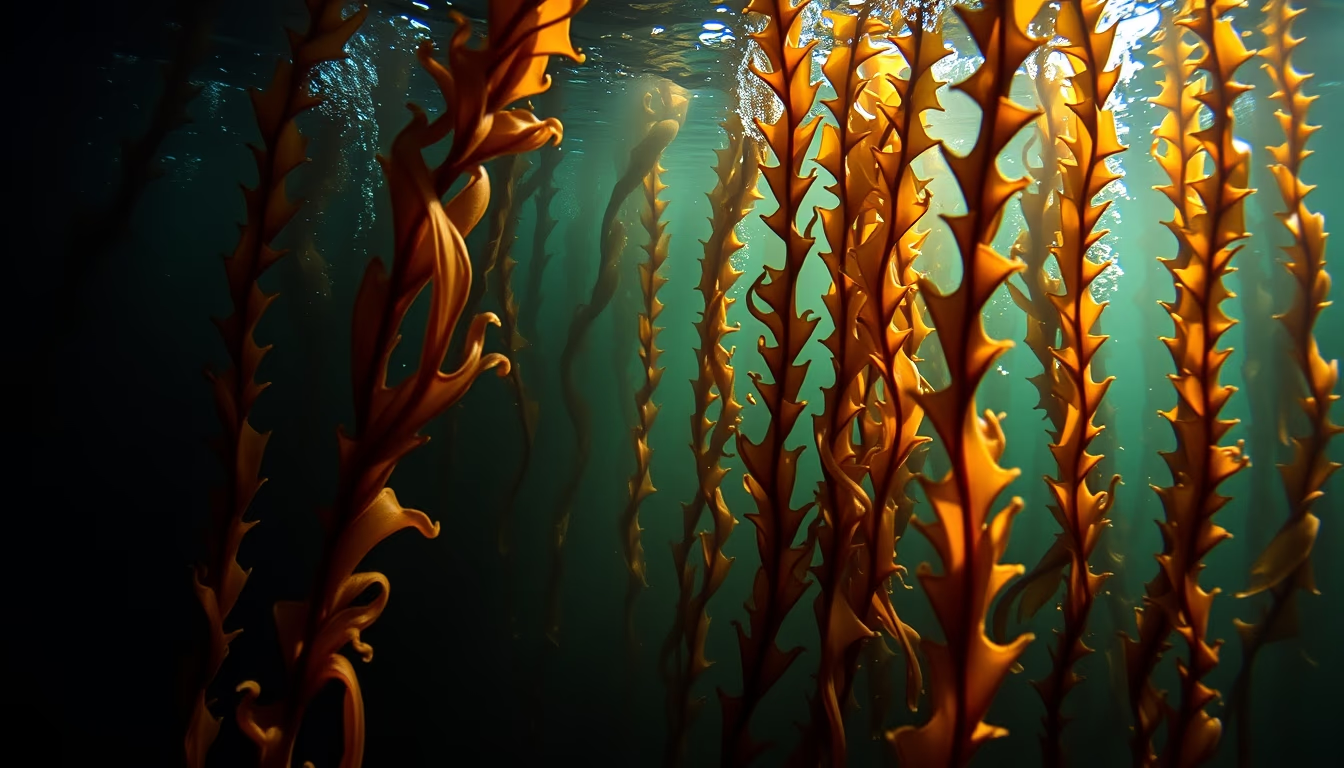
Kelp forests form dense, productive underwater ecosystems that support rich marine biodiversity in cold waters around the world.
About this subject
Kelp forests are marine ecosystems dominated by large brown algae of the order Laminariales, thriving in cold, nutrient-rich waters typically between 5 and 30 meters deep. They are found along rocky coastlines of the North Pacific (California, Alaska, Japan), the North Atlantic (Norway, Scotland), and the Southern Hemisphere (Chile, Argentina, South Africa). These giant algae can reach up to 50 meters in length, creating highly structured underwater forests that rival terrestrial forests in complexity.
Ecologically, kelp forests are vital nurseries for fish, crustaceans, and mollusks, and they provide habitat for iconic species such as sea otters, sea lions, and sea urchins. The algae absorb carbon dioxide, helping mitigate climate change, while their fronds dampen wave action and reduce coastal erosion. Economically, kelp is harvested for food, fertilizers, cosmetics, and even biofuels, with a particular focus on alginate extraction used in pharmaceuticals and food products.
Despite their resilience, kelp forests face growing threats. Global warming raises water temperatures, favoring invasive algae and causing outbreaks of sea urchins that can denude large areas. Coastal pollution and overfishing of natural predators like sea otters disrupt the ecosystem balance. Along the California coast, up to 90% of kelp forests have disappeared in some regions, a phenomenon termed “urchin barrens.” Restoration efforts, including spore seeding and sea otter reintroduction, aim to reverse this decline.
Frequently Asked Questions
What are kelp forests?
Kelp forests are underwater ecosystems dominated by giant brown macroalgae that grow in cold, shallow waters, providing habitat and food for thousands of marine species.
Where are kelp forests found?
They occur on rocky coastlines in temperate and polar regions, such as California, Chile, Norway, Japan, South Africa, and Argentina, where water is cold and nutrient-rich.
Why are kelp forests important?
They support high biodiversity, protect coastlines from erosion, sequester carbon, and have economic value for food, cosmetics, and pharmaceutical industries.
Direct URL
https://pub-c7d6a6ea828543ac903a74a341ccb2e1.r2.dev/imagens/kelp-forest-underwater-fine-art-photography-p6.avifHow to credit
Include a visible link back to UtilizAí. Copy one of the snippets below:
<a href="https://xn--utiliza-eza.com/en/midia/imagens/kelp-forest-underwater-fine-art-photography-p6">Kelp forest underwater</a> by <a href="https://xn--utiliza-eza.com">UtilizAí</a>, licensed under <a href="https://creativecommons.org/licenses/by/4.0/">CC BY 4.0</a>.
[Kelp forest underwater](https://xn--utiliza-eza.com/en/midia/imagens/kelp-forest-underwater-fine-art-photography-p6) by [UtilizAí](https://xn--utiliza-eza.com), CC BY 4.0
License: CC-BY-4.0