Kelp forest underwater
1344×768 · AVIF · CC BY 4.0
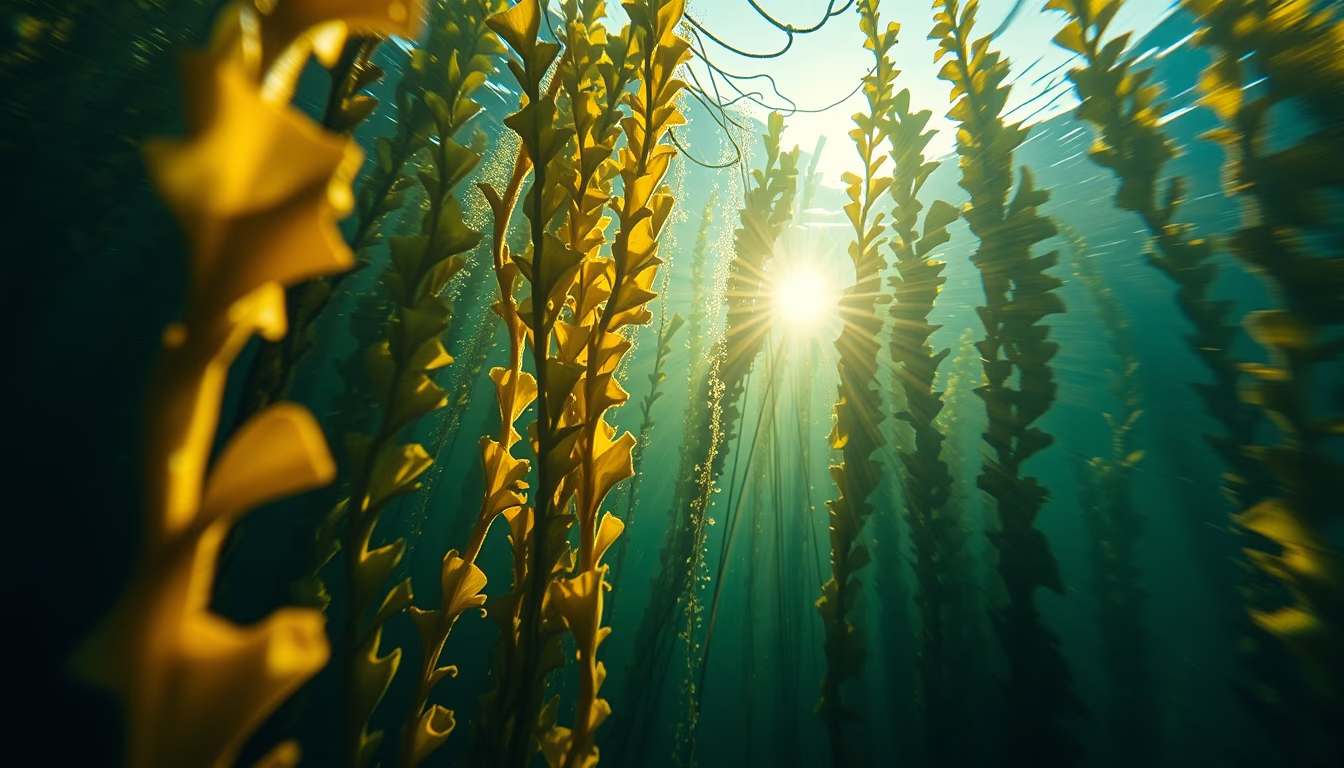
Kelp forests are underwater ecosystems formed by giant algae, vital for marine biodiversity and carbon sequestration.
About this subject
Kelp forests are dense underwater formations composed primarily of brown algae from the order Laminariales, which can grow up to 60 meters tall, creating vertical forests in the ocean. They occur in cold, nutrient-rich waters of temperate and polar regions, such as along the western coasts of the Americas from California to Chile, and off the coasts of South Africa, Japan, and New Zealand. These ecosystems are comparable to tropical rainforests in terms of productivity and diversity, hosting thousands of species of fish, invertebrates, and marine mammals, including sea otters and sea lions.
The importance of kelp forests extends beyond biodiversity: they act as carbon sinks, absorbing large amounts of CO2 from the atmosphere and helping mitigate climate change. Additionally, kelp provides habitat and food for commercial species like sea urchins and abalone. However, these forests face threats such as global warming, pollution, and overfishing. Events like El Niño can raise water temperatures and cause kelp bleaching and death, leading to temporary ecosystem collapse.
A curious fact is that kelp has no true roots; it attaches to the seafloor using structures called holdfasts, which look like roots but do not absorb nutrients. Instead, all absorption occurs through the fronds and stipe. Another interesting point is that sea otters play a crucial role in kelp forest health by controlling sea urchin populations, which feed on the algae. Without otters, urchins can devastate kelp forests, turning them into underwater deserts.
Frequently Asked Questions
Where are kelp forests found?
Kelp forests are found in cold, nutrient-rich waters of temperate and polar regions, such as the west coast of North America (California), South America (Chile), South Africa, Japan, and New Zealand.
Why are kelp forests important for the environment?
They are crucial for marine biodiversity, providing habitat for thousands of species. Additionally, they act as carbon sinks, helping to reduce atmospheric CO2 and mitigate climate change.
What are the main threats to kelp forests?
The main threats include global warming (raising water temperatures), pollution, overfishing, and ecological imbalances such as sea urchin overpopulation due to loss of natural predators like sea otters.
Direct URL
https://pub-c7d6a6ea828543ac903a74a341ccb2e1.r2.dev/imagens/kelp-forest-underwater-cinematic-wide-shot-p1.avifHow to credit
Include a visible link back to UtilizAí. Copy one of the snippets below:
<a href="https://xn--utiliza-eza.com/en/midia/imagens/kelp-forest-underwater-cinematic-wide-shot-p1">Kelp forest underwater</a> by <a href="https://xn--utiliza-eza.com">UtilizAí</a>, licensed under <a href="https://creativecommons.org/licenses/by/4.0/">CC BY 4.0</a>.
[Kelp forest underwater](https://xn--utiliza-eza.com/en/midia/imagens/kelp-forest-underwater-cinematic-wide-shot-p1) by [UtilizAí](https://xn--utiliza-eza.com), CC BY 4.0
License: CC-BY-4.0