Kabuki stage japanese
1344×768 · AVIF · CC BY 4.0
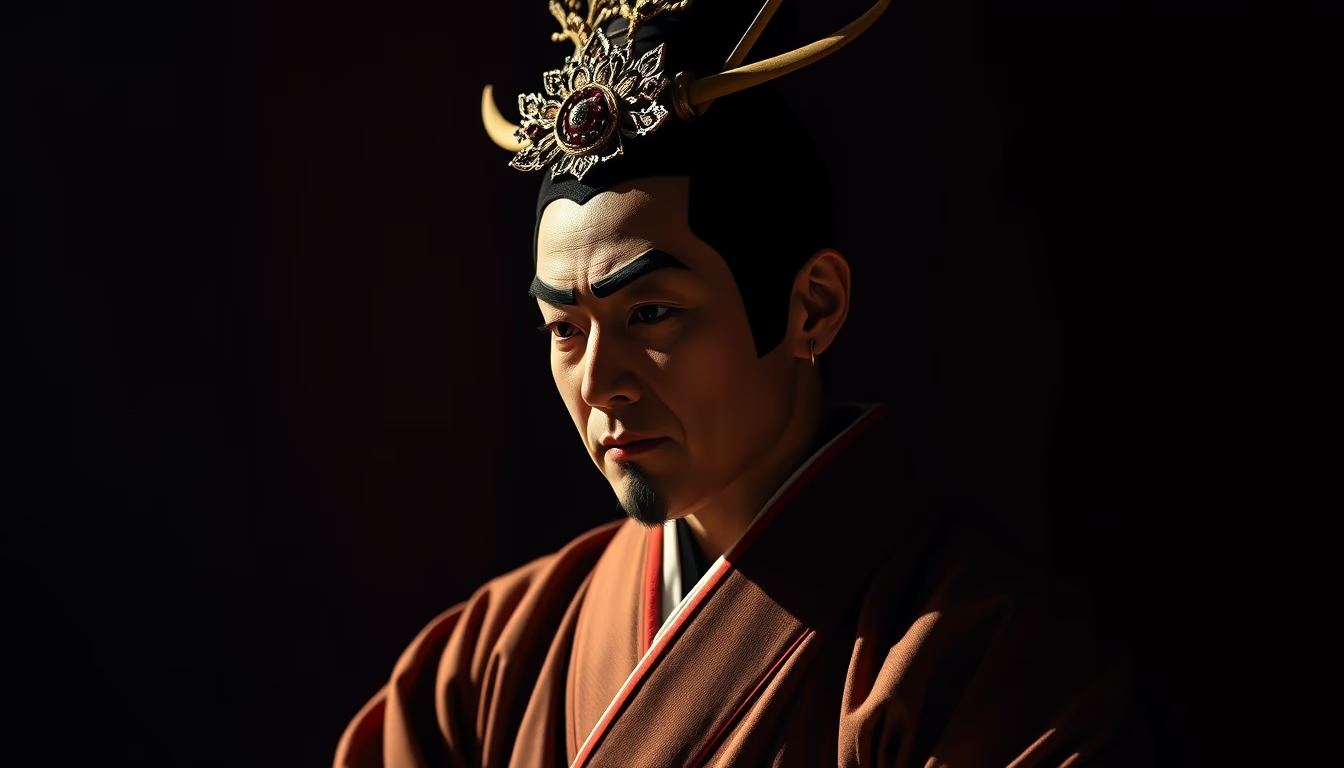
The Japanese kabuki stage is a traditional theater form combining drama, music and dance, known for its elaborate historical plots and expressive choreography.
About this subject
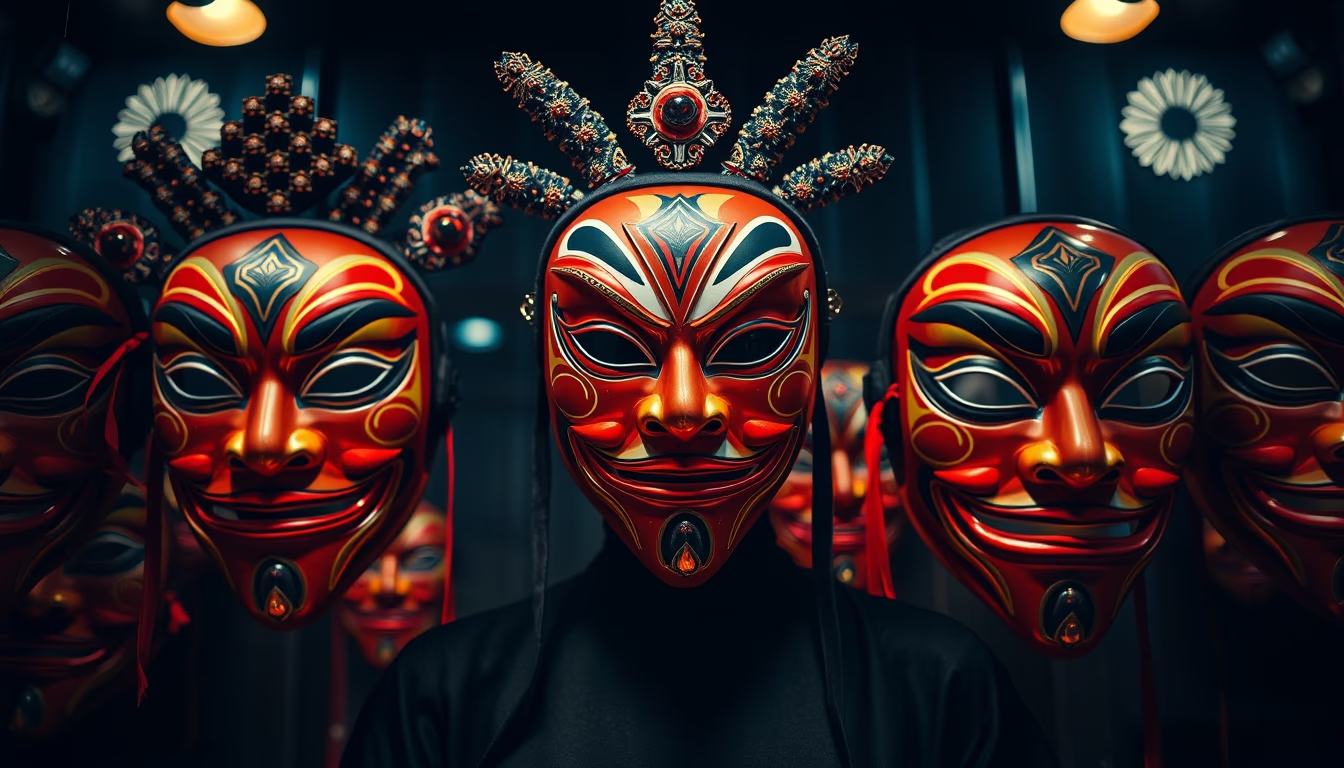
Kabuki originated in the early Edo period, around 1603, when Izumo no Okuni began performances in Kyoto. Initially, women played all roles, but after 1629, the government banned female participation, leading to male actors specializing in female roles, the onnagata. The kabuki stage features unique elements: the hanamichi, a walkway through the audience, and the mawari-butai, a revolving stage enabling quick scene changes. Dramatic lighting, with strong contrasts between light and shadow, enhances actors' expressiveness and the mood of the plays.
In Brazil, kabuki has influenced theater groups and is studied in universities, especially in performing arts. Kabuki performances occur at Japanese culture festivals, such as Festa do Japão in São Paulo and Festival do Japão in Curitiba. Kabuki's aesthetics, with vibrant colors and stylized movements, have inspired Brazilian artists in revue theater and carnival. The kabuki makeup technique, using white powder and colored lines, is recognized worldwide.
An interesting fact is that kabuki was declared an Intangible Cultural Heritage by UNESCO in 2005, highlighting its global importance. The acting style known as mie involves frozen poses and intense facial expressions marking climactic moments. Plays often explore themes of loyalty, honor, and revenge, blending comedic and tragic elements. Traditional music, played with shamisen, flutes, and drums, accompanies the stage action.
Frequently Asked Questions
What does the word kabuki mean?
The word kabuki derives from the Japanese verb kabuku, meaning to lean or be out of the ordinary, reflecting the bold and innovative style of the theater.
Where did kabuki originate?
Kabuki was created in 1603 by Izumo no Okuni, a Shinto priestess, as dance and song performances in Kyoto, later evolving into a full dramatic theater form.
How has kabuki influenced Brazilian theater?
Kabuki has inspired Brazilian theater groups in exploring makeup, stylized movements, and dramatic lighting, and is also studied in academic performing arts programs.
Direct URL
https://pub-c7d6a6ea828543ac903a74a341ccb2e1.r2.dev/imagens/kabuki-stage-japanese-rembrandt-lighting-dramatic-shadows-fresh2.avifHow to credit
Include a visible link back to UtilizAí. Copy one of the snippets below:
<a href="https://xn--utiliza-eza.com/en/midia/imagens/kabuki-stage-japanese-rembrandt-lighting-dramatic-shadows-fresh2">Kabuki stage japanese</a> by <a href="https://xn--utiliza-eza.com">UtilizAí</a>, licensed under <a href="https://creativecommons.org/licenses/by/4.0/">CC BY 4.0</a>.
[Kabuki stage japanese](https://xn--utiliza-eza.com/en/midia/imagens/kabuki-stage-japanese-rembrandt-lighting-dramatic-shadows-fresh2) by [UtilizAí](https://xn--utiliza-eza.com), CC BY 4.0
License: CC-BY-4.0