Kabuki stage japanese
1344×768 · AVIF · CC BY 4.0
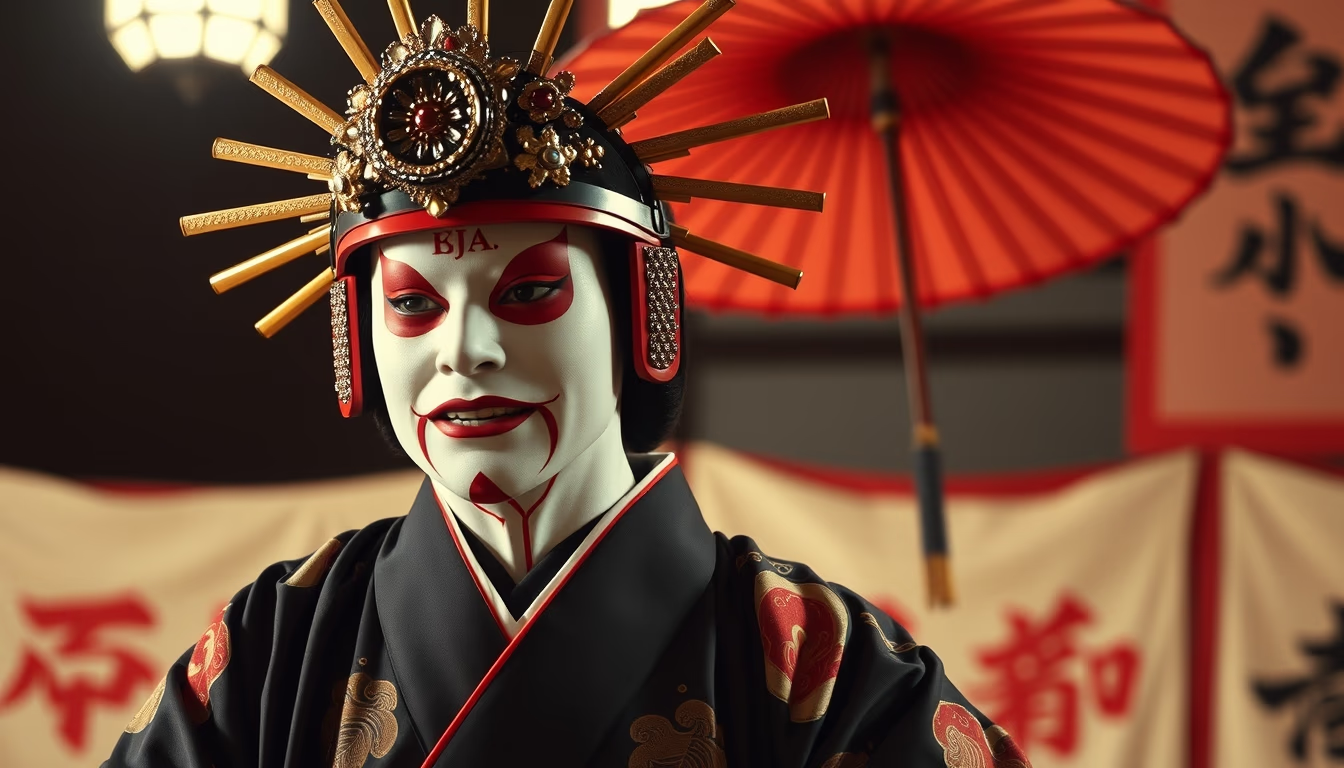
The Kabuki stage is a central element of traditional Japanese theater, with unique architectural features that facilitate dramatic staging and audience interaction.
About this subject
Kabuki is a form of Japanese theater that originated in the early Edo period, around 1603, when Izumo no Okuni, a Shinto priestess, began performing dramatic dances in dry riverbeds in Kyoto. The Kabuki stage is designed to maximize visual and emotional impact. Its most distinctive feature is the hanamichi, a walkway extending from the side of the stage through the audience, allowing actors to make spectacular entrances and exits. Additionally, the main stage has a rotating mechanism (mawari-butai) for quick scene changes and trapdoors (seri) for surprising appearances and disappearances. The stage ceiling is low and richly decorated, creating a sense of intimacy and grandeur. Kabuki was recognized by UNESCO as an Intangible Cultural Heritage of Humanity in 2005, highlighting its historical and artistic importance. Although women were banned from performing in 1629 due to moral concerns, Kabuki thrived with male actors specializing in female roles (onnagata), a tradition that continues today. The most famous Kabuki theaters are in Tokyo (Kabukiza), Kyoto (Minamiza), and Osaka (Shin-Kabukiza), attracting local audiences and tourists from around the world.
Frequently Asked Questions
What is the hanamichi in Kabuki theater?
The hanamichi is a walkway extending from the stage through the audience, used for dramatic entrances and exits, bringing actors closer to the spectators.
Why were women banned from performing Kabuki?
In 1629, the Tokugawa government banned women from Kabuki due to moral concerns, particularly prostitution associated with actresses. Since then, male actors (onnagata) have specialized in female roles.
Is Kabuki recognized as a cultural heritage?
Yes, in 2005 UNESCO declared Kabuki an Intangible Cultural Heritage of Humanity, acknowledging its importance as a traditional Japanese art form.
Direct URL
https://pub-c7d6a6ea828543ac903a74a341ccb2e1.r2.dev/imagens/kabuki-stage-japanese-lo-fi-disposable-camera-fresh16.avifHow to credit
Include a visible link back to UtilizAí. Copy one of the snippets below:
<a href="https://xn--utiliza-eza.com/en/midia/imagens/kabuki-stage-japanese-lo-fi-disposable-camera-fresh16">Kabuki stage japanese</a> by <a href="https://xn--utiliza-eza.com">UtilizAí</a>, licensed under <a href="https://creativecommons.org/licenses/by/4.0/">CC BY 4.0</a>.
[Kabuki stage japanese](https://xn--utiliza-eza.com/en/midia/imagens/kabuki-stage-japanese-lo-fi-disposable-camera-fresh16) by [UtilizAí](https://xn--utiliza-eza.com), CC BY 4.0
License: CC-BY-4.0