Kabuki stage japanese
1344×768 · AVIF · CC BY 4.0
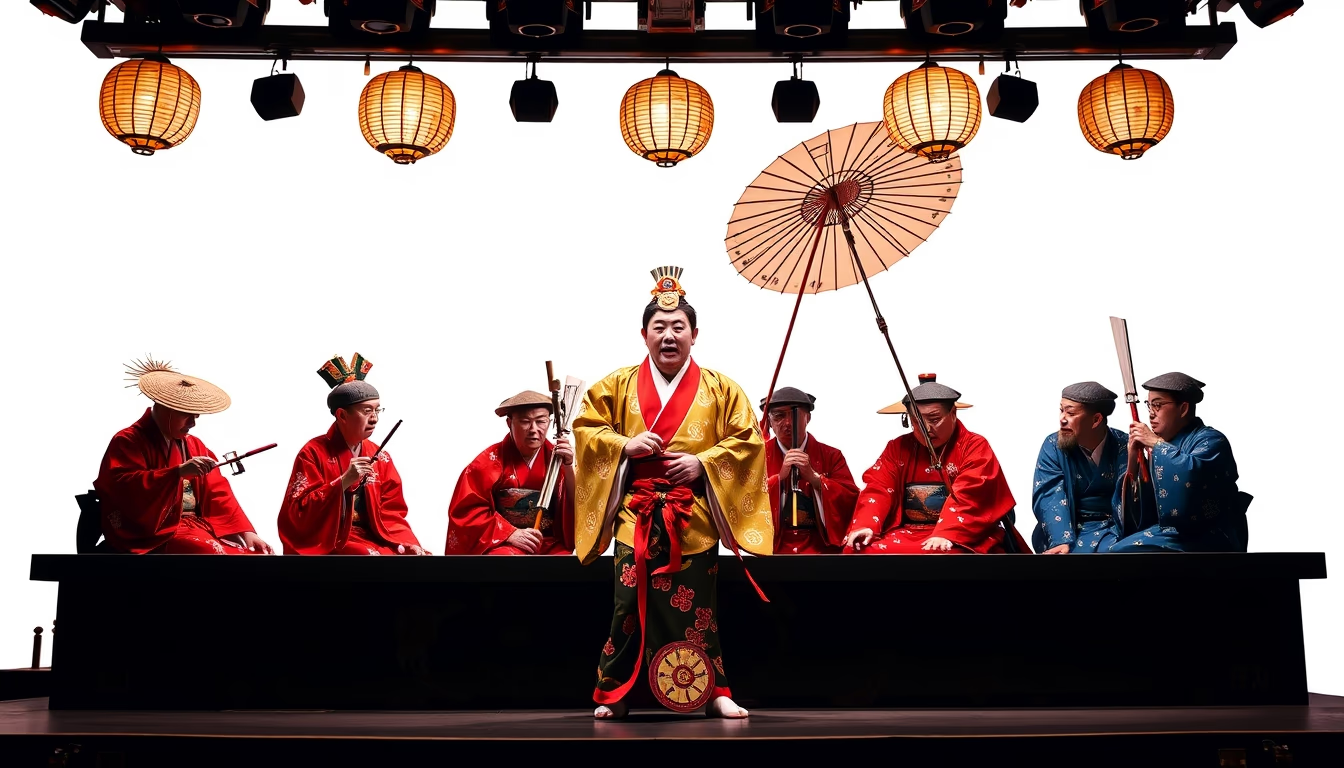
Kabuki, a Japanese theatrical tradition over 400 years old, blends drama, dance, and music in elaborate performances on rotating stages.
About this subject
Kabuki is a form of Japanese theater that emerged in the early Edo period, around 1603. It was created by Izumo no Okuni, a Shinto priestess, who began performing in dry riverbeds in Kyoto. Initially, kabuki involved dances and comedic skits, but it quickly evolved into an elaborate theatrical form with historical plots and domestic dramas. The term “kabuki” derives from “kabuku”, meaning “to lean” or “to be out of the ordinary”, reflecting the extravagant and innovative style of this theater.
The kabuki stage is an architectural masterpiece. It features a main stage (honbutai) with a revolving stage (mawari-butai) used for rapid scene changes, along with a runway (hanamichi) that extends into the audience, allowing actors to enter and exit dramatically. The scenery is meticulously designed, with perspective paintings and detailed props to create immersive worlds. Candle lighting, later replaced by electric lamps, highlights the actors' expressions and vibrant kimonos.
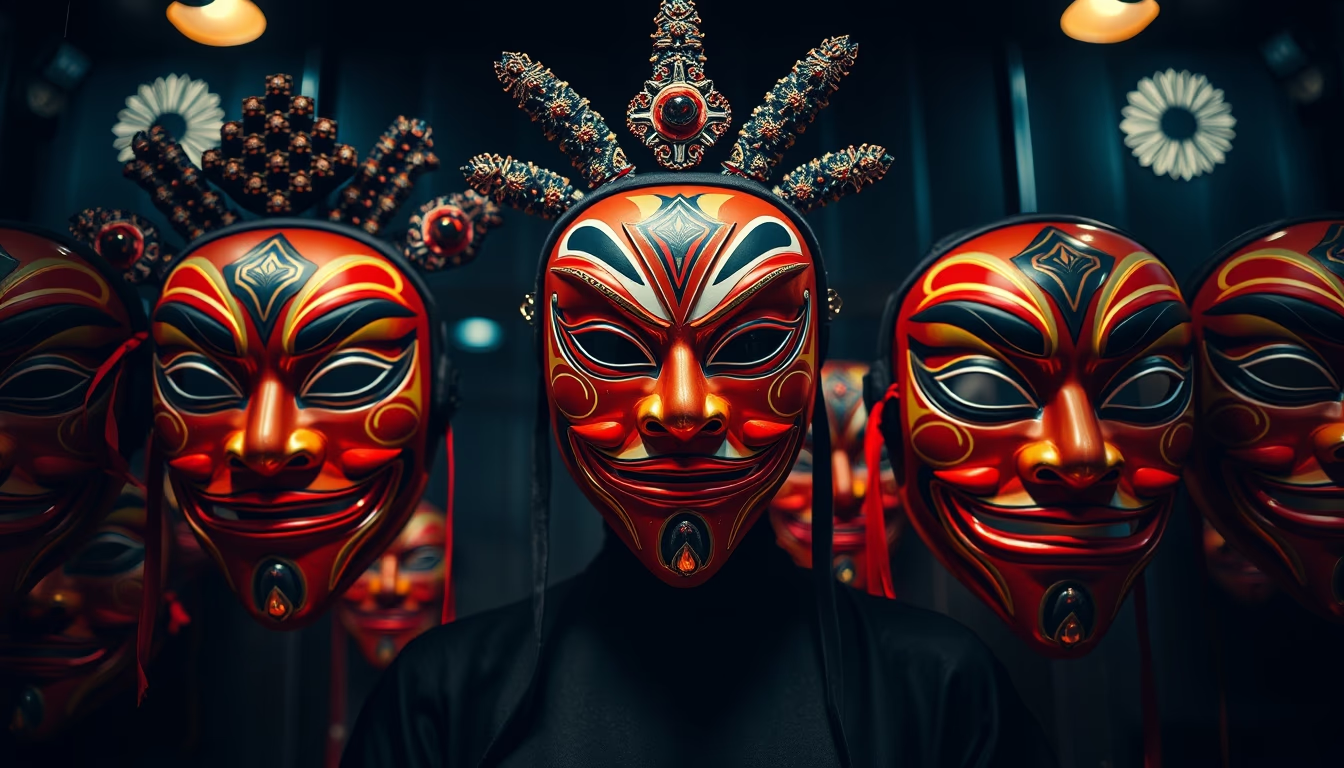
Kabuki actors are exclusively male, specializing in female roles (onnagata) and male roles (tachiyaku). They use elaborate makeup (kumadori) with colors that indicate the character's nature: red for heroes, blue for villains. Performances combine stylized recitation, dance, and exaggerated movements, accompanied by traditional music played on shamisen, drums, and flutes. Kabuki was declared a UNESCO Intangible Cultural Heritage in 2008, recognizing its global cultural significance.
Interestingly, kabuki has influenced other art forms, such as film and Western theater. Directors like Akira Kurosawa incorporated kabuki elements into their films. In Japan, theaters like Kabukiza in Tokyo continue to stage classical plays and new productions, attracting both tourists and locals. The repertoire includes plays like “Kanjincho” and “Sugawara Denju Tenarai Kagami”, performed with the same historical fidelity for centuries.
Frequently Asked Questions
What does the colorful makeup in kabuki mean?
Kabuki makeup, called kumadori, uses symbolic colors. Red indicates courage and heroism, blue represents villainy or fear, and brown or black are used for supernatural characters. Each color and pattern helps the audience quickly identify the character's nature.
Why is kabuki performed only by men?
Historically, women were banned from performing kabuki in 1629 due to moral concerns. Since then, men specializing in female roles, known as onnagata, have taken over these parts, developing a highly stylized portrayal of femininity.
Where can I watch a kabuki performance in Japan?
The main theater is Kabukiza in Tokyo, which offers regular performances. Other theaters include Minamiza in Kyoto and Shochikuza in Osaka. Many provide English subtitles and earphone guides with explanations for tourists.
Direct URL
https://pub-c7d6a6ea828543ac903a74a341ccb2e1.r2.dev/imagens/kabuki-stage-japanese-commercial-product-photography-fresh11.avifHow to credit
Include a visible link back to UtilizAí. Copy one of the snippets below:
<a href="https://xn--utiliza-eza.com/en/midia/imagens/kabuki-stage-japanese-commercial-product-photography-fresh11">Kabuki stage japanese</a> by <a href="https://xn--utiliza-eza.com">UtilizAí</a>, licensed under <a href="https://creativecommons.org/licenses/by/4.0/">CC BY 4.0</a>.
[Kabuki stage japanese](https://xn--utiliza-eza.com/en/midia/imagens/kabuki-stage-japanese-commercial-product-photography-fresh11) by [UtilizAí](https://xn--utiliza-eza.com), CC BY 4.0
License: CC-BY-4.0