Jewelry making bench
1344×768 · AVIF · CC BY 4.0
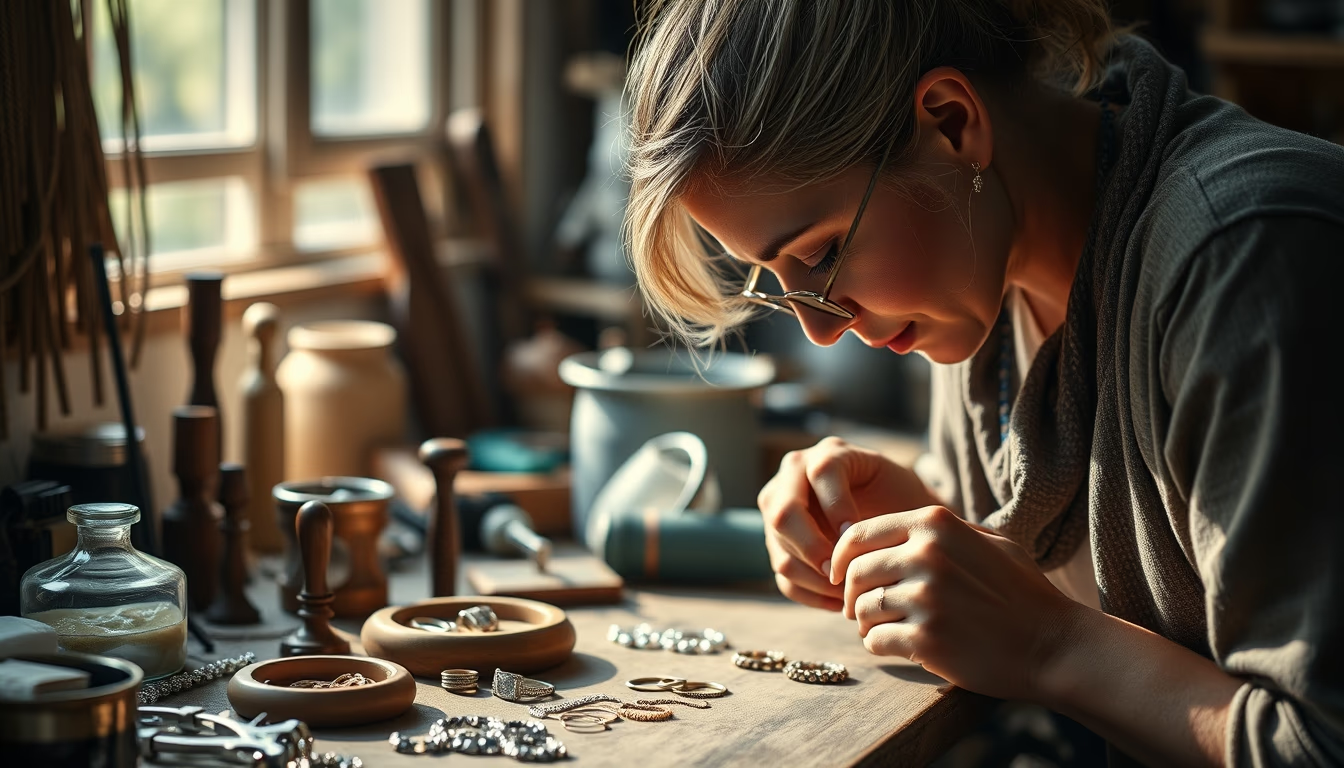
The jewelry making bench is the heart of handcrafted jewelry production, combining centuries-old tools with modern techniques.
About this subject
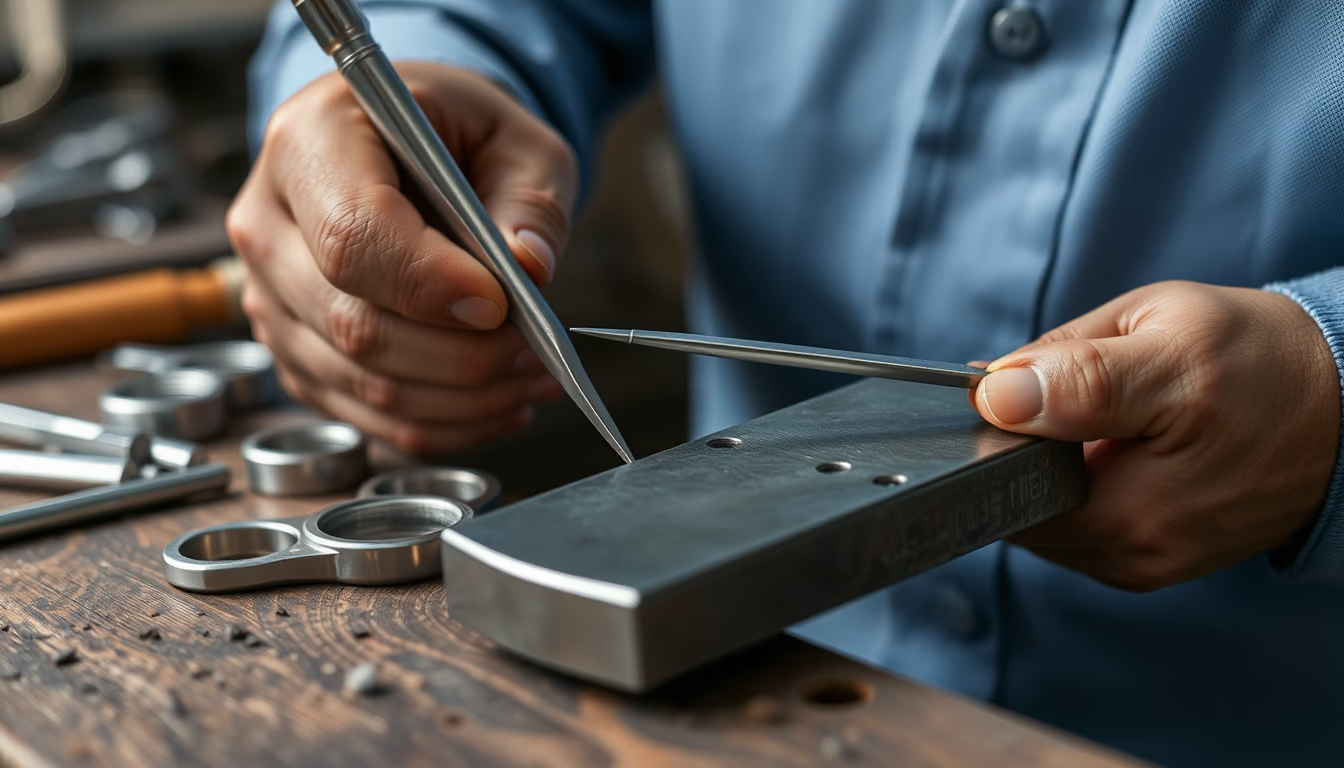
The jewelry making bench is a specialized workstation designed to support the intricate work of jewelry creation. Traditionally made of solid wood, often oak or walnut, the bench has a surface resistant to impacts and chemicals. Its design includes drawers and compartments to organize tools like files, pliers, hammers, and tweezers, plus a central hole or bracket for the "bench pin" (a wooden post where the piece is fixed). The bench height is adjusted so the jeweler can sit with eyes close to the object, ensuring precision.
The history of the jewelry bench dates back to antiquity, but the modern model was refined during the Renaissance, when goldsmiths like Benvenuto Cellini documented their work setups. In Brazil, the jewelry tradition was brought by Portuguese colonizers and adapted with Indigenous and African influences, resulting in unique styles like Baiana and Mineira jewelry. Goldsmith benches are still common in artisan workshops, especially in regions like Minas Gerais and São Paulo, where gold-plated or silver jewelry production is strong.
Specific tools such as the torch, the jeweler's loupe (magnifying lens), and the rolling mill are often mounted on the bench. Ergonomics is crucial: an ideal bench reduces fatigue and repetitive strain injuries common in the trade. Today, modern benches incorporate LED lighting, soldering exhaust, and even supports for digital microscopes, but the principle remains the same since medieval times. A curious detail is that many jewelers embed an old coin in the bench as a good luck charm, a tradition inherited from European goldsmiths.
Frequently Asked Questions
What are the main tools on a jewelry making bench?
A typical bench holds files, pliers, tweezers, hammers, jeweler's saws, a torch, a rolling mill, and a jeweler's loupe. It also has supports for the bench pin and materials like sandpaper, polishing compounds, and solders.
Why are jewelry benches made of solid wood?
Solid wood absorbs impacts and vibrations without damaging tools or pieces, and it resists chemicals like acids used in pickling. Wood also does not conduct excessive heat during soldering.
What is the ideal height for a jewelry bench?
The height should allow the jeweler to sit with eyes about 30-40 cm from the piece, typically between 90-100 cm. Many workshops use adjustable stools to compensate for the worker's height.
Direct URL
https://pub-c7d6a6ea828543ac903a74a341ccb2e1.r2.dev/imagens/jewelry-making-bench-documentary-photography-p1.avifHow to credit
Include a visible link back to UtilizAí. Copy one of the snippets below:
<a href="https://xn--utiliza-eza.com/en/midia/imagens/jewelry-making-bench-documentary-photography-p1">Jewelry making bench</a> by <a href="https://xn--utiliza-eza.com">UtilizAí</a>, licensed under <a href="https://creativecommons.org/licenses/by/4.0/">CC BY 4.0</a>.
[Jewelry making bench](https://xn--utiliza-eza.com/en/midia/imagens/jewelry-making-bench-documentary-photography-p1) by [UtilizAí](https://xn--utiliza-eza.com), CC BY 4.0
License: CC-BY-4.0