Jellyfish translucent dark water
1344×768 · AVIF · CC BY 4.0
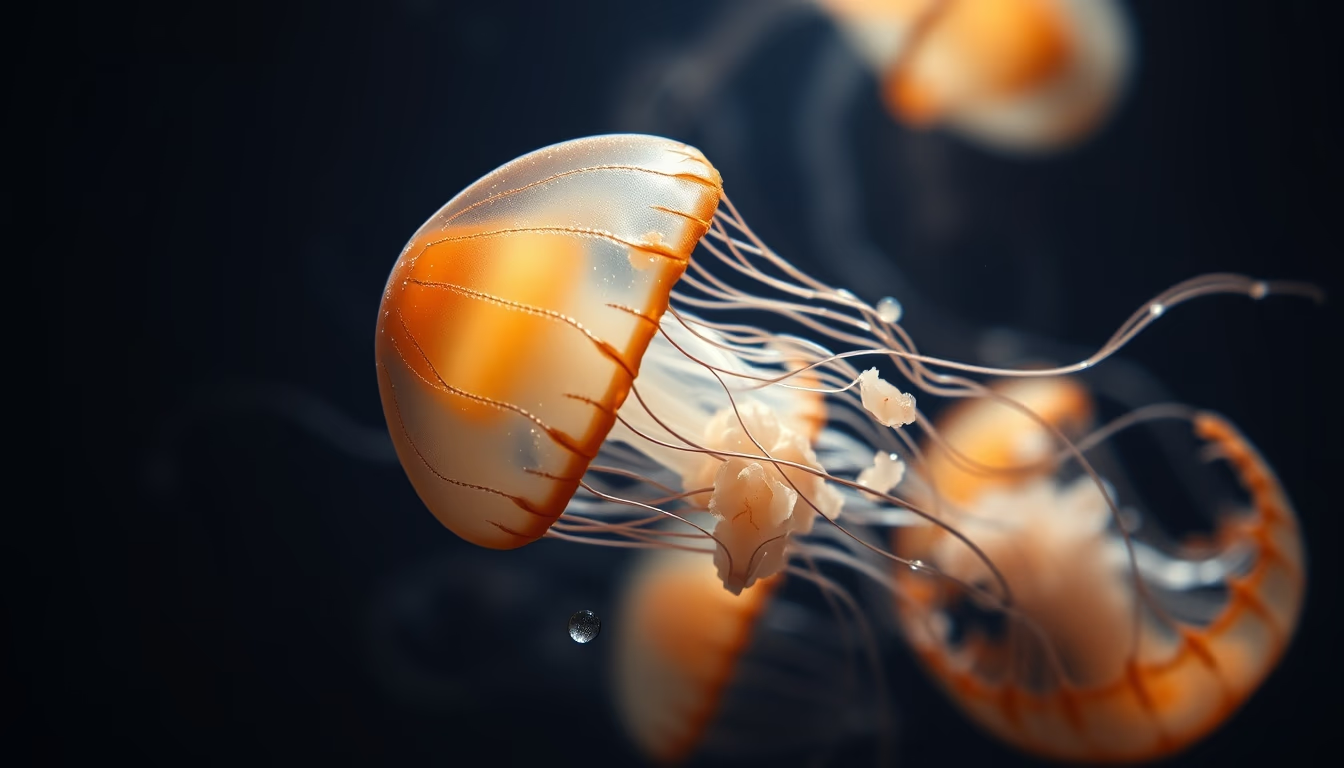
Jellyfish are ancient marine creatures that thrive in dark, deep habitats, exhibiting bioluminescence and unique adaptations.
About this subject
Jellyfish belong to the phylum Cnidaria and have existed for at least 500 million years, predating dinosaurs. They are composed of about 95% water, lack a brain, heart, or bones, but possess a nerve net that detects environmental stimuli. In dark, deep waters, many species have evolved bioluminescence: the ability to produce their own light through a chemical reaction between luciferin and luciferase. This glow can serve to attract prey, confuse predators, or communicate. The species Turritopsis dohrnii, known as the immortal jellyfish, can reverse its life cycle, returning to the polyp stage after reaching maturity, making it biologically immortal. In regions like the Sargasso Sea and the Gulf of Mexico, large jellyfish aggregations form blooms that can span kilometers, impacting fisheries and tourism. These events are becoming more frequent due to global warming and pollution, which favor jellyfish growth. Despite their fragile appearance, jellyfish are efficient predators: their tentacles contain nematocysts, stinging cells that paralyze small fish and crustaceans. Recent studies indicate that some species can survive in anoxic conditions for weeks, suggesting they may occupy extreme niches in a changing ocean.
Frequently Asked Questions
Why do jellyfish glow in the dark?
Bioluminescence is an evolutionary adaptation that helps attract prey, defend against predators, and communicate within species. The light is produced by oxidation of luciferin catalyzed by luciferase.
Can jellyfish live at any depth?
No, distribution varies by species. Some live at the surface, others in mesopelagic zones (200-1000 m) or abyssal depths. Species like Periphylla periphylla inhabit deep, dark waters throughout their life cycle.
What is the ecological importance of jellyfish?
They are key components of marine food webs, acting as predators of zooplankton and prey for turtles, ocean sunfish, and some crustaceans. In large blooms, they can alter nutrient flow and compete with commercial fish species.
Direct URL
https://pub-c7d6a6ea828543ac903a74a341ccb2e1.r2.dev/imagens/jellyfish-translucent-dark-water-national-geographic-style-p0.avifHow to credit
Include a visible link back to UtilizAí. Copy one of the snippets below:
<a href="https://xn--utiliza-eza.com/en/midia/imagens/jellyfish-translucent-dark-water-national-geographic-style-p0">Jellyfish translucent dark water</a> by <a href="https://xn--utiliza-eza.com">UtilizAí</a>, licensed under <a href="https://creativecommons.org/licenses/by/4.0/">CC BY 4.0</a>.
[Jellyfish translucent dark water](https://xn--utiliza-eza.com/en/midia/imagens/jellyfish-translucent-dark-water-national-geographic-style-p0) by [UtilizAí](https://xn--utiliza-eza.com), CC BY 4.0
License: CC-BY-4.0