Jellyfish translucent dark water
1344×768 · AVIF · CC BY 4.0
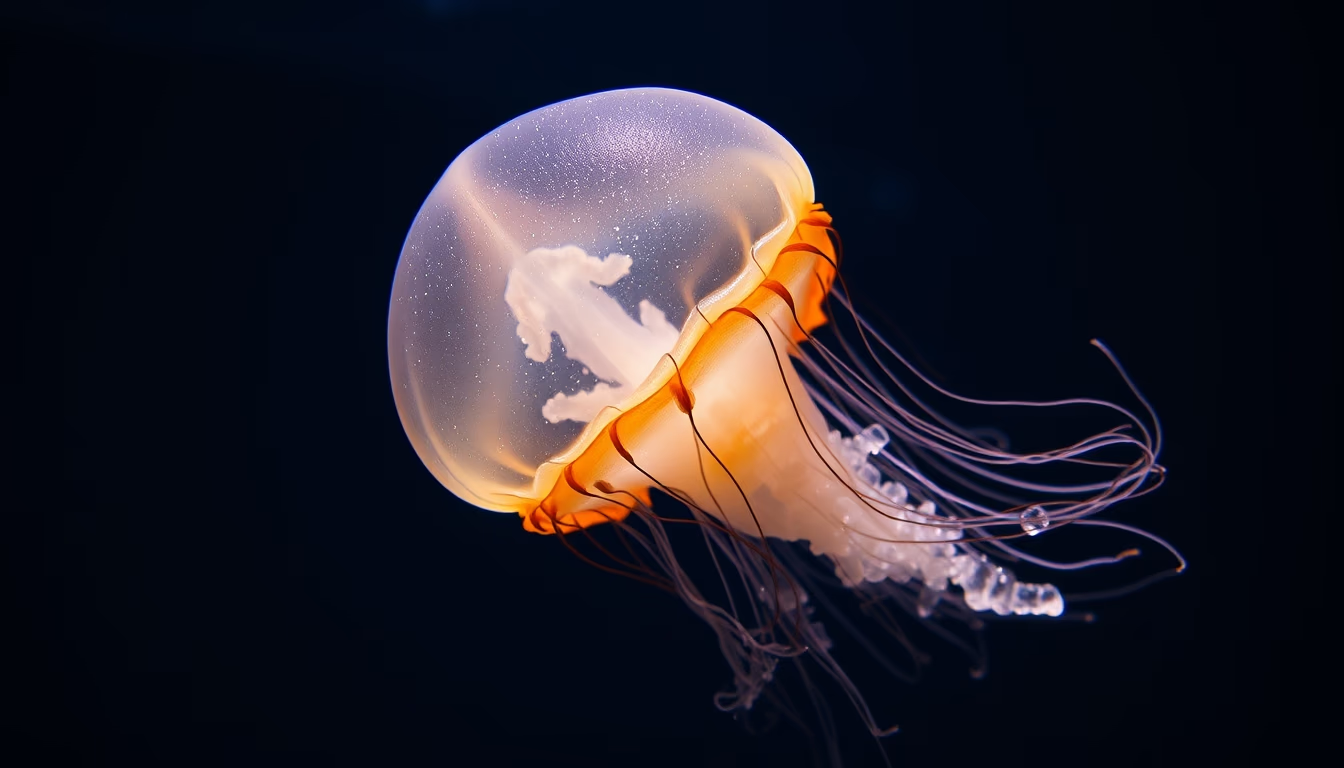
Translucent jellyfish inhabit dark, deep waters, using their transparency as camouflage and, in some species, bioluminescence to communicate.
About this subject
Jellyfish, or sea jellies, are cnidarians that have existed for over 500 million years, predating dinosaurs. Their transparency is a key evolutionary adaptation for survival in dark, deep waters where sunlight does not reach. Lacking pigmentation, they become virtually invisible to predators like sea turtles and ocean sunfish. This trait also makes it harder for prey such as zooplankton and small crustaceans to detect them before being captured by tentacles armed with cnidocytes, stinging cells that paralyze victims.
Many jellyfish species are capable of bioluminescence, a chemical process that produces cold light. In abyssal environments, this light is used to attract mates, confuse predators, or lure prey. The Pelagia noctiluca, common in the Atlantic Ocean, emits bright flashes when disturbed. The Aequorea victoria from the North Pacific produces the GFP (Green Fluorescent Protein), which revolutionized molecular biology as a fluorescent marker in research, a discovery that won the Nobel Prize in Chemistry in 2008.
Translucent jellyfish are distributed globally, from the surface to the hadal zone, deeper than 6,000 meters. With ocean warming and pollution, some species are expanding their range, forming massive blooms. The Sea of Japan and the Gulf of Mexico frequently experience huge aggregations that damage fisheries and clog cooling systems of coastal power plants. Despite this, jellyfish serve as important indicators of marine health and are sources of bioactive compounds for medicine, such as collagen and toxins with anti-cancer potential.
Interestingly, biological immortality exists among these animals: the Turritopsis dohrnii, known as the 'immortal jellyfish', can reverse its life cycle back to the polyp stage when stressed. This process, called transdifferentiation, allows it to avoid death, making it a fascinating model for research on aging and cellular regeneration in humans.
Frequently Asked Questions
How many species of translucent jellyfish exist?
There are about 200 described species of true jellyfish (Scyphozoa), but many more are poorly known. Most have some degree of transparency, adapted to different depths.
Why do some jellyfish glow in the dark?
Bioluminescence in jellyfish is produced by a protein called aequorin, which emits blue light when reacting with calcium ions. This glow helps attract prey, confuse predators, or communicate during reproduction.
Do all translucent jellyfish sting?
Not all jellyfish sting. The ability to cause stings depends on the species and the potency of their cnidocytes. Some, like Aequorea victoria, are harmless to humans, while others, like Pelagia noctiluca, cause intense pain.
Direct URL
https://pub-c7d6a6ea828543ac903a74a341ccb2e1.r2.dev/imagens/jellyfish-translucent-dark-water-lo-fi-disposable-camera-p4.avifHow to credit
Include a visible link back to UtilizAí. Copy one of the snippets below:
<a href="https://xn--utiliza-eza.com/en/midia/imagens/jellyfish-translucent-dark-water-lo-fi-disposable-camera-p4">Jellyfish translucent dark water</a> by <a href="https://xn--utiliza-eza.com">UtilizAí</a>, licensed under <a href="https://creativecommons.org/licenses/by/4.0/">CC BY 4.0</a>.
[Jellyfish translucent dark water](https://xn--utiliza-eza.com/en/midia/imagens/jellyfish-translucent-dark-water-lo-fi-disposable-camera-p4) by [UtilizAí](https://xn--utiliza-eza.com), CC BY 4.0
License: CC-BY-4.0