Jellyfish translucent dark water
1344×768 · AVIF · CC BY 4.0
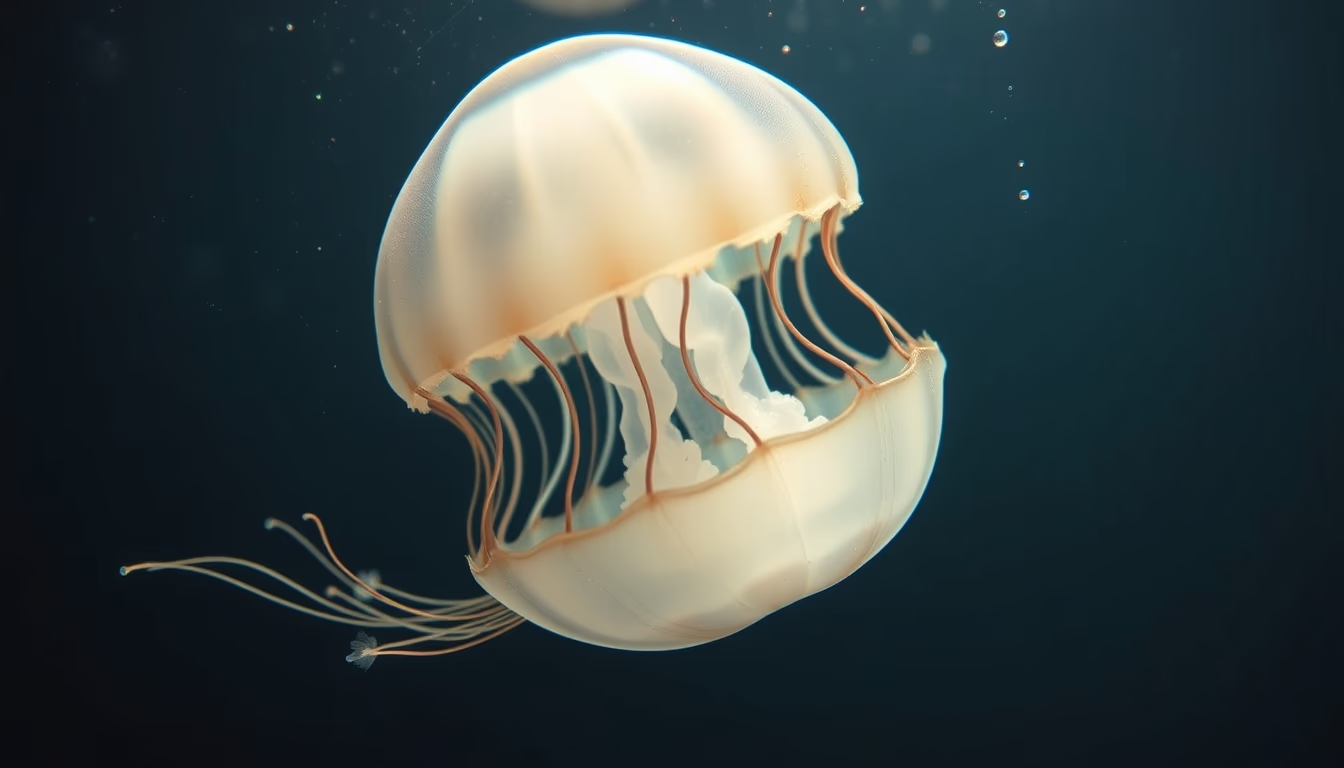
Translucent jellyfish in dark waters are fascinating marine organisms with a complex life cycle and a crucial ecological role in the oceans.
About this subject
Jellyfish, also known as sea jellies, belong to the phylum Cnidaria and inhabit all the world's oceans, from the surface to the abyssal depths. Their most striking feature is transparency, which makes them nearly invisible in dark waters. This evolutionary adaptation helps them avoid predators and ambush prey, such as small crustaceans and fish.
A jellyfish's body is composed of about 95% water. It has a gelatinous bell-shaped structure with tentacles containing cnidocytes, stinging cells that release toxins to capture food and defend itself. Species like Pelagia noctiluca are bioluminescent, emitting light when disturbed, a phenomenon common in dark water regions.
The life cycle of jellyfish alternates between the benthic polyp stage and the planktonic medusa stage. Under adverse conditions, such as food scarcity or temperature changes, some species can revert to the polyp stage, a survival mechanism that makes them resilient. This process is studied by marine biologists to understand jellyfish blooms, which can impact fisheries and tourism.
Jellyfish are important indicators of ocean health. Increases in their populations in certain areas are linked to overfishing of their natural predators (such as sea turtles) and eutrophication of waters. Despite their fragile appearance, these animals have existed for over 500 million years, making them one of the oldest groups of multicellular organisms.
Frequently Asked Questions
Why are jellyfish transparent?
Transparency is an adaptation that helps jellyfish avoid predators and ambush prey in dark waters. Since they are mostly water, light passes through them without being reflected, making them nearly invisible.
What is the ecological role of jellyfish in the oceans?
Jellyfish act as predators of zooplankton and small fish, and serve as food for sea turtles, ocean sunfish, and some crustaceans. They are also indicators of environmental imbalances, such as overfishing and eutrophication.
Can jellyfish revert to the polyp stage?
Yes, some species, like Turritopsis dohrnii (the immortal jellyfish), can revert from the medusa stage to the polyp stage when stressed, allowing them to restart the life cycle and escape death.
Direct URL
https://pub-c7d6a6ea828543ac903a74a341ccb2e1.r2.dev/imagens/jellyfish-translucent-dark-water-documentary-photography-p5.avifHow to credit
Include a visible link back to UtilizAí. Copy one of the snippets below:
<a href="https://xn--utiliza-eza.com/en/midia/imagens/jellyfish-translucent-dark-water-documentary-photography-p5">Jellyfish translucent dark water</a> by <a href="https://xn--utiliza-eza.com">UtilizAí</a>, licensed under <a href="https://creativecommons.org/licenses/by/4.0/">CC BY 4.0</a>.
[Jellyfish translucent dark water](https://xn--utiliza-eza.com/en/midia/imagens/jellyfish-translucent-dark-water-documentary-photography-p5) by [UtilizAí](https://xn--utiliza-eza.com), CC BY 4.0
License: CC-BY-4.0