Jellyfish translucent dark water
1344×768 · AVIF · CC BY 4.0
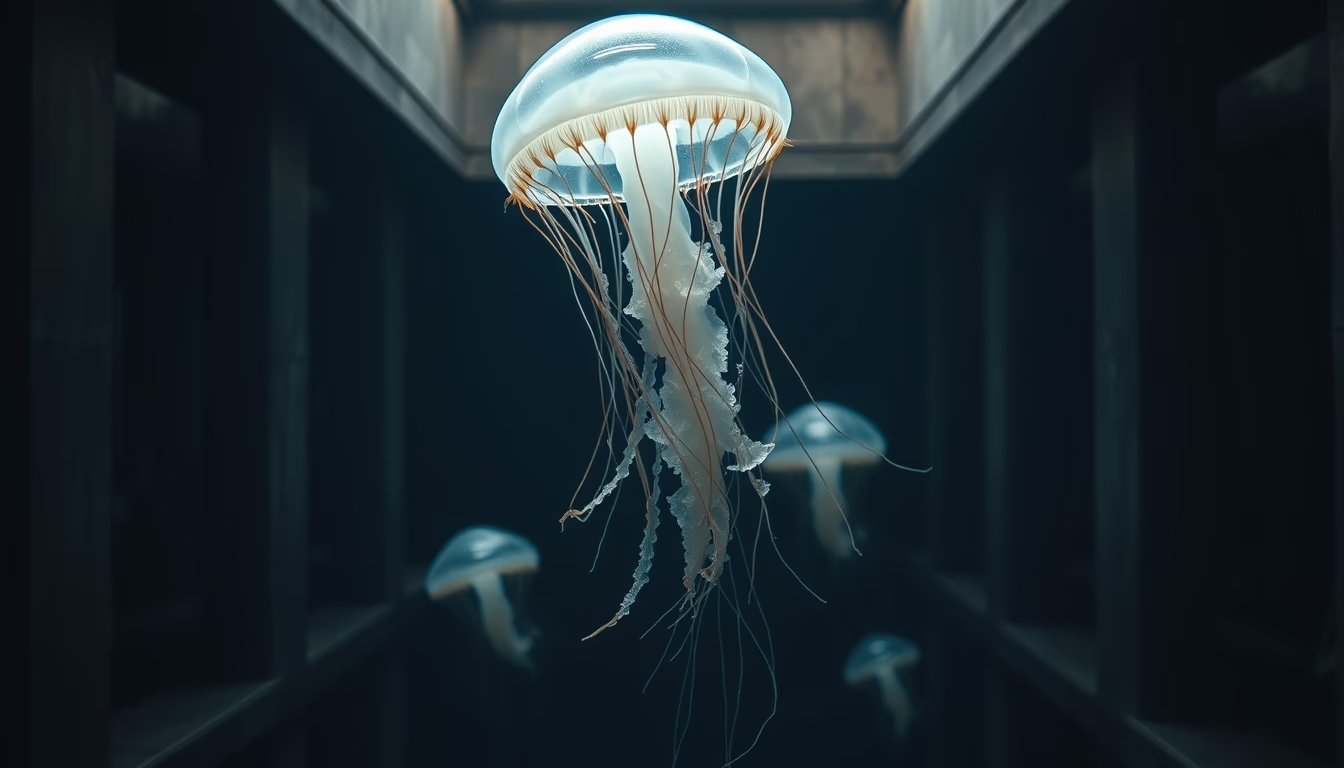
Explore the biology of jellyfish: translucent marine creatures inhabiting dark ocean depths, with a fascinating life cycle.
About this subject
Jellyfish, also known as sea jellies, are gelatinous cnidarians that consist of about 95% water. They belong to the phylum Cnidaria and have existed for over 500 million years, making them one of the oldest animal groups on Earth. They lack a brain, heart, or complex respiratory system; their body is composed of a double layer of cells with a jelly-like substance called mesoglea in between. Most species are found in marine waters, from the surface to great depths.
Many jellyfish inhabit the mesopelagic zone, between 200 and 1000 meters deep, where sunlight does not reach. To survive in this dark environment, various species have developed bioluminescence: they emit light through chemical reactions involving the protein aequorin. This glow can serve to attract prey, confuse predators, or communicate. Examples include Pelagia noctiluca, known as the luminous jellyfish.
The life cycle of jellyfish is complex and alternates between a sessile polyp stage and a free-swimming medusa stage. The polyp reproduces asexually by budding, producing small medusae called ephyrae. These grow into adults, which reproduce sexually by releasing gametes into the water. One remarkable species is Turritopsis dohrnii, nicknamed the "immortal jellyfish", as it can reverse its life cycle from medusa back to polyp, potentially living indefinitely.
Jellyfish play crucial ecological roles as predators of plankton and as prey for sea turtles and some fish. Some species, like Chironex fleckeri (box jellyfish), have potent venom that can be fatal to humans. Others, such as Aurelia aurita, are harmless and common in aquariums. The increase in their populations in some regions has been linked to climate change and overfishing, sparking scientific interest in their impact on marine ecosystems.
Frequently Asked Questions
What is the largest jellyfish species?
The largest known species is the lion's mane jellyfish (Cyanea capillata). Its bell can reach up to 2.5 meters in diameter and its tentacles can extend over 30 meters, longer than a blue whale.
Why do jellyfish glow in the dark?
Many jellyfish have bioluminescence, a chemical reaction involving the protein aequorin and luciferin. This glow can be used to attract prey, deter predators, or communicate with others.
Can jellyfish live forever?
The species Turritopsis dohrnii is called the 'immortal jellyfish' because it can reverse its life cycle: when stressed, it reverts to the polyp stage and restarts development. Theoretically, this process can repeat indefinitely, avoiding death from aging.
Direct URL
https://pub-c7d6a6ea828543ac903a74a341ccb2e1.r2.dev/imagens/jellyfish-translucent-dark-water-architectural-photography-p2.avifHow to credit
Include a visible link back to UtilizAí. Copy one of the snippets below:
<a href="https://xn--utiliza-eza.com/en/midia/imagens/jellyfish-translucent-dark-water-architectural-photography-p2">Jellyfish translucent dark water</a> by <a href="https://xn--utiliza-eza.com">UtilizAí</a>, licensed under <a href="https://creativecommons.org/licenses/by/4.0/">CC BY 4.0</a>.
[Jellyfish translucent dark water](https://xn--utiliza-eza.com/en/midia/imagens/jellyfish-translucent-dark-water-architectural-photography-p2) by [UtilizAí](https://xn--utiliza-eza.com), CC BY 4.0
License: CC-BY-4.0