Jade carved chinese
1344×768 · AVIF · CC BY 4.0
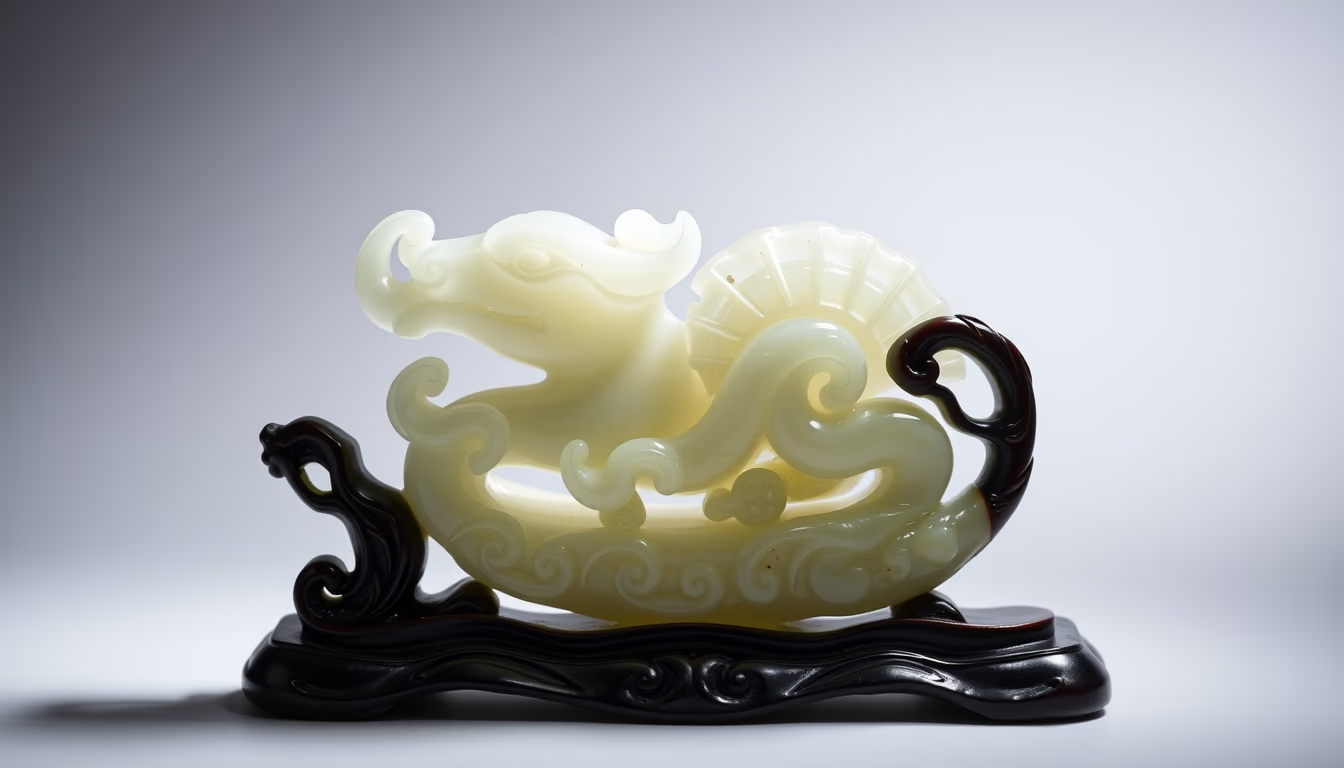
Chinese carved jade: an ancient art symbolizing purity and immortality, used in ceremonial and ornamental objects since the Neolithic period.
About this subject
Jade is a semi-precious stone that has held a central place in Chinese culture for over seven millennia. The earliest evidence of jade objects in China dates back to the Hongshan culture (c. 4700, 2900 BCE) and the Liangzhu culture (c. 3300, 2300 BCE), where pieces like bi discs and cong tubes were used in funerary rituals and as symbols of power. Jade (yu in Chinese) is associated with five cardinal virtues: benevolence, righteousness, wisdom, courage, and purity. The exceptional hardness of the stone (6 to 7 on the Mohs scale) requires extremely time-consuming cutting and polishing techniques, often using abrasives like quartz sand.
Jadeite and nephrite are the two main types of jade. Nephrite, more common in China, is mainly found in the regions of Xinjiang and Liaoning. Jadeite, rarer and more highly valued, was imported from Myanmar from the 18th century onward. The imperial green variety is the most sought after. During the Ming (1368, 1644) and Qing (1644, 1912) dynasties, jade carving art reached its peak, with pieces depicting mythical animals, deities, plants, and natural scenes, often carved from a single stone.
Jade also holds strong religious and philosophical symbolism in Confucianism and Taoism. It was believed to protect the body from decay, so it was placed in tombs. The famous jade burial suit of Princess Dou Wan (Han dynasty, 2nd century BCE) is a notable example, made of thousands of jade plaques sewn with gold wire. To this day, jade is considered a talisman for good luck and prosperity, often given as a gift on special occasions like weddings and Chinese New Year.
Frequently Asked Questions
What is the difference between jadeite and nephrite?
Jadeite is rarer, harder, and more vitreous, found in colors like imperial green, lavender, and red. Nephrite is more common, has a fibrous texture, and ranges from green to white, historically more used in ancient China.
Why is jade so important in Chinese culture?
Jade symbolizes moral virtues, purity, and immortality. It is used in religious rituals, objects of power, and protective amulets. Its hardness and durability represent eternity.
How can you identify a genuine jade piece?
Real jade is dense and cool to the touch; when tapped, it produces a clear, musical sound. It can be tested with a blade (does not scratch) or by density. Gemological certification is the most reliable method.
Direct URL
https://pub-c7d6a6ea828543ac903a74a341ccb2e1.r2.dev/imagens/jade-carved-chinese-studio-still-life-p8.avifHow to credit
Include a visible link back to UtilizAí. Copy one of the snippets below:
<a href="https://xn--utiliza-eza.com/en/midia/imagens/jade-carved-chinese-studio-still-life-p8">Jade carved chinese</a> by <a href="https://xn--utiliza-eza.com">UtilizAí</a>, licensed under <a href="https://creativecommons.org/licenses/by/4.0/">CC BY 4.0</a>.
[Jade carved chinese](https://xn--utiliza-eza.com/en/midia/imagens/jade-carved-chinese-studio-still-life-p8) by [UtilizAí](https://xn--utiliza-eza.com), CC BY 4.0
License: CC-BY-4.0