Jade carved chinese
1344×768 · AVIF · CC BY 4.0
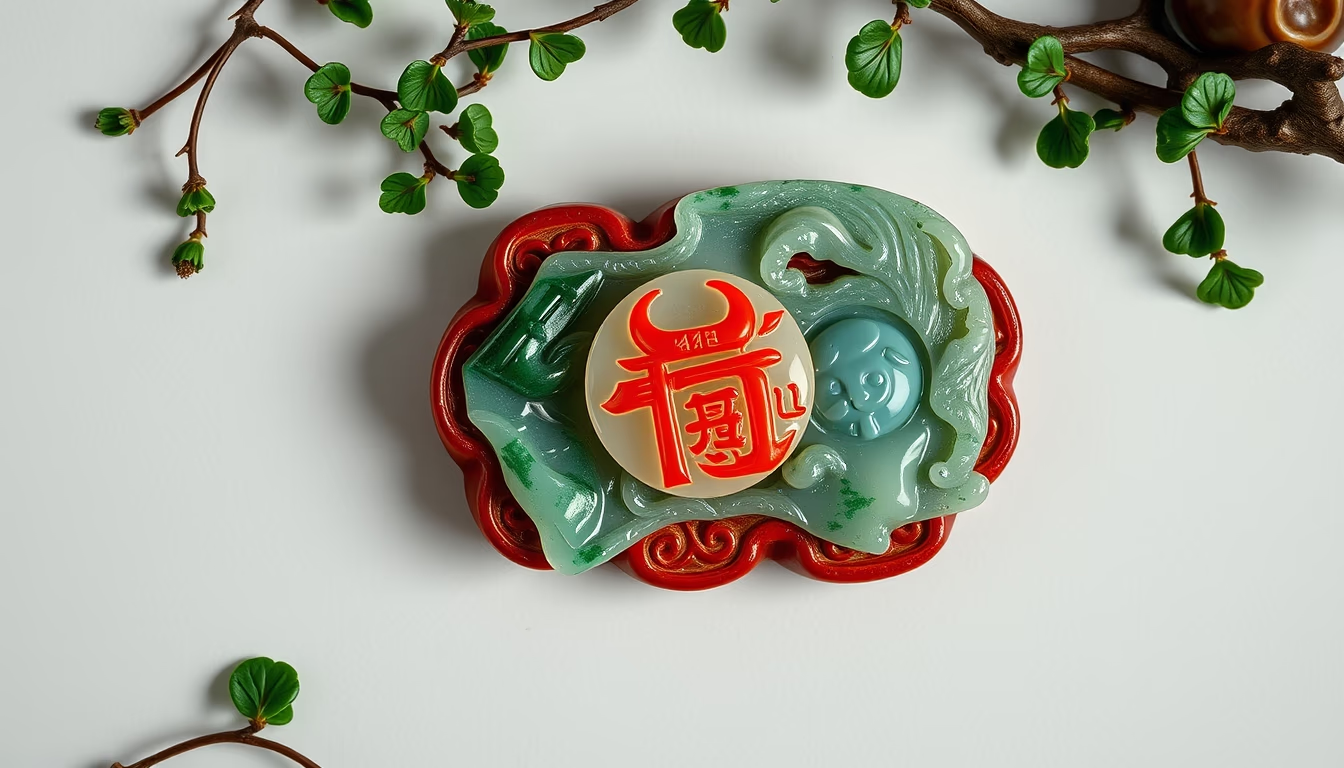
Jade is a semiprecious stone prized in Chinese culture for millennia, symbolizing purity and immortality.
About this subject
Jade, actually two distinct minerals (nephrite and jadeite), has held a central place in Chinese culture since the Neolithic period. Carved jade pieces, such as those from the Liangzhu culture (3400-2250 BC), already showed advanced cutting and drilling techniques. Unlike the West, where jade was mainly used for ornaments, in China it acquired philosophical and spiritual meaning. The sage Confucius compared jade's virtues to those of the ideal man: its translucence represented sincerity, its hardness justice, and its sound when struck wisdom.
The art of jade carving reached its peak during the Qing dynasty (1644-1912), when enormous blocks of jadeite from Burma were transformed into ceremonial objects, vases, and mythological figures. Emperor Qianlong, a great collector, established imperial workshops that produced pieces of extraordinary precision. Techniques such as grinding with sand and quartz abrasives, using bamboo drills, and drilling with silk threads allowed the creation of complex forms, including interlocking rings and chains carved from a single block.
Today, jade remains a symbol of status and good luck in China. Imperial green jadeite, originating from Myanmar (formerly Burma), is the most valuable. The jade antique market is a billion-dollar industry, with historical pieces fetching millions at auction. Authenticity is verified by experts who analyze texture, color, and inclusions, since natural jade is often treated or imitated by materials like serpentine or green quartz.
Beyond China, jade is important in Mesoamerican cultures, such as the Olmecs and Maya, who used it for masks and ritual objects. However, the Chinese tradition of carving jade is uninterrupted and influences contemporary jewelers and artists, who combine ancient techniques with modern designs. The stone, which can range from milky white to deep green and lavender, remains a tangible link to Chinese history and philosophy.
Frequently Asked Questions
What is the difference between nephrite and jadeite?
Nephrite is more common and tougher, composed of a mixture of amphibole minerals. Jadeite is rarer and more valuable, composed of pyroxene, and shows more vibrant colors like imperial green.
How to identify authentic jade?
Authentic jade is dense and cool to the touch, produces a clear metallic sound when tapped, and often has small inclusions or color variations. Hardness tests and refractive index analysis help distinguish it from imitations.
Why is jade so important in Chinese culture?
Jade symbolizes virtues such as kindness, purity, and wisdom. It was used in funerary rituals to protect the body and soul, and to this day it is associated with good luck, longevity, and prosperity.
Direct URL
https://pub-c7d6a6ea828543ac903a74a341ccb2e1.r2.dev/imagens/jade-carved-chinese-isometric-flat-lay-p10.avifHow to credit
Include a visible link back to UtilizAí. Copy one of the snippets below:
<a href="https://xn--utiliza-eza.com/en/midia/imagens/jade-carved-chinese-isometric-flat-lay-p10">Jade carved chinese</a> by <a href="https://xn--utiliza-eza.com">UtilizAí</a>, licensed under <a href="https://creativecommons.org/licenses/by/4.0/">CC BY 4.0</a>.
[Jade carved chinese](https://xn--utiliza-eza.com/en/midia/imagens/jade-carved-chinese-isometric-flat-lay-p10) by [UtilizAí](https://xn--utiliza-eza.com), CC BY 4.0
License: CC-BY-4.0