Jade carved chinese
1344×768 · AVIF · CC BY 4.0
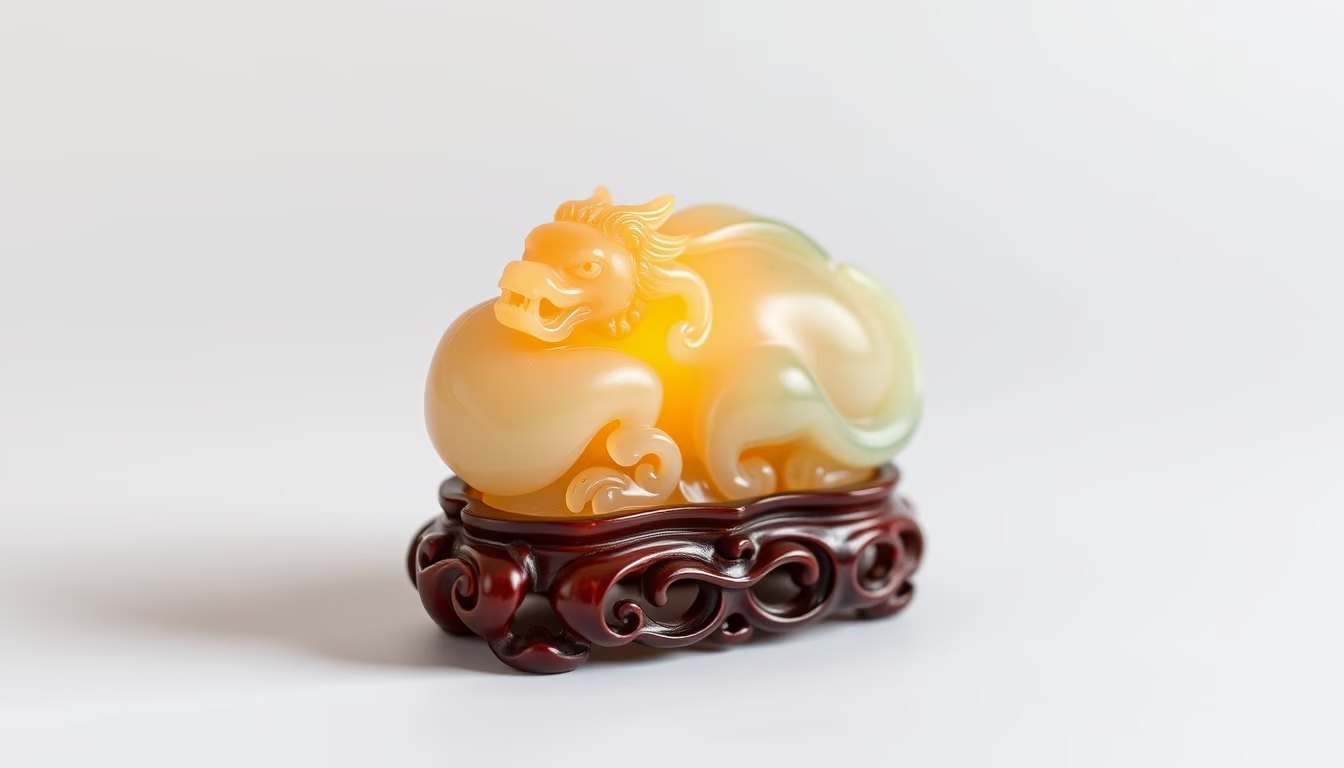
Jade is a semiprecious stone of great historical and cultural importance in China, with a carving tradition dating back thousands of years.
About this subject
Jade, particularly nephrite and jadeite, has been valued in Chinese culture since the Neolithic period. Jade objects were used in funerary rituals, as symbols of power, and representations of moral purity. Carving jade requires great skill due to the stone's hardness, typically worked with abrasives such as quartz sand. Craftsmen use rotary tools to shape, drill, and polish, creating highly intricate pieces.
The art of jade carving reached its peak during the Ming (1368-1644) and Qing (1644-1912) dynasties, when emperors commissioned elaborate pieces for decoration and ceremonies. Common motifs include dragons, phoenixes, mythological figures, landscapes, and symbols of good fortune, such as the endless knot and fish. Each detail carries auspicious meanings: for example, a bat represents happiness, and a peach longevity.
Jadeite was introduced to China in the 18th century from Myanmar and became popular among the nobility. Its intense green color, known as "imperial green," is highly prized. Today, jade is used not only in jewelry and ornaments but also as a financial investment, with rare pieces fetching millions of dollars at auctions. The influence of jade in Chinese culture is so profound that the word for jade (yu) appears in idiomatic expressions, such as "yu jie bing qing" (pure jade and ice), symbolizing moral integrity.
Beyond China, jade is mined in other countries, including Canada, Russia, and New Zealand, but the Chinese carving style remains unique for its iconography and technique. The preservation of this art is maintained through craft schools and master artisans training new generations, ensuring the cultural legacy continues.
Frequently Asked Questions
What does the color of jade signify in Chinese culture?
Green jade is the most traditional, associated with purity and vitality. White symbolizes impartiality, yellow represents the emperor, and lavender is linked to spiritual healing.
What is the difference between nephrite and jadeite?
Nephrite is more common, tough, and comes in varied colors (green, white, brown). Jadeite is rarer, translucent, and has more vivid colors, especially imperial green, making it more valuable.
How to identify an authentic jade piece?
Real jade is dense, feels cold to the touch, and produces a clear, metallic sound when tapped. Imitations made of glass or resin are usually lighter and less detailed.
Direct URL
https://pub-c7d6a6ea828543ac903a74a341ccb2e1.r2.dev/imagens/jade-carved-chinese-commercial-product-photography-p1.avifHow to credit
Include a visible link back to UtilizAí. Copy one of the snippets below:
<a href="https://xn--utiliza-eza.com/en/midia/imagens/jade-carved-chinese-commercial-product-photography-p1">Jade carved chinese</a> by <a href="https://xn--utiliza-eza.com">UtilizAí</a>, licensed under <a href="https://creativecommons.org/licenses/by/4.0/">CC BY 4.0</a>.
[Jade carved chinese](https://xn--utiliza-eza.com/en/midia/imagens/jade-carved-chinese-commercial-product-photography-p1) by [UtilizAí](https://xn--utiliza-eza.com), CC BY 4.0
License: CC-BY-4.0