Jack in the box
1344×768 · AVIF · CC BY 4.0
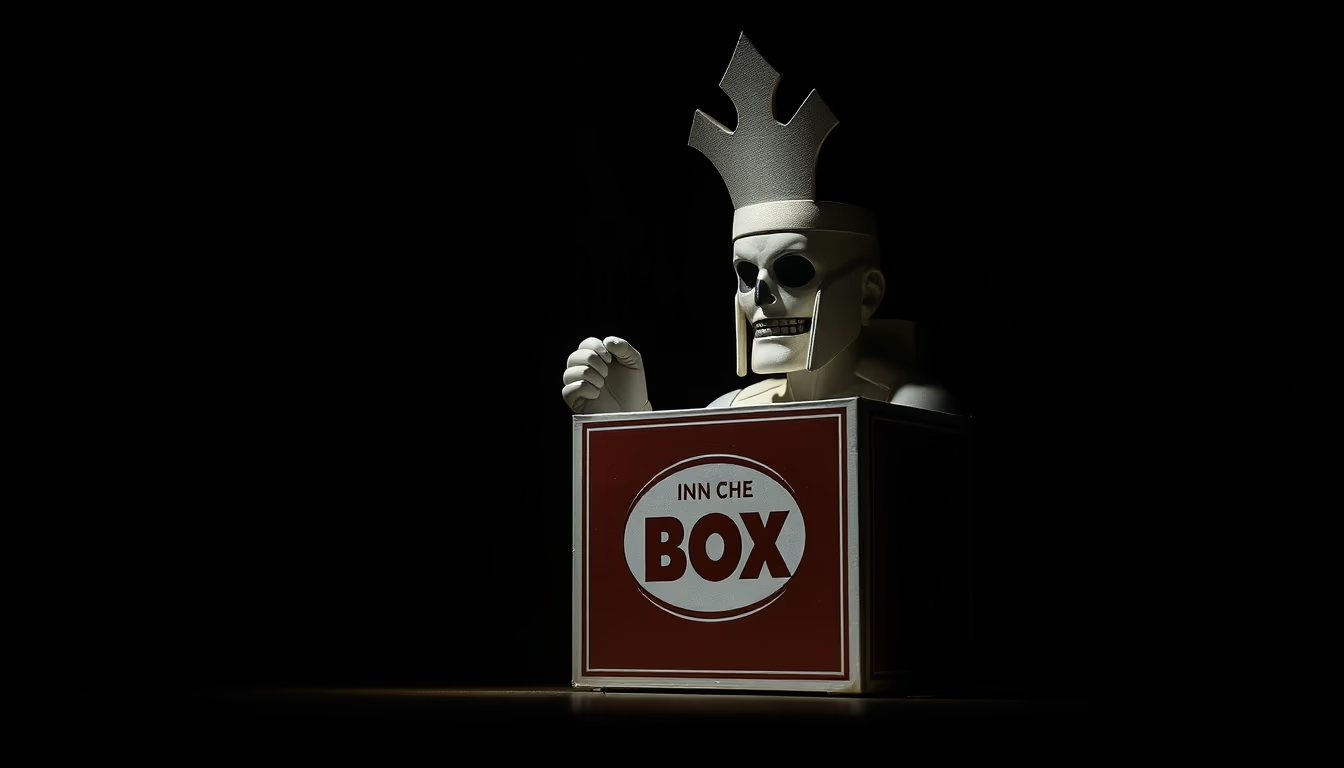
Discover the history and details of the jack-in-the-box, a classic toy that combines surprising mechanics and nostalgia.
About this subject
The jack-in-the-box is an iconic toy consisting of a decorated box with a crank. When the crank is turned, a melody plays until, at an unexpected moment, a figure, usually a clown or jester, springs out of the box. This surprise effect is the essence of the toy, which has entertained children and adults for centuries.
The origin of the jack-in-the-box dates back to 16th-century Europe. Early records indicate that German craftsmen created spring-loaded mechanisms hidden in everyday objects to amuse the nobility. The name “Jack” was a generic term for any servant or peasant, and the jumping figure represented a playful disruption of hierarchy. In the 19th century, the toy became popular through mass production, especially in Victorian England, where it was made with hand-painted wooden boxes and cloth or papier-mâché characters.
Culturally, the jack-in-the-box has transcended childhood play to become a symbol of surprise and unpredictability. In horror films and suspense works, its appearance is often used to create tension, a notable example is the movie “Saw”. Additionally, the box design varies widely: from simple versions to collectible editions with lights and sounds. The lighting technique known as Rembrandt, characterized by strong contrasts of light and shadow, is frequently employed in photographs of these toys to highlight their ornamental details and give a dramatic, nostalgic feel.
From a mechanical standpoint, the operation is ingenious: the crank turns a music cylinder (like a music box) while simultaneously tensioning a spring attached to the figure. At the end of the melody, a trigger mechanism releases the spring, propelling the figure upward. This simple yet effective principle is a classic example of pre-electronic automation. Today, the jack-in-the-box is prized by vintage toy collectors, and original 19th-century pieces can fetch high prices at auctions due to their preservation and rarity.
Frequently Asked Questions
How does the jack-in-the-box mechanism work?
Turning the crank activates a music cylinder that plays a tune while tensioning a spring. At the end of the tune, a trigger releases the spring, causing the figure to pop out.
What is the historical origin of the jack-in-the-box?
The toy originated in 16th-century Europe, created by German craftsmen. It became popular in the 19th century in Victorian England, with mass production and characters like clowns and jesters.
Why is the jack-in-the-box associated with horror films?
Its surprise element and sudden popping figure create a jump scare. Movies like Saw use this effect to build tension, making the toy an icon of psychological horror.
Direct URL
https://pub-c7d6a6ea828543ac903a74a341ccb2e1.r2.dev/imagens/jack-in-the-box-rembrandt-lighting-dramatic-shadows-fresh7.avifHow to credit
Include a visible link back to UtilizAí. Copy one of the snippets below:
<a href="https://xn--utiliza-eza.com/en/midia/imagens/jack-in-the-box-rembrandt-lighting-dramatic-shadows-fresh7">Jack in the box</a> by <a href="https://xn--utiliza-eza.com">UtilizAí</a>, licensed under <a href="https://creativecommons.org/licenses/by/4.0/">CC BY 4.0</a>.
[Jack in the box](https://xn--utiliza-eza.com/en/midia/imagens/jack-in-the-box-rembrandt-lighting-dramatic-shadows-fresh7) by [UtilizAí](https://xn--utiliza-eza.com), CC BY 4.0
License: CC-BY-4.0