Islamic geometric pattern
1344×768 · AVIF · CC BY 4.0
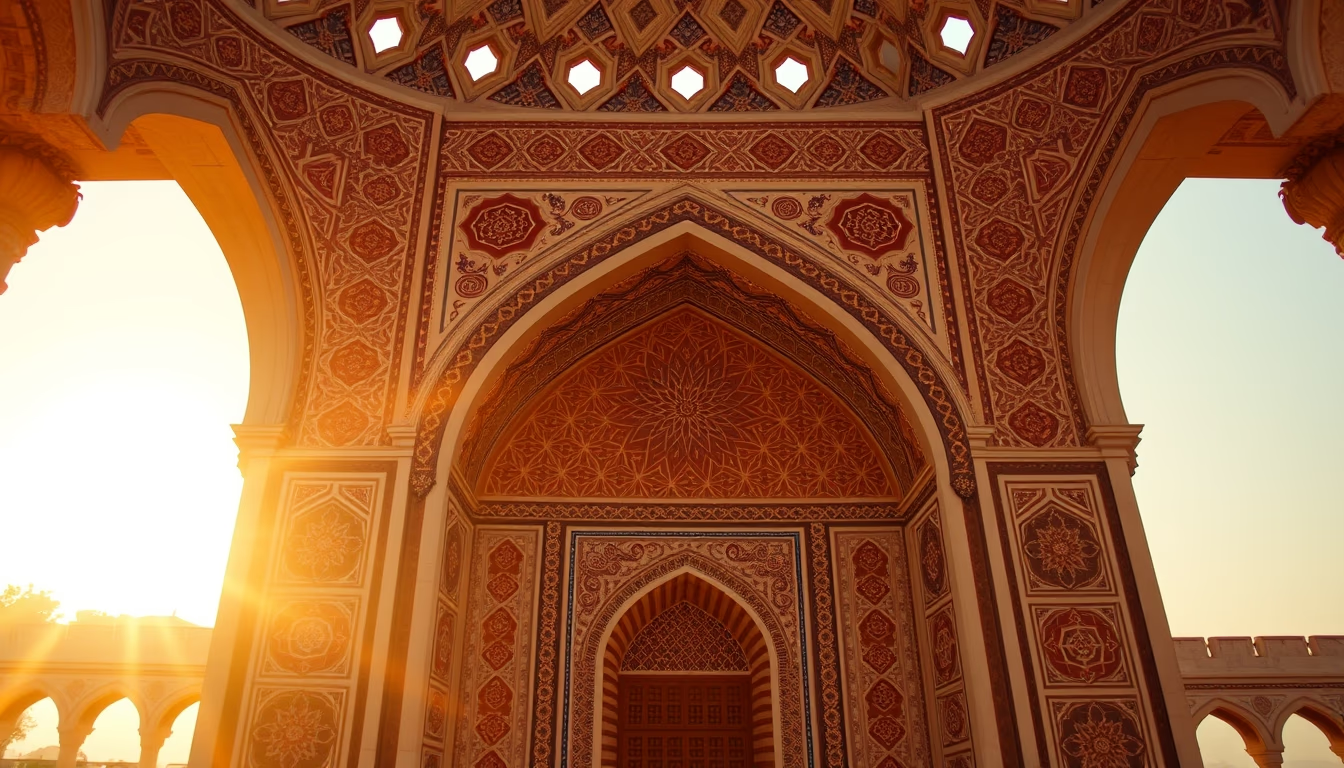
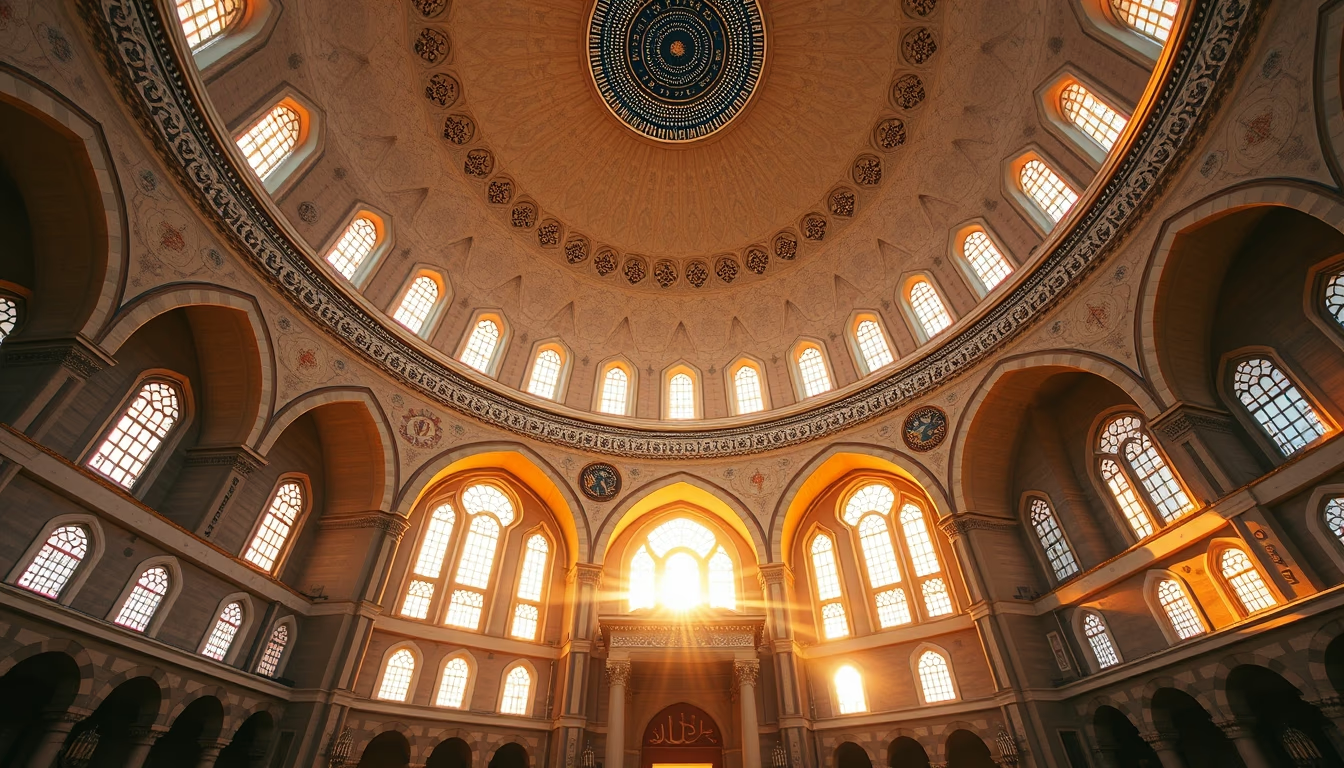
Islamic geometric patterns have adorned mosques and palaces since the 8th century, blending mathematics and sacred art.
About this subject
Islamic geometric patterns are among the most distinctive expressions of Islamic art, developed from the 8th century across regions from the Iberian Peninsula to Central Asia. They emerged as a non-figurative form of ornamentation, avoiding depictions of living beings due to religious considerations. Islamic artists relied on geometry to create complex compositions based on circles, stars, and polygons, often repeated in mosaics, tiles, stucco, and woodwork.
The mathematical foundation of these patterns lies in dividing the circle into equal parts, generating 8-, 12-, or 16-pointed stars. A classic example is the eight-pointed star pattern found in the Alhambra in Spain and many mosques in the Middle East. These designs are not merely decorative: they symbolize divine order and the infinity of Allah. The repetition of motifs suggests endless continuity, inviting spiritual contemplation.
Technically, constructing these patterns requires precision. Craftsmen used compass and ruler to draw geometric grids, transferring them onto surfaces such as ceramic or plaster. In Iran, the use of colorful tiles (cuerda seca) allowed vibrant combinations of blue, turquoise, and white. In the Maghreb, the zellij technique (ceramic mosaic) created intricate panels covering fountains and walls.
Today, these patterns inspire contemporary designers and architects. The Museum of Islamic Art in Qatar, designed by I. M. Pei, incorporates geometric motifs in its facade. Recent mathematical studies have revealed that many medieval patterns use crystallographic group symmetries, anticipating concepts in modern physics. UNESCO has recognized techniques like Moroccan zellij as Intangible Cultural Heritage.
Frequently Asked Questions
What is the origin of Islamic geometric patterns?
They emerged in the 8th century, influenced by Byzantine and Persian traditions but adapted to the religious prohibition of figurative images. They flourished across the Islamic world, from Spain to India.
How are these patterns constructed?
They are based on dividing a circle into equal parts using a compass and ruler. Regular polygons generate stars and arabesques repeated in radial symmetry.
What is the spiritual meaning of geometric patterns?
They represent divine order and the infinity of Allah. The continuous repetition symbolizes eternity and invites meditation on the unity of creation.
Direct URL
https://pub-c7d6a6ea828543ac903a74a341ccb2e1.r2.dev/imagens/islamic-geometric-pattern-travel-photography-p2.avifHow to credit
Include a visible link back to UtilizAí. Copy one of the snippets below:
<a href="https://xn--utiliza-eza.com/en/midia/imagens/islamic-geometric-pattern-travel-photography-p2">Islamic geometric pattern</a> by <a href="https://xn--utiliza-eza.com">UtilizAí</a>, licensed under <a href="https://creativecommons.org/licenses/by/4.0/">CC BY 4.0</a>.
[Islamic geometric pattern](https://xn--utiliza-eza.com/en/midia/imagens/islamic-geometric-pattern-travel-photography-p2) by [UtilizAí](https://xn--utiliza-eza.com), CC BY 4.0
License: CC-BY-4.0