Islamic geometric pattern
1344×768 · AVIF · CC BY 4.0

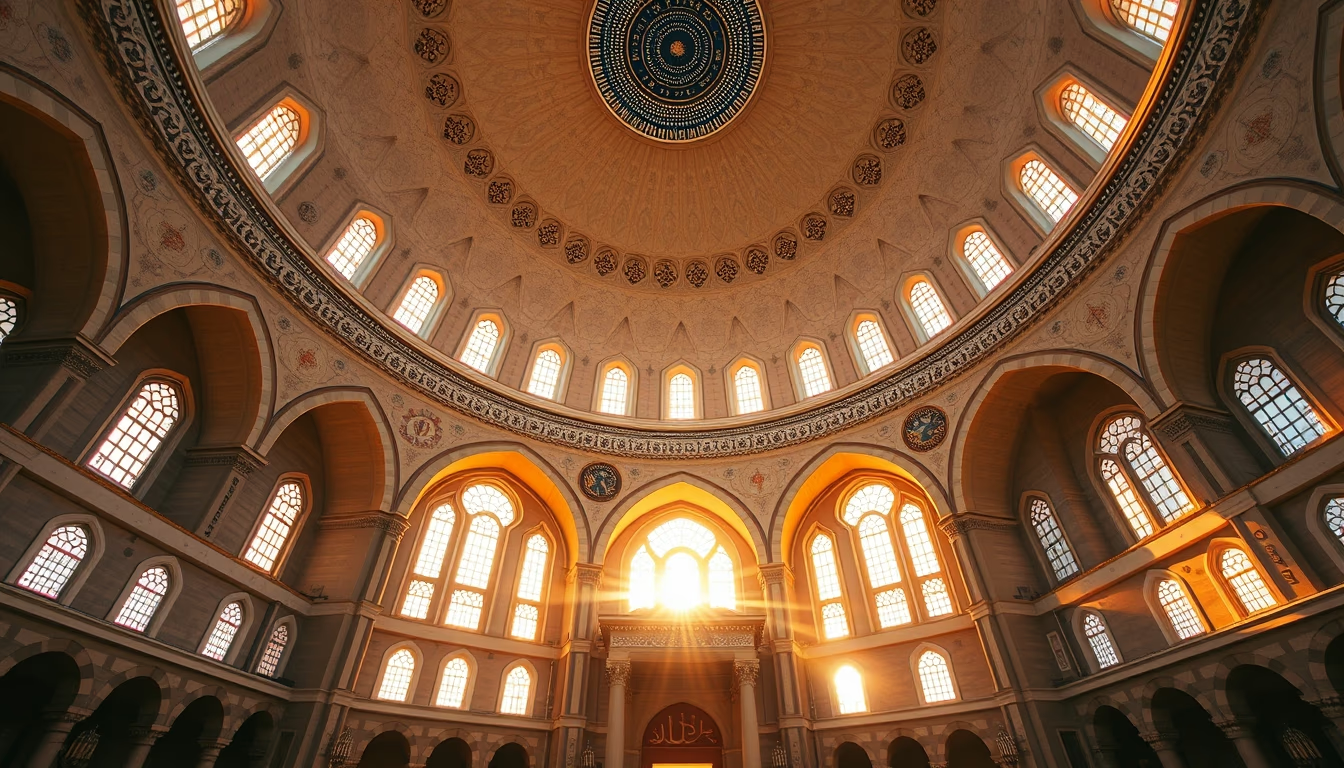
Islamic geometric pattern, abstract art based on mathematics and symmetry, found in mosques and palaces since the 8th century.
About this subject
Islamic geometric patterns are a form of non-figurative art that flourished across the Islamic world from the 8th century. They are based on rigorous mathematical principles including rotational symmetry, reflection, and translation, often using star polygons and tessellations. These patterns adorn surfaces of mosques, madrasas, palaces, and books like the Quran, spanning a vast region from Spain to India.
The origin of these patterns is linked to the Islamic prohibition of figurative representation in religious contexts, which encouraged the development of abstract and geometric art. Islamic craftsmen mastered Euclidean geometry and created complex designs using only a ruler and compass. Notable examples include the mosaics of the Alhambra in Spain and the tile panels of the Topkapi Palace in Istanbul.
In modern times, Islamic geometric patterns have inspired fashion designers, architects, and contemporary artists. High-fashion brands often incorporate these motifs into editorial collections, blending tradition with contemporary aesthetics. Islamic geometric pattern is a field of study in art history and mathematics, featured in exhibitions at museums such as the Victoria and Albert Museum in London and the Metropolitan Museum of Art in New York.
Frequently Asked Questions
Why are geometric patterns predominant in Islamic art?
Due to aniconism in Islam, which discourages the depiction of living beings in religious contexts, Islamic artists developed abstract forms like geometric patterns to decorate mosques and sacred books.
What is the role of mathematics in Islamic patterns?
Mathematics is fundamental: patterns are created using symmetry, rotation, and reflection, employing regular and star polygons. Many patterns demonstrate concepts like tessellation and fractals, centuries before they were formalized in the West.
Where can I see famous examples of Islamic geometric patterns?
Iconic examples include the Alhambra (Spain), Topkapi Palace (Turkey), Sheikh Lotfollah Mosque (Iran), and the Qutb Minar complex (India). Many museums, such as the Louvre and the Metropolitan Museum of Art, display objects featuring these patterns.
Direct URL
https://pub-c7d6a6ea828543ac903a74a341ccb2e1.r2.dev/imagens/islamic-geometric-pattern-high-fashion-editorial-p4.avifHow to credit
Include a visible link back to UtilizAí. Copy one of the snippets below:
<a href="https://xn--utiliza-eza.com/en/midia/imagens/islamic-geometric-pattern-high-fashion-editorial-p4">Islamic geometric pattern</a> by <a href="https://xn--utiliza-eza.com">UtilizAí</a>, licensed under <a href="https://creativecommons.org/licenses/by/4.0/">CC BY 4.0</a>.
[Islamic geometric pattern](https://xn--utiliza-eza.com/en/midia/imagens/islamic-geometric-pattern-high-fashion-editorial-p4) by [UtilizAí](https://xn--utiliza-eza.com), CC BY 4.0
License: CC-BY-4.0