Irrigation drip system
1344×768 · AVIF · CC BY 4.0
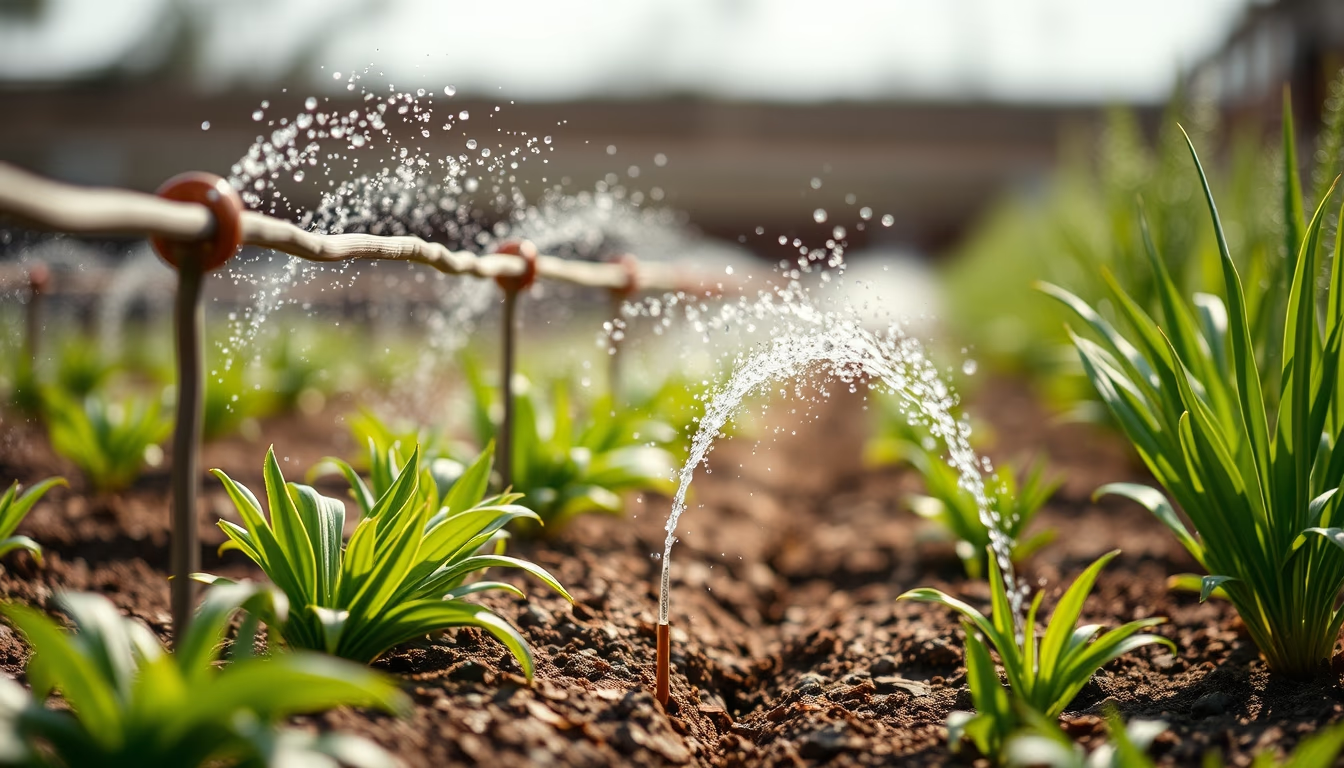
Drip irrigation system: water savings and high efficiency in modern agriculture.
About this subject
Drip irrigation is a method that delivers water directly to the plant root zone, drop by drop, through tubes and emitters. Developed in the 1960s in Israel, this system revolutionized agriculture in arid and semi-arid regions, enabling cultivation in water-scarce areas. The technique reduces water consumption by up to 60% compared to sprinkler irrigation, as it minimizes evaporation and surface runoff. Additionally, localized fertilizer application (fertigation) optimizes nutrient uptake and reduces leaching.
In Brazil, drip irrigation use is growing mainly in coffee, sugarcane, vegetables, and fruit crops. The system is especially advantageous in sandy soils or those with low water retention. However, installation requires high initial investment and periodic maintenance to prevent emitter clogging by particles or biofilm. Technologies such as automatic filters and pressure-compensating drippers increase system reliability.
A curious fact: the first modern drip irrigation system was created by Simcha Blass, an Israeli engineer who observed a tree growing more than others in a desert, he discovered that a leak in an underground pipe provided constant water to the roots. From there, he developed the concept of drip irrigation, now used globally to increase agricultural productivity while using water efficiently. This method is essential for sustainable agriculture, especially in the face of climate change and the need for food security.
Frequently Asked Questions
What are the main advantages of drip irrigation?
Water savings (up to 60% less than sprinkler), precise fertilizer application, reduced foliar diseases, and higher nutrient use efficiency.
Is drip irrigation suitable for all soil types?
It works well in sandy and clay soils, but requires proper management. In very clayey soils, localized waterlogging may occur; therefore, flow rate should be adjusted.
How to prevent clogging of drippers?
Use sand or screen filters, perform periodic maintenance, and choose pressure-compensating drippers. Water quality is crucial to avoid blockages from sediment or biofilm.
Direct URL
https://pub-c7d6a6ea828543ac903a74a341ccb2e1.r2.dev/imagens/irrigation-drip-system-minimalist-composition-p5.avifHow to credit
Include a visible link back to UtilizAí. Copy one of the snippets below:
<a href="https://xn--utiliza-eza.com/en/midia/imagens/irrigation-drip-system-minimalist-composition-p5">Irrigation drip system</a> by <a href="https://xn--utiliza-eza.com">UtilizAí</a>, licensed under <a href="https://creativecommons.org/licenses/by/4.0/">CC BY 4.0</a>.
[Irrigation drip system](https://xn--utiliza-eza.com/en/midia/imagens/irrigation-drip-system-minimalist-composition-p5) by [UtilizAí](https://xn--utiliza-eza.com), CC BY 4.0
License: CC-BY-4.0