Irrigation drip system
1344×768 · AVIF · CC BY 4.0
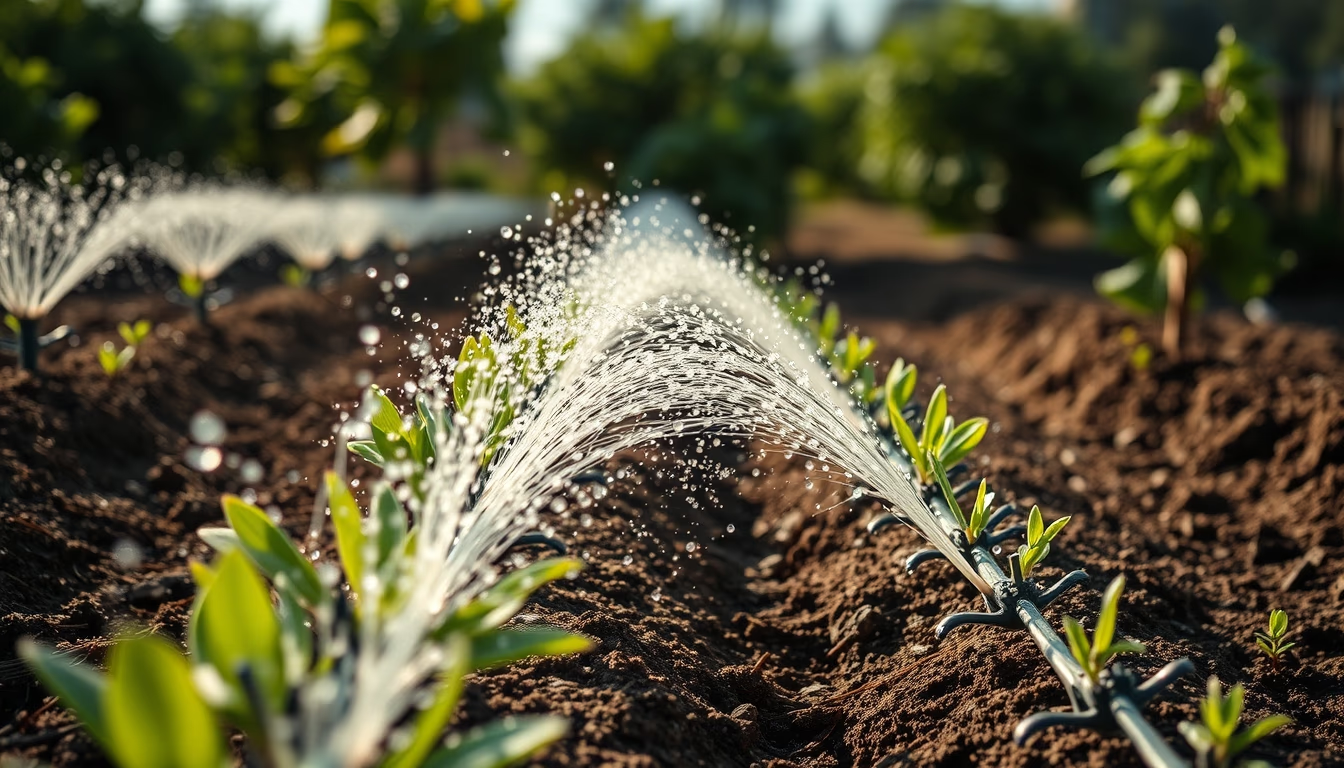
Drip irrigation delivers water directly to plant roots, reducing waste and boosting crop yields. Learn about this efficient method.
About this subject
Drip irrigation is a micro-irrigation system that delivers water and nutrients directly to the plant root zone in slow, controlled drips. Developed in Israel during the 1960s by engineer Simcha Blass, the technology transformed agriculture in arid regions. Emitters release water at regular intervals, allowing the soil to absorb moisture efficiently while minimizing losses from evaporation, runoff, and deep percolation.
The system consists of polyethylene tubing, filters, pressure regulators, and self-compensating drippers. Water efficiency can exceed 90%, compared to 50-70% for sprinkler or furrow irrigation. Beyond water savings, fertigation (applying fertilizers through the system) reduces costs and environmental impacts. Drip irrigation is widely used for crops such as tomatoes, strawberries, grapes, coffee, and cotton, as well as in landscaping and urban gardens.
Globally, adoption is rising due to water scarcity and the need for higher productivity. Countries like Israel, the United States, China, and Brazil deploy the method on large scales. However, challenges include clogging of emitters by sediment or biofilm, high initial installation costs, and ongoing maintenance. Innovations such as clog-resistant drippers and automated filtration systems help mitigate these issues. Drip irrigation is a key tool for sustainable agriculture, contributing to global food security.
Frequently Asked Questions
How does drip irrigation work?
It uses tubing with emitters that release water drop by drop directly at the plant root zone. Water is filtered and pressurized to ensure uniform flow.
What are the main benefits?
Water savings (efficiency above 90%), reduced weed growth, lower foliar disease incidence, and the ability to fertigate, leading to higher yields.
How much does a drip system cost to install?
Costs vary by area, crop, and equipment type, typically higher than traditional systems. However, the return on investment comes from water savings and increased production.
Direct URL
https://pub-c7d6a6ea828543ac903a74a341ccb2e1.r2.dev/imagens/irrigation-drip-system-documentary-photography-p0.avifHow to credit
Include a visible link back to UtilizAí. Copy one of the snippets below:
<a href="https://xn--utiliza-eza.com/en/midia/imagens/irrigation-drip-system-documentary-photography-p0">Irrigation drip system</a> by <a href="https://xn--utiliza-eza.com">UtilizAí</a>, licensed under <a href="https://creativecommons.org/licenses/by/4.0/">CC BY 4.0</a>.
[Irrigation drip system](https://xn--utiliza-eza.com/en/midia/imagens/irrigation-drip-system-documentary-photography-p0) by [UtilizAí](https://xn--utiliza-eza.com), CC BY 4.0
License: CC-BY-4.0