Irrigation drip system
1344×768 · AVIF · CC BY 4.0
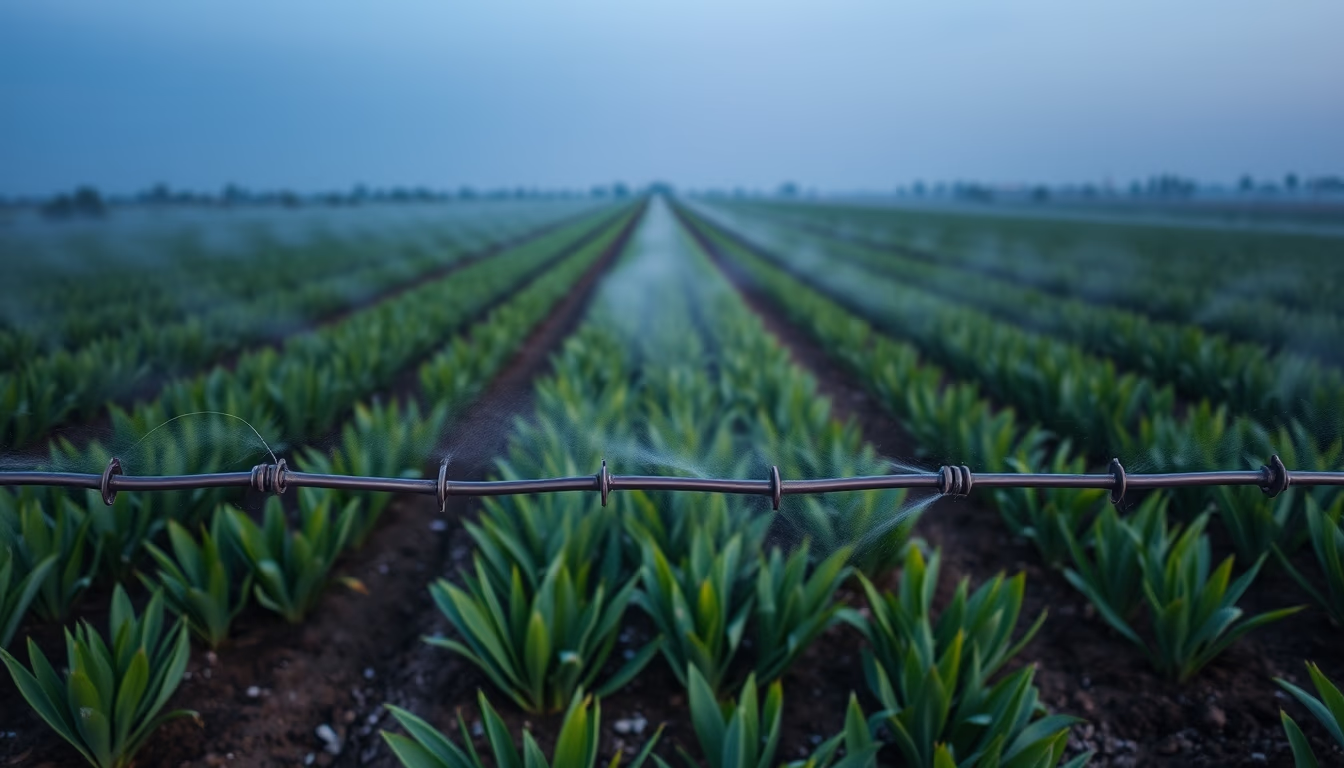
Aerial view of a drip irrigation system: technology delivering water directly to plant roots, reducing waste and boosting agricultural productivity.
About this subject
Drip irrigation is a controlled water delivery method in which water is applied slowly, drop by drop, directly to the root zone of plants. The system consists of main pipes, lateral lines with emitters (drippers), filtration units, and pressure-regulating valves. Its main advantage is water efficiency: while sprinkler irrigation can lose up to 40% of water through evaporation and drift, drip irrigation achieves efficiency above 90%. Beyond saving water, the method reduces weed growth (only the plant area is wetted) and lowers the incidence of foliar diseases.
In Brazil, drip irrigation is widely adopted in the semi-arid Northeast and the Cerrado region, enabling the cultivation of fruits such as grapes, melons, and mangoes in low-rainfall areas. Data from Embrapa indicate that drip irrigation can increase productivity by up to 50% compared to conventional systems, and it also allows fertigation, application of dissolved fertilizers through the irrigation water. The technology is particularly effective for high-value crops and in water-scarce regions.
Implementing a drip system requires a higher initial investment than furrow or sprinkler irrigation, but the financial return typically occurs within two to three growing seasons due to water savings and increased yields. Maintenance includes periodic filter cleaning and checking for clogged drippers, which can be caused by solid particles or chemical precipitation. Modern solutions include pressure-compensating drippers that maintain constant flow even on uneven terrain.
Globally, drip irrigation is a cornerstone of precision agriculture and sustainability. Israel is a reference in the development of the technique, used in over 50% of its irrigated areas. In Brazil, adoption growth is linked to irrigation incentive programs and the need to increase food production without expanding the agricultural frontier. Integration with soil moisture sensors and IoT automation is transforming drip systems into smart irrigation networks that adjust watering in real time according to plant needs.
Frequently Asked Questions
How does drip irrigation work?
Water is pumped through pipes and released slowly by drippers placed near plant roots. The flow rate is controlled so that water infiltrates the soil without surface runoff.
Which crops benefit most from drip irrigation?
High-value crops such as vegetables, fruits (grapes, melons, strawberries), and greenhouse crops. It is also effective for fruit trees and sugarcane in arid regions.
What is the average installation cost per hectare?
In Brazil, costs range from BRL 8,000 to BRL 20,000 per hectare, depending on the crop, terrain, and automation level. The investment typically pays back within 2 to 3 growing seasons.
Direct URL
https://pub-c7d6a6ea828543ac903a74a341ccb2e1.r2.dev/imagens/irrigation-drip-system-aerial-drone-shot-p3.avifHow to credit
Include a visible link back to UtilizAí. Copy one of the snippets below:
<a href="https://xn--utiliza-eza.com/en/midia/imagens/irrigation-drip-system-aerial-drone-shot-p3">Irrigation drip system</a> by <a href="https://xn--utiliza-eza.com">UtilizAí</a>, licensed under <a href="https://creativecommons.org/licenses/by/4.0/">CC BY 4.0</a>.
[Irrigation drip system](https://xn--utiliza-eza.com/en/midia/imagens/irrigation-drip-system-aerial-drone-shot-p3) by [UtilizAí](https://xn--utiliza-eza.com), CC BY 4.0
License: CC-BY-4.0