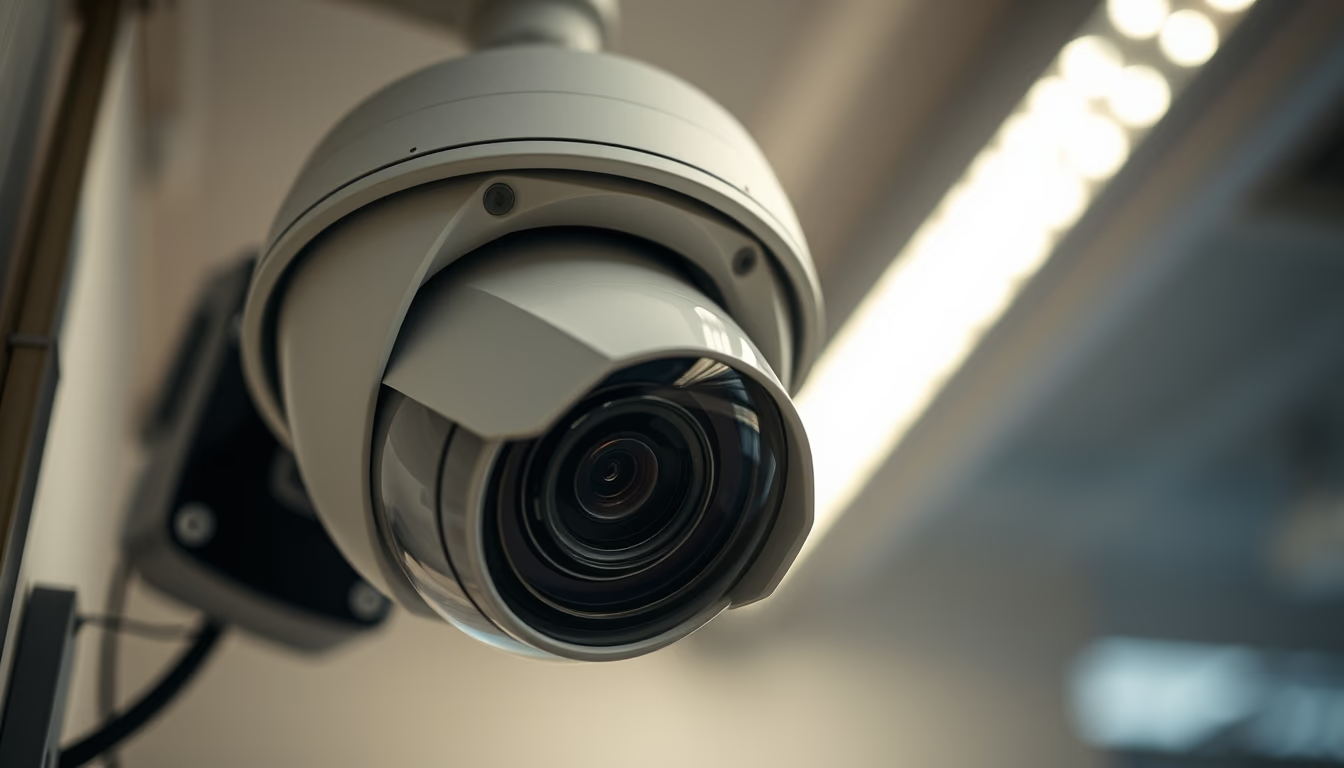
Iot sensor industrial
1344×768 · AVIF · CC BY 4.0

Industrial IoT sensors collect real-time data from machines and processes, driving Industry 4.0 and predictive maintenance.
About this subject
Industrial IoT sensors are key devices for the digital transformation of factories. They monitor variables such as temperature, vibration, pressure and energy consumption, sending data to cloud or edge platforms. This technology allows managers to track equipment performance in real time, reducing unplanned downtime and optimizing production.
In practice, an industrial IoT sensor can be installed on an electric motor of an assembly line or on a pipeline of a refinery. The collected data feeds machine learning algorithms that identify imminent failure patterns. Predictive maintenance, enabled by these sensors, can reduce repair costs by up to 30% according to industry studies. Furthermore, integration with MES (Manufacturing Execution Systems) and ERP systems allows more granular control of the entire production chain.
In Brazil, the adoption of industrial IoT sensors is growing, driven by programs such as BNDES Industry 4.0 and digitalization initiatives of medium-sized companies. Sectors like automotive, steel and food & beverage lead the implementation. Communication is typically done via protocols such as MQTT, LoRaWAN or 5G, depending on latency and range requirements. Cybersecurity is a central concern, with adoption of encryption and network segmentation.
Interestingly, the first remote industrial sensors emerged in the 1970s with the 4-20 mA standard, but the real revolution came with IP connectivity and component miniaturization. Today, coin-sized sensors can monitor the structural integrity of bridges or silos. The global market for industrial IoT sensors is expected to surpass USD 30 billion by 2028, according to Fortune Business Insights projections.
Frequently Asked Questions
What is an industrial IoT sensor?
It's a device that collects physical or chemical data from industrial machines and processes and transmits it over the internet for remote monitoring and analysis.
What are the main benefits of IoT sensors in industry?
Reduction of unplanned downtime through predictive maintenance, improved energy efficiency, better product quality and real-time traceability.
How do industrial IoT sensors communicate?
They use protocols like MQTT, LoRaWAN, 5G or NB-IoT to send data to gateways or directly to the cloud, with low power consumption and high reliability.
Direct URL
https://pub-c7d6a6ea828543ac903a74a341ccb2e1.r2.dev/imagens/iot-sensor-industrial-studio-editorial-portrait-p0.avifHow to credit
Include a visible link back to UtilizAí. Copy one of the snippets below:
<a href="https://xn--utiliza-eza.com/en/midia/imagens/iot-sensor-industrial-studio-editorial-portrait-p0">Iot sensor industrial</a> by <a href="https://xn--utiliza-eza.com">UtilizAí</a>, licensed under <a href="https://creativecommons.org/licenses/by/4.0/">CC BY 4.0</a>.
[Iot sensor industrial](https://xn--utiliza-eza.com/en/midia/imagens/iot-sensor-industrial-studio-editorial-portrait-p0) by [UtilizAí](https://xn--utiliza-eza.com), CC BY 4.0
License: CC-BY-4.0