Iot sensor industrial
1344×768 · AVIF · CC BY 4.0
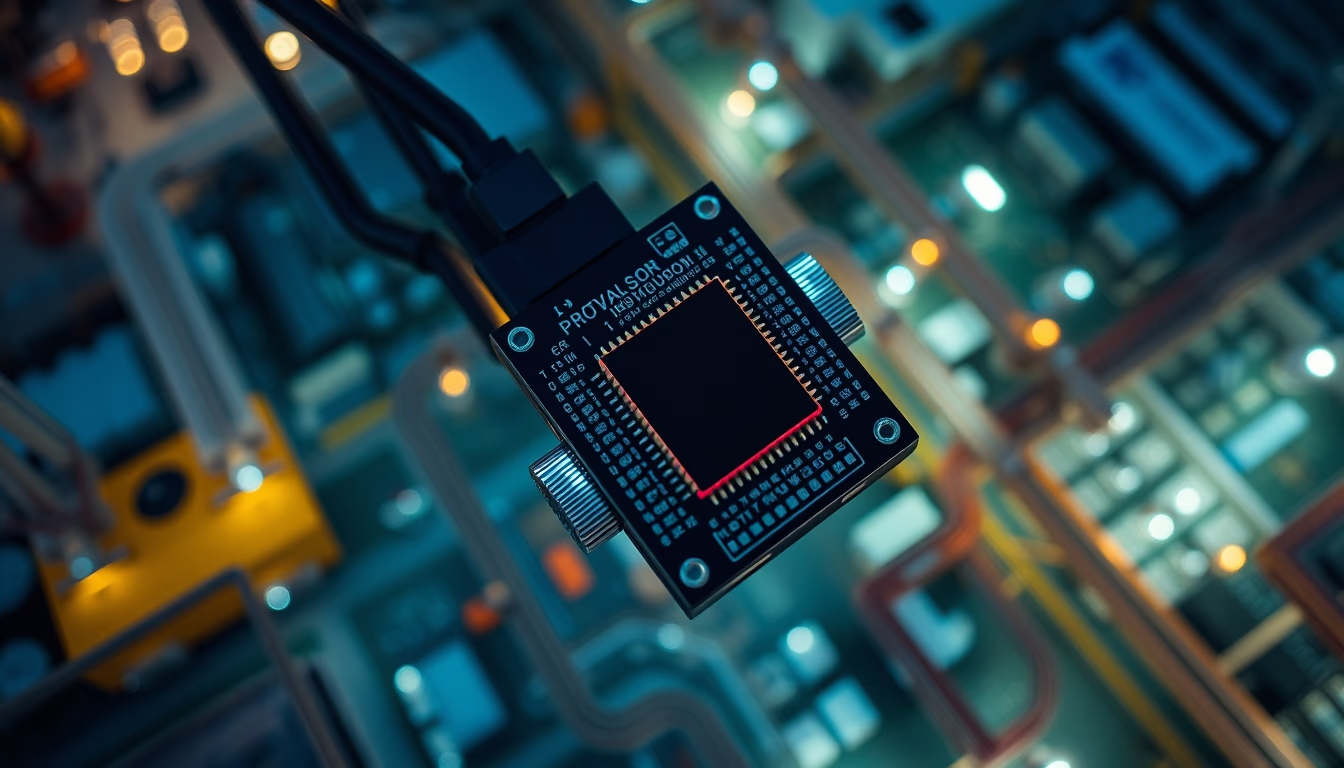
Industrial IoT sensors are smart devices that monitor and control manufacturing processes, optimizing efficiency and reducing costs in Industry 4.0.
About this subject
Industrial IoT sensors form the backbone of Industry 4.0, connecting machines and systems to the internet for real-time data collection and analysis. These devices measure variables such as temperature, pressure, vibration, humidity, and energy consumption, enabling factories to operate with greater precision and less waste. In Brazil, sectors like automotive, petrochemical, and agribusiness have adopted these technologies for remote monitoring and predictive maintenance.
A common example is a vibration sensor attached to electric motors. It detects anomalies before a failure occurs, avoiding unplanned downtime that can cost millions. According to McKinsey, predictive maintenance based on IoT can reduce maintenance costs by up to 25% and increase equipment availability by 15%. Temperature sensors in industrial furnaces ensure that thermal processes meet quality standards, with alerts sent directly to operators' tablets or smartphones.
Implementing these sensors also raises cybersecurity and interoperability concerns. Protocols such as MQTT and OPC UA are widely used to standardize communication between devices from different manufacturers. In the Brazilian context, the government's digital transformation policy encourages IoT adoption in industry, with credit lines from BNDES for digitalization projects. In advanced factories, sensors communicate with ERP systems and artificial intelligence platforms, creating an autonomous decision-making ecosystem.
Despite the potential, integration still faces barriers such as high initial cost and the need for skilled professionals. However, the global industrial IoT sensor market is expected to surpass US$ 40 billion by 2027, according to Fortune Business Insights. Brazilian companies like Weg and Embraer already use these solutions to monitor assets in real time, showing that the trend is irreversible for industrial competitiveness.
Frequently Asked Questions
What is the difference between industrial IoT sensors and ordinary sensors?
Industrial IoT sensors are internet-connected and can transmit data in real time to analysis platforms, while ordinary sensors only perform local readings without remote communication. They support protocols like MQTT and OPC UA and are designed for harsh environments, with high durability and accuracy.
How does predictive maintenance with IoT sensors reduce costs in factories?
By continuously monitoring variables such as vibration and temperature, sensors detect early signs of wear or failure. This allows repairs to be scheduled before an unexpected breakdown, reducing unplanned downtime, extending equipment life, and cutting emergency spare parts costs.
What are the main challenges for implementing IoT sensors in Brazilian industry?
The main challenges include the high initial investment in hardware and network infrastructure, the need for trained professionals in data analysis and cybersecurity, and integration with legacy systems that still lack IP connectivity. Incentives from BNDES and digitalization programs have been accelerating adoption.
Direct URL
https://pub-c7d6a6ea828543ac903a74a341ccb2e1.r2.dev/imagens/iot-sensor-industrial-aerial-drone-shot-p1.avifHow to credit
Include a visible link back to UtilizAí. Copy one of the snippets below:
<a href="https://xn--utiliza-eza.com/en/midia/imagens/iot-sensor-industrial-aerial-drone-shot-p1">Iot sensor industrial</a> by <a href="https://xn--utiliza-eza.com">UtilizAí</a>, licensed under <a href="https://creativecommons.org/licenses/by/4.0/">CC BY 4.0</a>.
[Iot sensor industrial](https://xn--utiliza-eza.com/en/midia/imagens/iot-sensor-industrial-aerial-drone-shot-p1) by [UtilizAí](https://xn--utiliza-eza.com), CC BY 4.0
License: CC-BY-4.0