Inking pen workshop
1344×768 · AVIF · CC BY 4.0
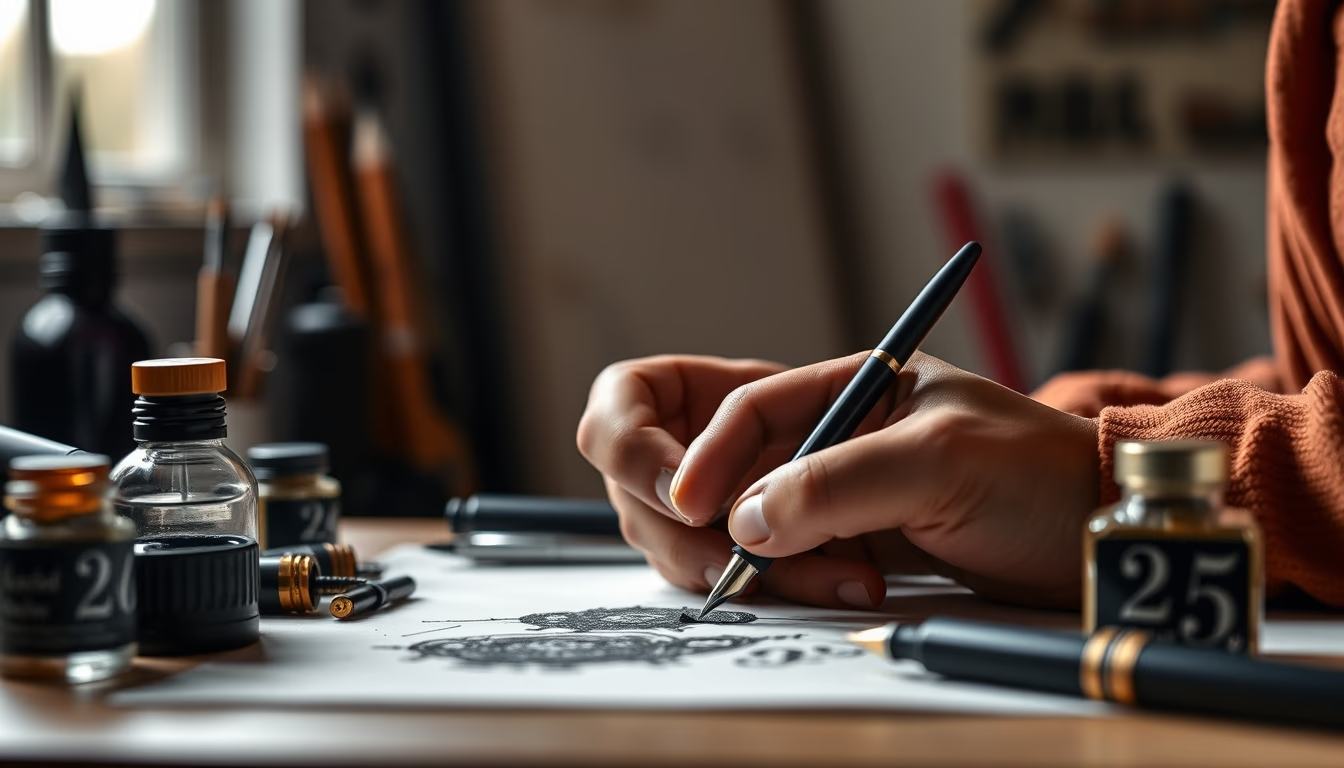
Inking pen workshop: how mastering nib and brush pens transforms the linework of illustrators and comic artists.
About this subject
Inking is a critical stage in comic book and illustration production. Unlike pencil, which allows erasing, ink demands decisive strokes and precise pressure control. In an inking pen workshop, participants learn to handle various tools: traditional nibs fitted into wooden holders, technical pens, and fine-tipped brushes. Line weight, calligraphic variation, and texture creation are explored through hands-on exercises.
Mastering the ink pen is essential for sequential art, especially in manga and Western comics. Masters like Will Eisner and Katsuhiro Otomo used specific nibs to achieve shadows and dynamic motion. Workshops often cover hatching, stippling, and the use of diluted ink for gray tones. Paper selection is also discussed: higher grammage withstands liquid ink better, preventing bleeding.
Beyond technique, workshops frequently contextualize the history of inking. Before digitization, color and finishing were done by hand, and the pen was the primary tool for contrast. Today, many artists combine traditional methods with tablets, but the tactile feel of real ink remains valued. Group practice encourages the exchange of tips among professionals and amateurs.
A trivia is that the famous "G-pen" (used by many mangakas) has a flexible nib that produces thin and thick lines with a single stroke. In workshops, instructors teach how to prepare a new nib by removing protective oil with flame or alcohol. This care prolongs lifespan and improves ink flow. Participating in a workshop is a key step for those aiming to advance their linework and understand the physics behind each stroke.
Frequently Asked Questions
What materials are needed for an inking pen workshop?
High-grammage paper (180gsm or more), waterproof black india ink, assorted nibs (G-pen, maru-pen, kabura), a pen holder, fine-tipped brushes, and an ink container. Many workshops provide basic kits.
What is the difference between a technical pen and a dip pen?
A technical pen has a tubular metal tip that produces lines of fixed width (e.g., 0.1 mm, 0.5 mm). A dip pen has a flexible nib that varies line thickness with pressure, allowing more expressive strokes.
How do I clean and maintain metal nibs?
Rinse nibs with running water and dry immediately to prevent rust. Use a soft brush to remove dried ink residue. Store in a dry case. Remove factory oil with a quick flame or alcohol before first use.
Direct URL
https://pub-c7d6a6ea828543ac903a74a341ccb2e1.r2.dev/imagens/inking-pen-workshop-studio-still-life-fresh0.avifHow to credit
Include a visible link back to UtilizAí. Copy one of the snippets below:
<a href="https://xn--utiliza-eza.com/en/midia/imagens/inking-pen-workshop-studio-still-life-fresh0">Inking pen workshop</a> by <a href="https://xn--utiliza-eza.com">UtilizAí</a>, licensed under <a href="https://creativecommons.org/licenses/by/4.0/">CC BY 4.0</a>.
[Inking pen workshop](https://xn--utiliza-eza.com/en/midia/imagens/inking-pen-workshop-studio-still-life-fresh0) by [UtilizAí](https://xn--utiliza-eza.com), CC BY 4.0
License: CC-BY-4.0