Inking pen workshop
1344×768 · AVIF · CC BY 4.0

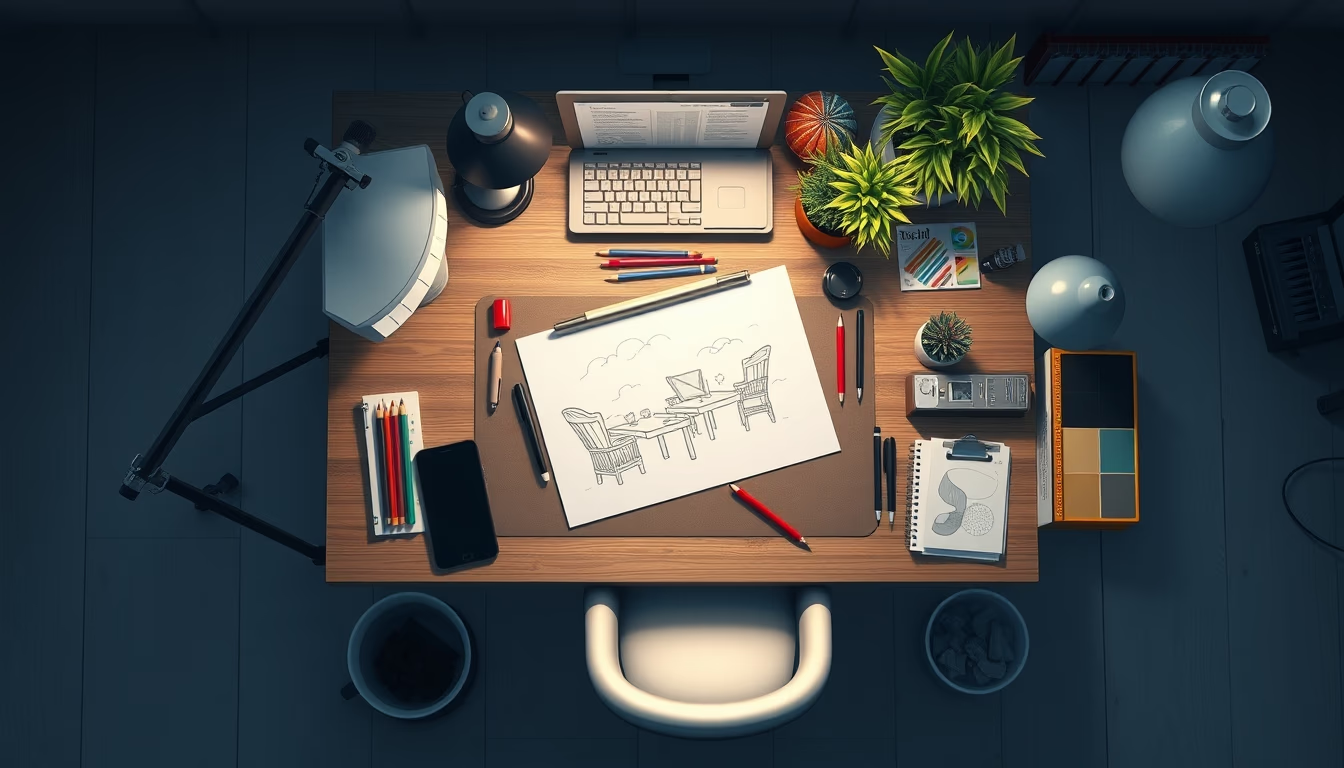
Inking pen workshops teach essential inking techniques for comics, combining theory and hands-on practice with professional materials.
About this subject
Inking is the stage of comic drawing where pencil lines are reinforced with black ink, defining contours, shadows, and textures. Inking pen workshops emerged as dedicated spaces for perfecting this art, often organized by illustration studios, art schools, and comic conventions. In the United States, workshops at events like the San Diego Comic-Con or local art leagues cover everything from line anatomy to using India ink, dip pens, and brush pens.
Mastering inking requires knowledge of specific tools: technical pens (such as Staedtler), flexible nib dip pens, and fine-tipped brushes. Workshops typically include exercises on pressure and angle to vary line weight, as well as hatching and stippling techniques. Masters like American inker Terry Austin and Brazilian artist Mike Deodato influence the approaches taught.
The importance of inking goes beyond linework: it prepares the drawing for digital coloring or print, ensuring contrast and legibility. Workshops also discuss the difference between traditional and digital inking, using tablets and software like Clip Studio Paint. Many professionals recommend beginners start with liquid India ink and a brush to feel the flow before moving to pens.
Culturally, inking is a tradition dating back to early American and European comics. In Japan, the equivalent is sumi-e, but modern manga uses G-pen nibs. In the US, the style of inkers like Joe Kubert and Bernie Wrightson set standards. Attending a workshop offers direct feedback and portfolio-building opportunities.
Frequently Asked Questions
What do you learn at an inking pen workshop?
You learn inking techniques such as line control, hatching, stippling, and using different tools like dip pens and brushes, plus tips to prepare artwork for print.
What materials are needed for an inking workshop?
Typically liquid India ink, nib dip pens, technical pens, fine-tipped brushes, ink-friendly paper (e.g., 180 gsm bond), and a slanted drawing board.
Does digital inking replace traditional in workshops?
No, many workshops still focus on traditional inking for its tactile feel and control. Digital is complementary, addressing simulating textures with tablets and software.
Direct URL
https://pub-c7d6a6ea828543ac903a74a341ccb2e1.r2.dev/imagens/inking-pen-workshop-minimalist-composition-fresh11.avifHow to credit
Include a visible link back to UtilizAí. Copy one of the snippets below:
<a href="https://xn--utiliza-eza.com/en/midia/imagens/inking-pen-workshop-minimalist-composition-fresh11">Inking pen workshop</a> by <a href="https://xn--utiliza-eza.com">UtilizAí</a>, licensed under <a href="https://creativecommons.org/licenses/by/4.0/">CC BY 4.0</a>.
[Inking pen workshop](https://xn--utiliza-eza.com/en/midia/imagens/inking-pen-workshop-minimalist-composition-fresh11) by [UtilizAí](https://xn--utiliza-eza.com), CC BY 4.0
License: CC-BY-4.0