Injera ethiopian flat
1344×768 · AVIF · CC BY 4.0
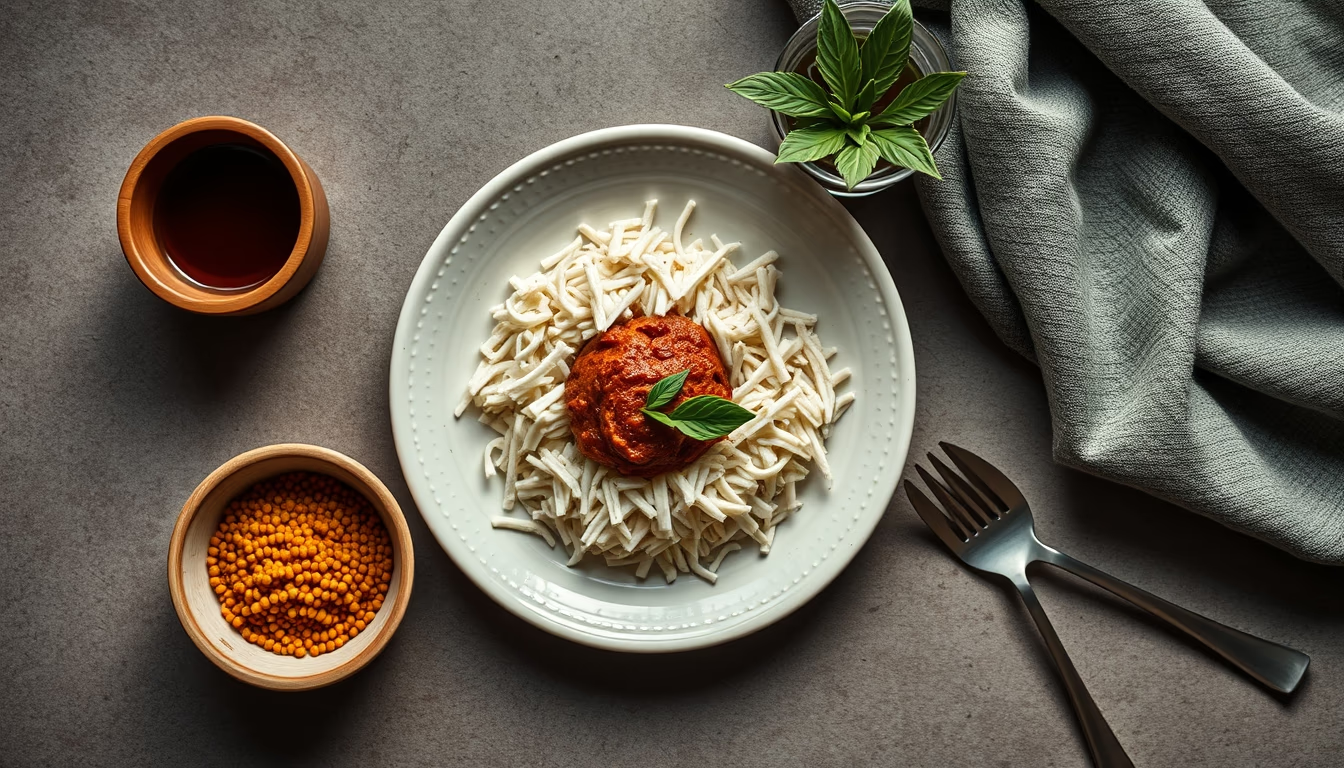
Injera is the fermented Ethiopian and Eritrean flatbread, staple of Horn of Africa cuisine, made from teff flour and used as both plate and utensil.
About this subject
Injera is a spongy, sour flatbread traditional to Ethiopia and Eritrea, made from teff flour, an ancient grain rich in iron and calcium. Its characteristic texture, with bubbles on the underside and a soft consistency, comes from a natural fermentation process lasting several days, akin to sourdough. The batter is poured onto a hot flat griddle called mitad, spread in a circle, and cooked on one side only.
In Ethiopian culture, injera is not merely bread but the centerpiece of meals. Dishes like wat (spicy stews of meat or vegetables) are served on a large injera sheet covering the entire platter. Diners tear pieces of the bread with their right hand and use them to scoop up the stew, absorbing the flavors. This communal practice reflects the importance of sharing and community in local gastronomy.
Teff, a grain native to Ethiopia, is grown mainly in the highlands. It is a gluten-free pseudocereal, making injera naturally suitable for celiacs. Regional variations exist: pure teff injera is the most prized, but mixtures with barley, wheat, or sorghum are common. The fermentation also produces a slightly acidic taste that balances the strong spices of the wat.
Historically, injera is mentioned in Ethiopian texts as early as the 10th century. Artisanal production still predominates, though industrial versions are emerging. The Ethiopian diaspora has spread injera globally, making it popular in African restaurants and as a gluten-free option in the West. UNESCO recognized Ethiopian cuisine as an Intangible Cultural Heritage of Humanity, highlighting injera's central role.
Frequently Asked Questions
Does injera contain gluten?
Traditional injera made from teff flour is naturally gluten-free, as teff is a gluten-free pseudocereal. However, versions mixed with barley, wheat, or other grains contain gluten.
What does injera taste like?
Injera has a slightly sour, fermented taste similar to sourdough bread. This tanginess comes from natural fermentation and balances the strong flavors of Ethiopian stews.
How is injera traditionally eaten?
Injera is served as a base for meals, topped with stews (wat). Diners tear pieces of the bread to scoop up the food, using no utensils. The meal is shared from a large platter.
Direct URL
https://pub-c7d6a6ea828543ac903a74a341ccb2e1.r2.dev/imagens/injera-ethiopian-flat-isometric-flat-lay-fresh10.avifHow to credit
Include a visible link back to UtilizAí. Copy one of the snippets below:
<a href="https://xn--utiliza-eza.com/en/midia/imagens/injera-ethiopian-flat-isometric-flat-lay-fresh10">Injera ethiopian flat</a> by <a href="https://xn--utiliza-eza.com">UtilizAí</a>, licensed under <a href="https://creativecommons.org/licenses/by/4.0/">CC BY 4.0</a>.
[Injera ethiopian flat](https://xn--utiliza-eza.com/en/midia/imagens/injera-ethiopian-flat-isometric-flat-lay-fresh10) by [UtilizAí](https://xn--utiliza-eza.com), CC BY 4.0
License: CC-BY-4.0