Industrial loft brick wall
1344×768 · AVIF · CC BY 4.0
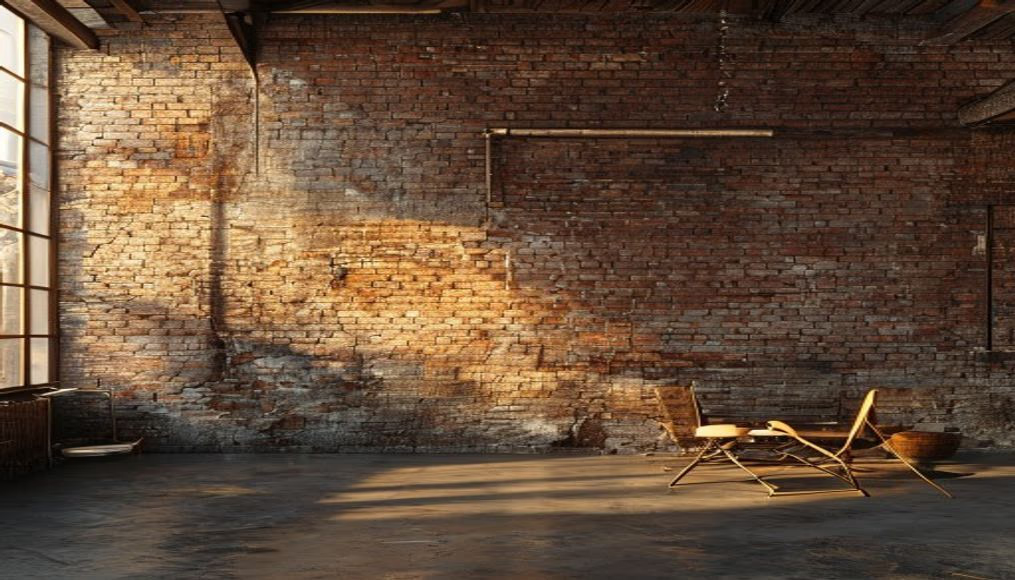
Exposed brick walls in industrial lofts blend raw aesthetics with architectural history, becoming an icon in areas like Brooklyn and Vila Madalena.
About this subject
Exposed brick walls are a key element in industrial loft design, typical of former warehouses and factories converted into residential and commercial spaces. This aesthetic, popularized in the 1960s and 1970s in New York neighborhoods like SoHo and Brooklyn, found fertile ground in Brazil, notably in Vila Madalena (São Paulo) and the Recife Antigo district (Pernambuco). The bricks used in these constructions, often dating from the 19th and early 20th centuries, were handcrafted in local kilns, giving them unique color and texture variations.
Beyond aesthetics, brick walls offer thermal and acoustic benefits: the ceramic mass helps regulate indoor temperature and absorbs sound. In tropical climates like Brazil's, the thermal inertia of bricks can reduce the need for artificial climate control, especially when paired with proper cross ventilation. Preserving original brick walls requires technical care; clear sealants are often applied to control dust without altering appearance, but one must avoid sealing the material's pores completely, which could trap moisture and lead to damage.
Culturally, exposed brick symbolizes the appreciation of industrial heritage and the beauty of imperfection, contrasting with the smooth, uniform finishes of contemporary construction. In retrofit projects, Brazilian architects like Isay Weinfeld and Marcio Kogan frequently highlight these walls as focal points, preserving the memory of the original space while adapting it for modern use. Real estate values also reflect this appeal: properties with exposed brick often command higher prices, especially among buyers seeking a creative and alternative lifestyle.
Each brick can tell a story. Hand-pressing and wood-fired kilns leave marks that can date a piece. In some regions, bricks carry incised initials from old brickyards, details that fascinate collectors and historians. The durability of these materials is striking; many bricks in industrial lofts are over 100 years old and remain structurally sound.
Frequently Asked Questions
How do I clean an exposed brick wall without damaging it?
Use a soft-bristle brush to remove dust and cobwebs. For stains, mix water with mild detergent and apply with a damp cloth, avoiding saturation. Avoid harsh chemicals and pressure washers.
Are exposed brick walls suitable for all climates?
Not entirely. In very humid regions, bricks can absorb moisture and promote mold growth. A breathable sealant and good ventilation are recommended. In dry climates, they contribute to thermal comfort.
Can I create a fake exposed brick wall in a new building?
Yes, ceramic veneers that mimic brick are available, but the visual effect and texture differ. Another option is to use thin bricks (brick slips) applied to a base. The result can be convincing but lacks the same thermal properties.
Direct URL
https://pub-c7d6a6ea828543ac903a74a341ccb2e1.r2.dev/imagens/industrial-loft-brick-wall-travel-photography-v10.avifHow to credit
Include a visible link back to UtilizAí. Copy one of the snippets below:
<a href="https://xn--utiliza-eza.com/en/midia/imagens/industrial-loft-brick-wall-travel-photography-v10">Industrial loft brick wall</a> by <a href="https://xn--utiliza-eza.com">UtilizAí</a>, licensed under <a href="https://creativecommons.org/licenses/by/4.0/">CC BY 4.0</a>.
[Industrial loft brick wall](https://xn--utiliza-eza.com/en/midia/imagens/industrial-loft-brick-wall-travel-photography-v10) by [UtilizAí](https://xn--utiliza-eza.com), CC BY 4.0
License: CC-BY-4.0