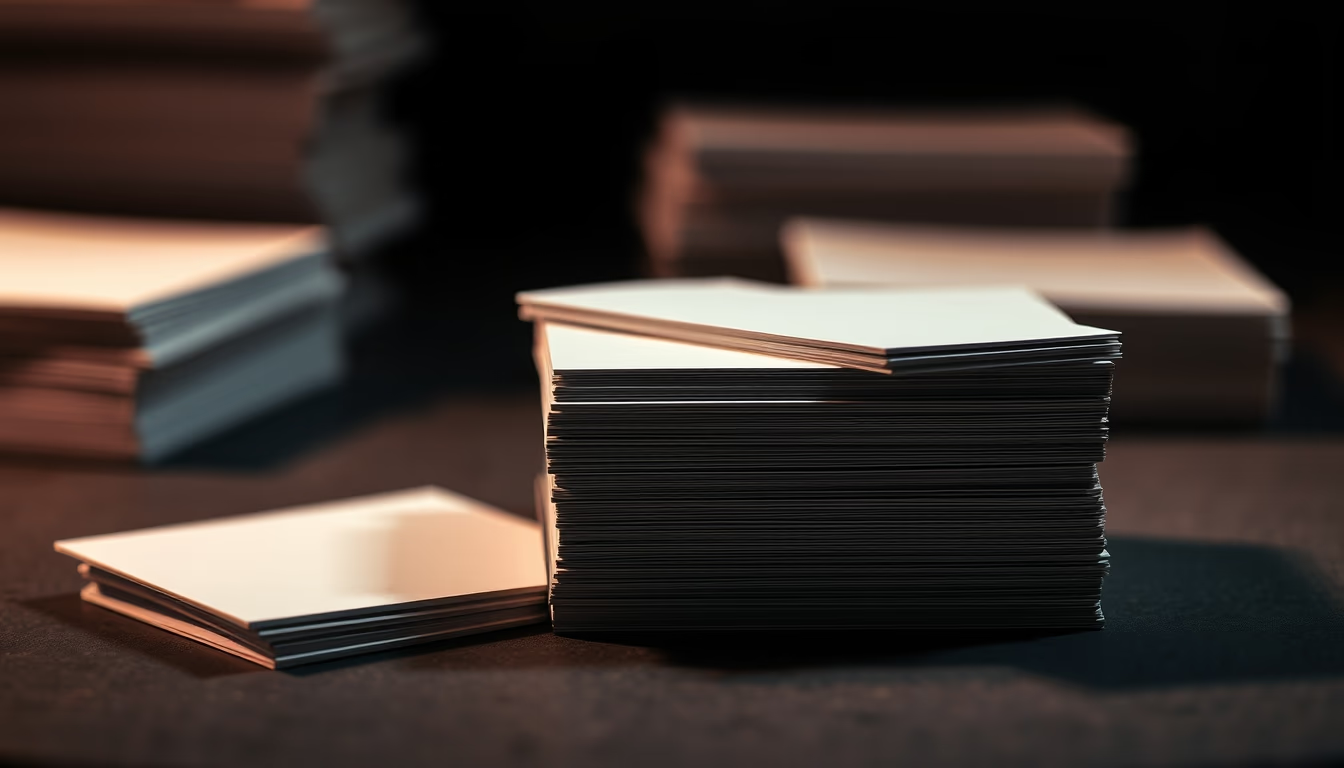
Index cards stacked
1344×768 · AVIF · CC BY 4.0

Stacks of paper index cards arranged in a minimalist composition, an icon of office stationery and study methodologies.
About this subject
Index cards, also known as flash cards, are small pieces of cardstock used to record standardized information. Their origins trace back to the 18th century when Swedish naturalist Carl Linnaeus used them to catalog species, but they became widespread in offices and libraries during the 20th century, especially in the standard 3 x 5 inch size. They are central to study methods like spaced repetition and the Leitner system, which enhance memorization by organizing cards into boxes based on knowledge levels.
In corporate settings, index cards were precursors to visual management tools like the Kanban method, which uses colored cards to signal production stages. Despite digitization, many professionals still prefer them for brainstorming, quick notes, and prototyping ideas, valuing the tangibility and freedom to physically rearrange information. The minimalist aesthetic of aligned stacks reflects a pursuit of order and mental clarity, principles associated with functional design and productivity.
Interestingly, the compact card format influenced modern application interfaces: the "card" concept in platforms like Trello and Notion is a direct legacy from this analog medium. The classic yellow color of index cards originated from the need for reading contrast, while colored variations enable instant visual categorization. In Brazil, they are common in government offices and schools, where the technique of "fichamento" (card-based summarization) is still taught for academic text analysis.
Frequently Asked Questions
What is the standard size of an index card?
The most common size is 3 x 5 inches (7.6 x 12.7 cm), but variations like 4 x 6 inches (10 x 15 cm) exist for longer notes.
How are index cards used in the Leitner system?
In the Leitner system, cards are sorted into numbered boxes. Correct answers move the card to boxes with longer review intervals, while mistakes return it to the first box, intensifying repetition of difficult content.
Are index cards still relevant in the digital age?
Yes, many professionals and students use them to stimulate creativity, reduce screen distractions, and physically manipulate ideas during brainstorming and planning sessions.
Direct URL
https://pub-c7d6a6ea828543ac903a74a341ccb2e1.r2.dev/imagens/index-cards-stacked-minimalist-composition-fresh17.avifHow to credit
Include a visible link back to UtilizAí. Copy one of the snippets below:
<a href="https://xn--utiliza-eza.com/en/midia/imagens/index-cards-stacked-minimalist-composition-fresh17">Index cards stacked</a> by <a href="https://xn--utiliza-eza.com">UtilizAí</a>, licensed under <a href="https://creativecommons.org/licenses/by/4.0/">CC BY 4.0</a>.
[Index cards stacked](https://xn--utiliza-eza.com/en/midia/imagens/index-cards-stacked-minimalist-composition-fresh17) by [UtilizAí](https://xn--utiliza-eza.com), CC BY 4.0
License: CC-BY-4.0