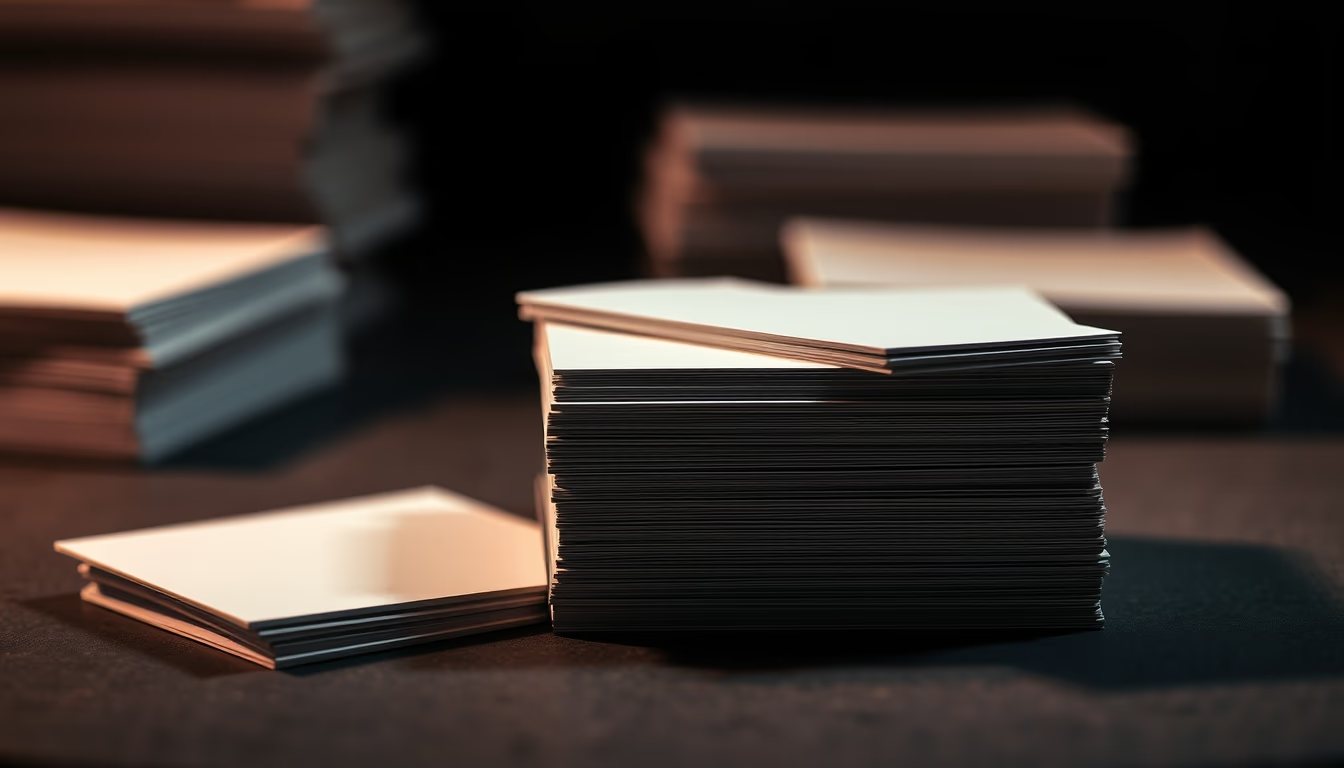
Index cards stacked
1344×768 · AVIF · CC BY 4.0

Stacked index cards are versatile tools for organization, studying, and cataloging, used since the 18th century.
About this subject
Index cards are small, rectangular pieces of stiff paper, typically white or ruled, standardized in sizes such as 3x5 inches or 4x6 inches. Their invention is credited to the Swedish naturalist Carl Linnaeus, who in the 18th century used them to classify plant and animal species, creating a cataloging system that allowed cards to be rearranged without rewriting. This method revolutionized information organization in libraries and archives, adopted by scholars, writers, and researchers.
In the 20th century, index cards became ubiquitous in offices, schools, and homes. Businesses used them for customer records, inventory, and time cards. Students employed them as flashcards for memorizing formulas, vocabulary, or historical dates, a technique still popular in the Leitner spaced repetition system. Libraries maintained card catalogs until mass digitization in the 1980s and 1990s. Despite the rise of database software and apps like Anki, physical index cards persist in niche uses: artists use them for sketches, cooks for recipes, and writers for organizing ideas, as Vladimir Nabokov did when composing his novels.
Culturally, index cards symbolize an era of tangible organization. They are associated with the bullet journal movement and David Allen's Getting Things Done (GTD) method, which recommends cards for task lists. In many countries, color-coded cards and tabbed dividers enhance categorization. Their longevity stems from simplicity and reliability: no electricity or connectivity needed, offering a robust way to mechanically store and manipulate information. Even in the digital age, index cards remain a versatile tool for brainstorming, prototyping, and offline productivity.
Frequently Asked Questions
Who invented index cards?
Swedish naturalist Carl Linnaeus invented index cards in the 18th century to classify species in his binomial nomenclature system.
What are the standard sizes of index cards?
The most common sizes are 3x5 inches and 4x6 inches, but variations like 5x8 and 6x9 also exist.
Are index cards still used today?
Yes, in contexts like studying with flashcards, personal organization (bullet journal, GTD), recipe collections, and creative note-taking, as well as offline activities.
Direct URL
https://pub-c7d6a6ea828543ac903a74a341ccb2e1.r2.dev/imagens/index-cards-stacked-long-exposure-fresh7.avifHow to credit
Include a visible link back to UtilizAí. Copy one of the snippets below:
<a href="https://xn--utiliza-eza.com/en/midia/imagens/index-cards-stacked-long-exposure-fresh7">Index cards stacked</a> by <a href="https://xn--utiliza-eza.com">UtilizAí</a>, licensed under <a href="https://creativecommons.org/licenses/by/4.0/">CC BY 4.0</a>.
[Index cards stacked](https://xn--utiliza-eza.com/en/midia/imagens/index-cards-stacked-long-exposure-fresh7) by [UtilizAí](https://xn--utiliza-eza.com), CC BY 4.0
License: CC-BY-4.0