Incan terraces
1344×768 · AVIF · CC BY 4.0
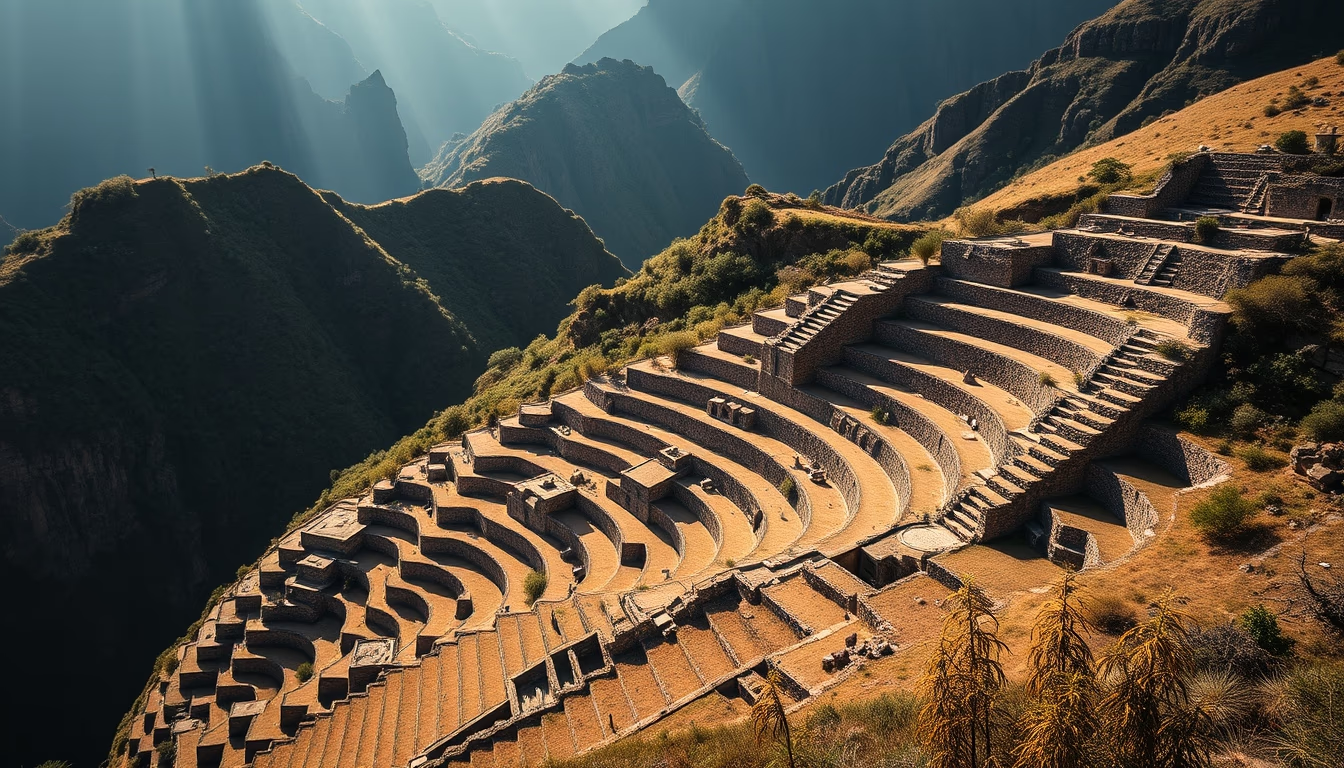
Incan terraces, known as andenes, are ingenious agricultural structures that transformed the steep slopes of the Andes into fertile land.
About this subject
Incan terraces, known as andenes, are among the most impressive agricultural engineering feats of pre-Columbian America. Built between the 13th and 16th centuries, they enabled farming on the steep slopes of the Andes, overcoming challenges such as erosion, water scarcity, and climatic variations. Each terrace consisted of dry-stone walls filled with layers of gravel, sand, and fertile soil, creating a drainage system that prevented waterlogging while retaining optimal moisture for roots.
These terraces were not only functional but also incorporated principles of sustainability and environmental adaptation. The Inca Empire, stretching from modern-day Ecuador to Chile, used these structures to cultivate a wide variety of crops, including maize, potatoes, quinoa, and beans. The terraces also created microclimates: the stone walls absorbed heat during the day and released it at night, protecting crops from frost at high altitudes, which can reach up to 4,000 meters above sea level.
Sites like Moray, an archaeological site near Cusco, feature concentric terraces that served as an agricultural laboratory, simulating different altitudes and temperatures. At Machu Picchu, terraces supported the local population and are admired today for their beauty and engineering. Construction required deep knowledge of geology and hydrology: the Incas selected stones of various sizes for stability and used canals to distribute water from springs.
Today, many Incan terraces remain in use by Andean communities, preserving traditional farming techniques. UNESCO recognizes sites like the Nazca Lines and Machu Picchu as World Heritage, highlighting the terraces as a testament to Inca ingenuity. Conservation faces challenges from overtourism and climate change, but restoration efforts aim to keep this ancient agricultural heritage alive.
Frequently Asked Questions
What was the main purpose of Incan terraces?
Incan terraces were primarily used for agriculture on steep slopes, preventing erosion, optimizing water use, and creating microclimates favorable for growing crops like maize, potatoes, and quinoa.
Where are the most famous Incan terraces located?
The most well-known examples include Moray, Pisac, Ollantaytambo, and Machu Picchu, all in Peru. Terraces also exist at archaeological sites throughout the former Inca Empire, from Ecuador to Chile.
Are Incan terraces still used today?
Yes, many Andean communities continue to farm on Incan terraces, preserving traditional techniques. They are vital for subsistence agriculture and cultural heritage.
Direct URL
https://pub-c7d6a6ea828543ac903a74a341ccb2e1.r2.dev/imagens/incan-terraces-fine-art-photography-p11.avifHow to credit
Include a visible link back to UtilizAí. Copy one of the snippets below:
<a href="https://xn--utiliza-eza.com/en/midia/imagens/incan-terraces-fine-art-photography-p11">Incan terraces</a> by <a href="https://xn--utiliza-eza.com">UtilizAí</a>, licensed under <a href="https://creativecommons.org/licenses/by/4.0/">CC BY 4.0</a>.
[Incan terraces](https://xn--utiliza-eza.com/en/midia/imagens/incan-terraces-fine-art-photography-p11) by [UtilizAí](https://xn--utiliza-eza.com), CC BY 4.0
License: CC-BY-4.0