Incan terraces
1344×768 · AVIF · CC BY 4.0
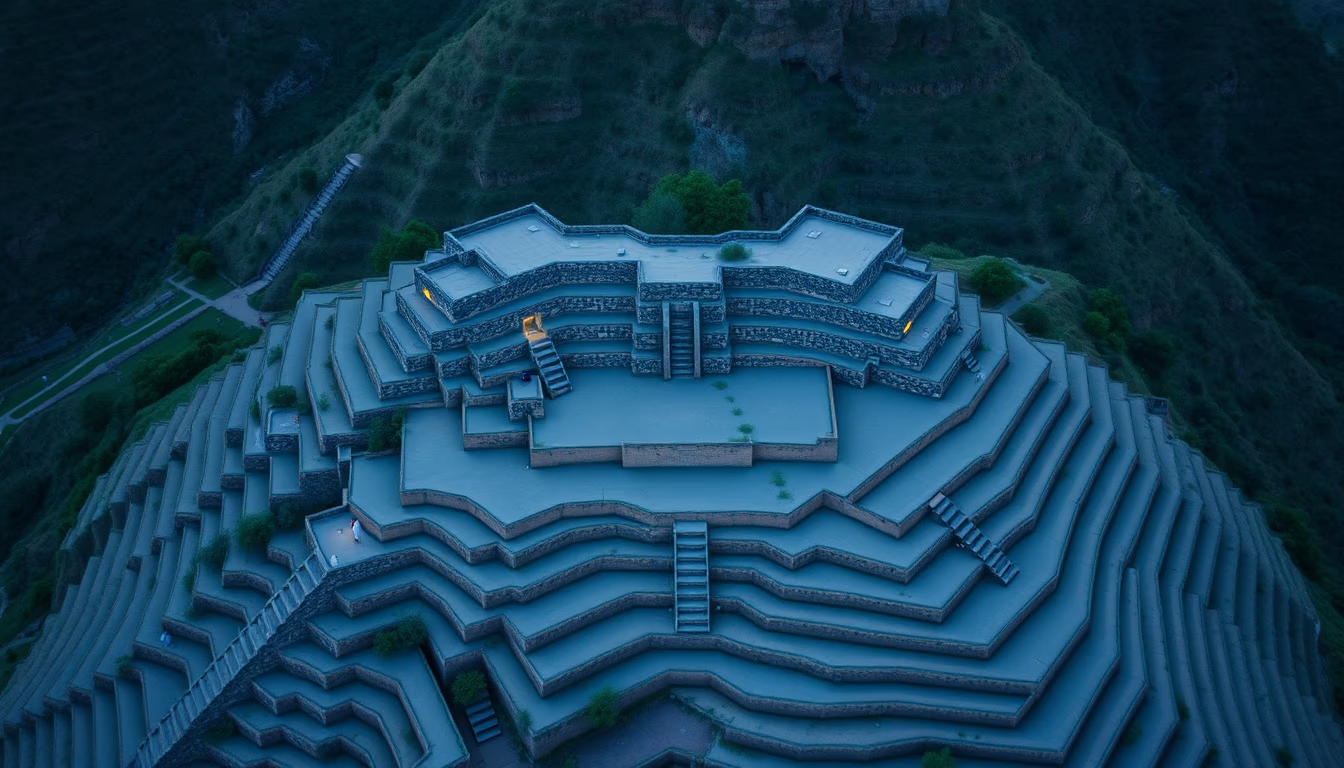
Inca terraces, agricultural engineering in the Peruvian Andes, showcase adaptation to steep terrain and sustainable farming techniques.
About this subject
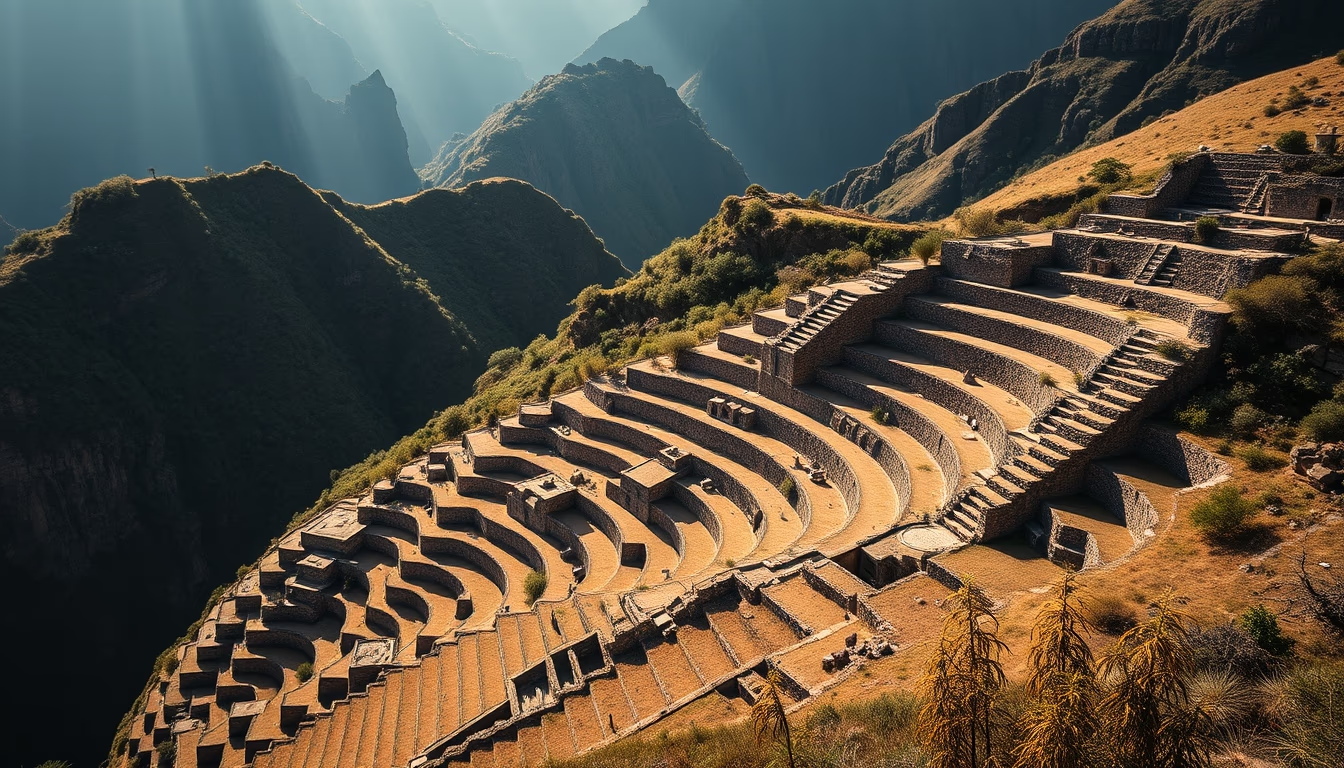
Inca terraces are agricultural structures built on the slopes of the Peruvian Andes, especially at sites like Machu Picchu, Pisac, and Moray. They were developed by the Inca civilization between the 13th and 16th centuries to maximize the use of steep land and ensure food production in a high-altitude environment. The technique involved carving flat platforms and lining them with stone walls, filling the interior with layers of gravel, sand, and fertile soil. This allowed efficient drainage and prevented erosion, while creating microclimates that expanded the variety of crops, such as potatoes, maize, quinoa, and beans.
The construction of the terraces reflects the Incas' advanced knowledge of hydraulic engineering and agronomy. They incorporated irrigation channels that brought water from nearby springs and rivers, distributing it by gravity across levels. It is estimated that only in the Sacred Valley there are thousands of hectares of terraces, many still in use by local communities. These structures not only increased agricultural productivity but also served as protection against frost and drought, stabilized slopes, and prevented landslides.
Culturally, the terraces represent the Incas' harmonious relationship with the environment and their ability to transform adverse landscapes into productive areas. They are an integral part of the Machu Picchu archaeological site, declared a UNESCO World Heritage Site in 1983 and one of the New Seven Wonders of the Modern World. Today, the terraces attract millions of tourists annually and are studied by archaeologists and engineers as an example of pre-Columbian sustainable agriculture. Preserving these structures is crucial, as they face threats such as erosion, urban growth, and climate change.
Frequently Asked Questions
How do Inca terraces work?
Inca terraces function as stepped platforms that prevent soil erosion, retain rainwater, and create microclimates. They were irrigated by gravity-fed channels, allowing the cultivation of various crops at different altitudes.
Where are the main Inca terraces located?
The main Inca terraces are in Peru, especially at Machu Picchu (Cusco), the Sacred Valley (Pisac, Ollantaytambo), and Moray. They are also found in other Andean regions of Peru and neighboring countries like Bolivia and Ecuador.
Why are Inca terraces important for modern engineering?
Inca terraces are considered examples of sustainable agriculture and advanced hydraulic engineering. Studies show that their drainage and soil retention techniques can inspire modern practices for soil conservation and adaptation to steep terrain and climate change.
Direct URL
https://pub-c7d6a6ea828543ac903a74a341ccb2e1.r2.dev/imagens/incan-terraces-aerial-drone-shot-p8.avifHow to credit
Include a visible link back to UtilizAí. Copy one of the snippets below:
<a href="https://xn--utiliza-eza.com/en/midia/imagens/incan-terraces-aerial-drone-shot-p8">Incan terraces</a> by <a href="https://xn--utiliza-eza.com">UtilizAí</a>, licensed under <a href="https://creativecommons.org/licenses/by/4.0/">CC BY 4.0</a>.
[Incan terraces](https://xn--utiliza-eza.com/en/midia/imagens/incan-terraces-aerial-drone-shot-p8) by [UtilizAí](https://xn--utiliza-eza.com), CC BY 4.0
License: CC-BY-4.0