Imax theater giant screen
1344×768 · AVIF · CC BY 4.0
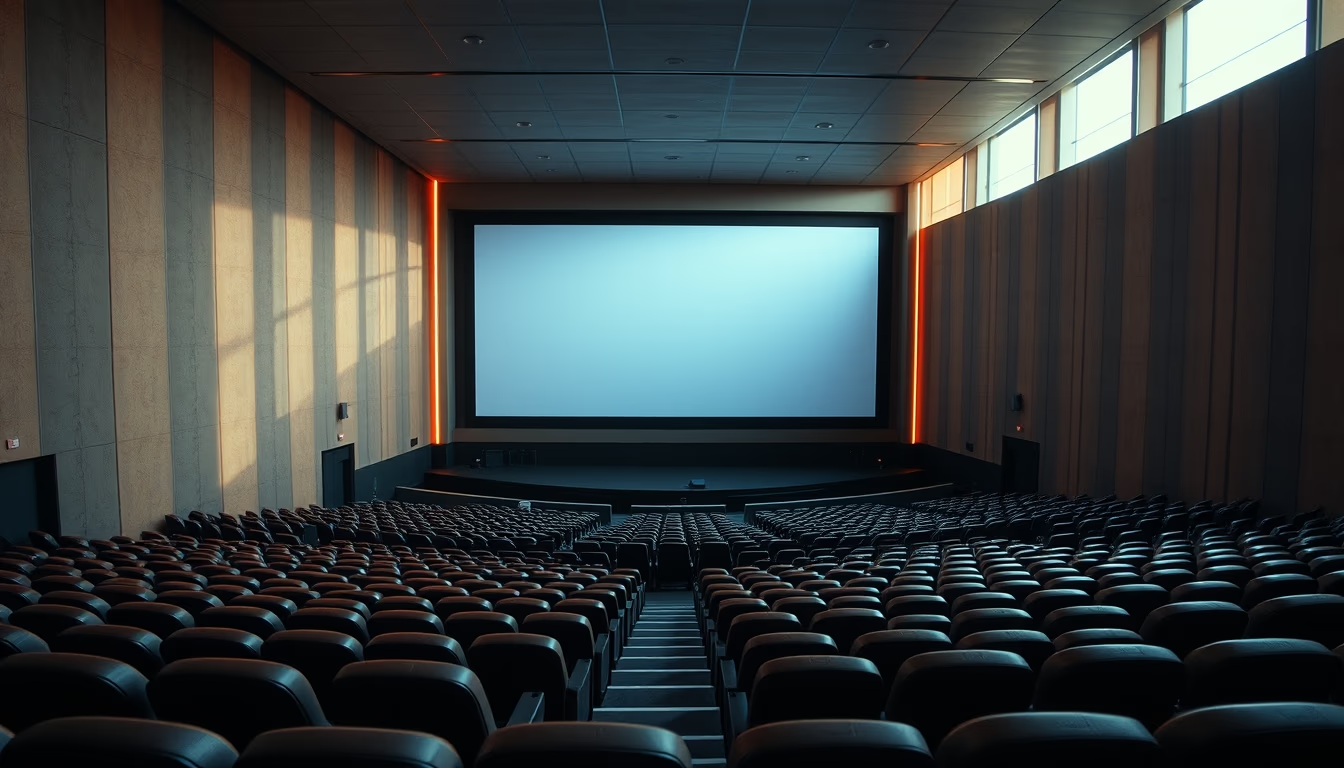
IMAX giant screens revolutionized the cinematic experience with high-definition projection and immersive sound.
About this subject
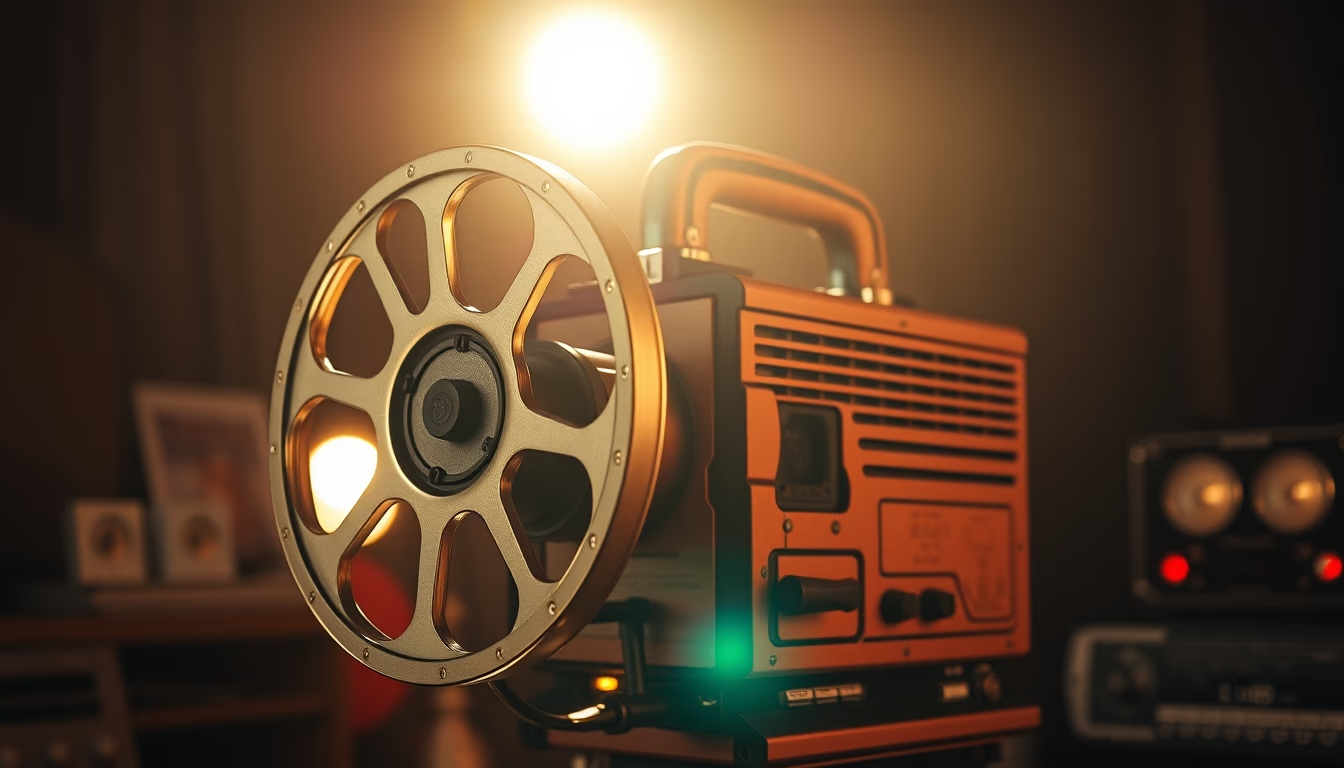
IMAX (Image Maximum) technology was developed in Canada in the 1970s by Graeme Ferguson, Roman Kroitor, and Robert Kerr. The system uses 70 mm film projectors oriented horizontally, providing about ten times the resolution of traditional 35 mm film. IMAX screens are massive, typically 22 meters wide by 16 meters tall, with a curved shape that fills the viewer's peripheral vision, creating a deep sense of immersion. The audio is processed by a proprietary multi-channel system, calibrated for each theater to ensure clear and powerful sound for every seat.
In the United States, the first permanent IMAX theater opened in 1973 at the Ontario Place in Toronto, and today there are over 1,500 IMAX theaters worldwide. The technology is particularly popular for action, sci-fi, and nature documentaries like "Avatar", "Interstellar", and "Mission: Impossible". IMAX is also used in planetariums and museums for educational astronomy and science shows.
A notable fact: modern digital IMAX projectors use high-power lasers for consistent brightness, surpassing traditional lamp-based projectors. Some IMAX theaters feature specially treated acoustic panels and reclining seats designed for optimal viewing angles. The investment for an IMAX installation can exceed $3 million, reflecting the cost of equipment and acoustic calibration. IMAX 3D offers enhanced resolution and brightness over conventional 3D, using passive or active glasses to create stereoscopic depth.
Frequently Asked Questions
What is the difference between IMAX and regular theaters?
IMAX screens are much larger and curved, projection has higher resolution (70 mm horizontal), and the sound is multi-channel calibrated. This provides greater visual and auditory immersion.
Do I need special glasses for IMAX 3D movies?
Yes, for IMAX 3D films, passive or active glasses are provided, depending on the theater's technology. The glasses are stereoscopic and enable 3D perception.
Is IMAX used only for entertainment films?
No, IMAX is also widely used for educational documentaries, especially in museums and planetariums, showing high-definition content about nature, space, and science.
Direct URL
https://pub-c7d6a6ea828543ac903a74a341ccb2e1.r2.dev/imagens/imax-theater-giant-screen-minimalist-composition-p3.avifHow to credit
Include a visible link back to UtilizAí. Copy one of the snippets below:
<a href="https://xn--utiliza-eza.com/en/midia/imagens/imax-theater-giant-screen-minimalist-composition-p3">Imax theater giant screen</a> by <a href="https://xn--utiliza-eza.com">UtilizAí</a>, licensed under <a href="https://creativecommons.org/licenses/by/4.0/">CC BY 4.0</a>.
[Imax theater giant screen](https://xn--utiliza-eza.com/en/midia/imagens/imax-theater-giant-screen-minimalist-composition-p3) by [UtilizAí](https://xn--utiliza-eza.com), CC BY 4.0
License: CC-BY-4.0