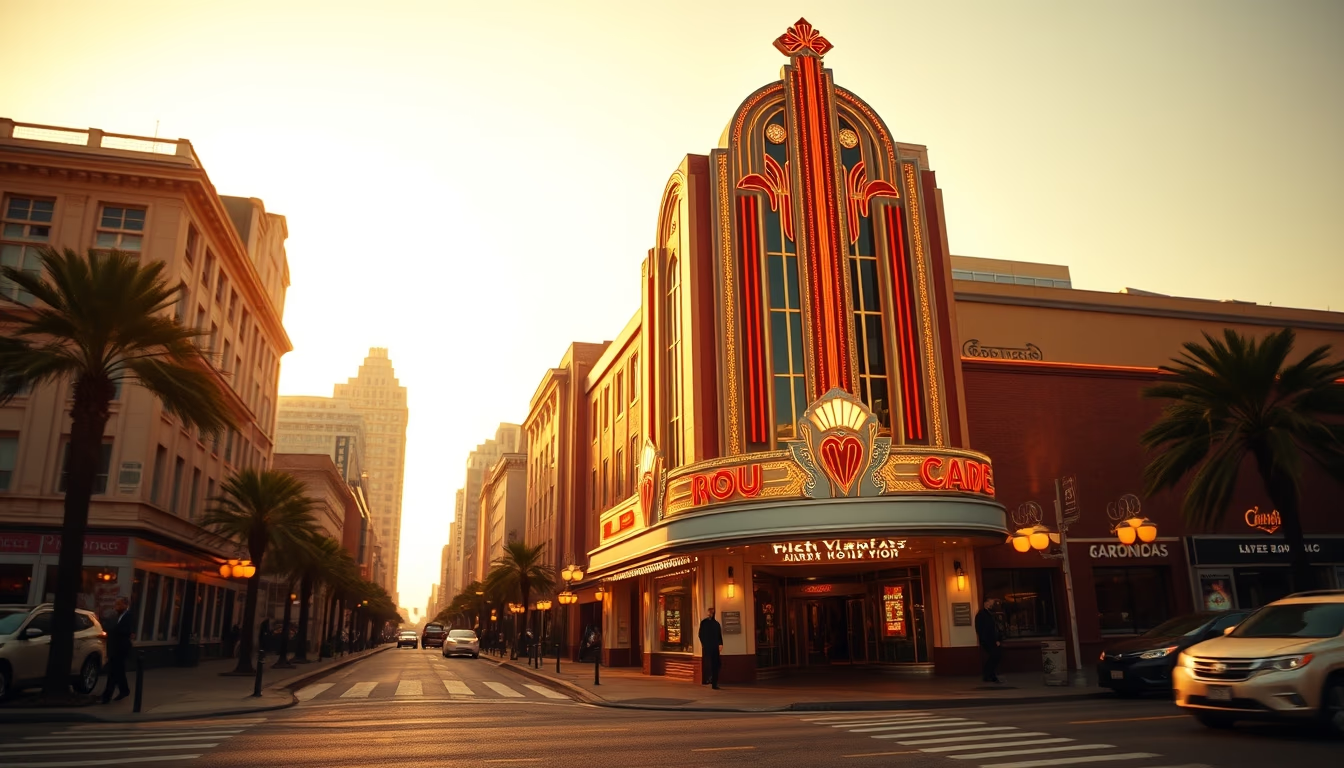
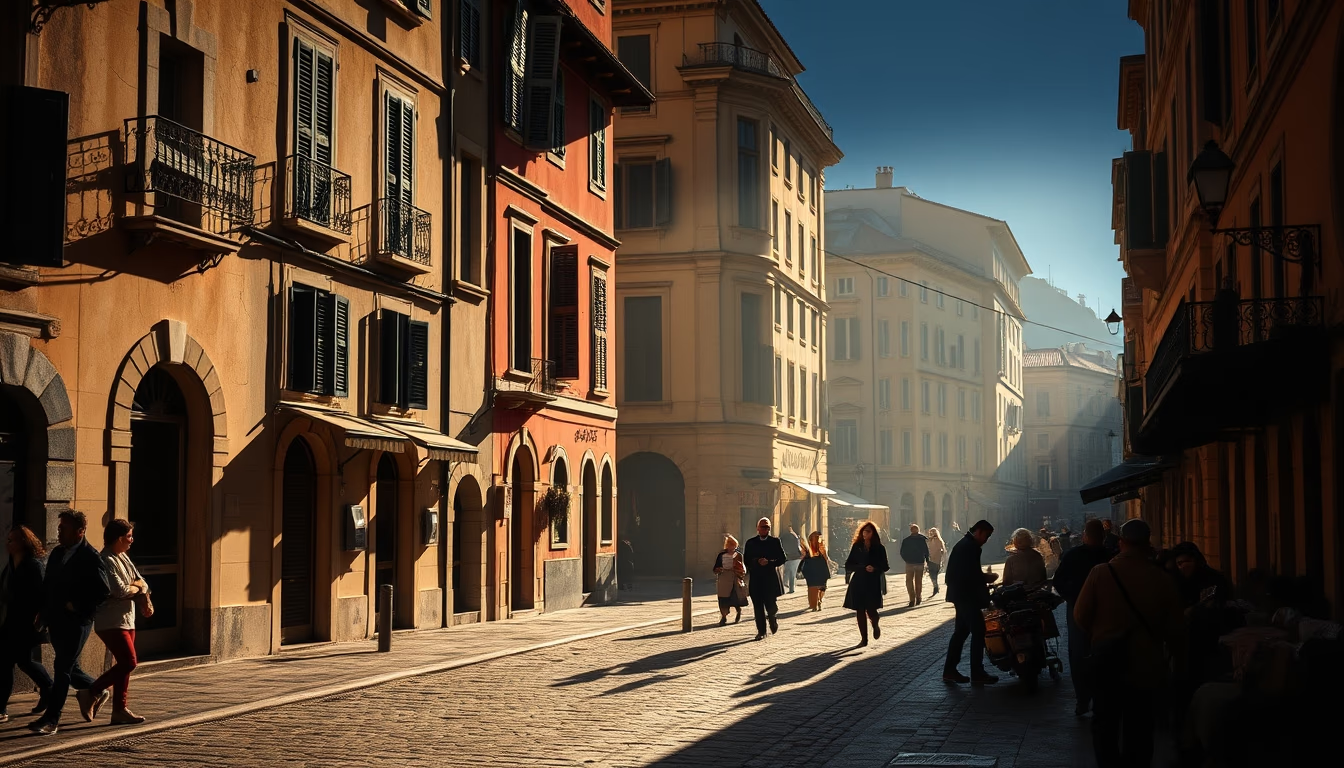
Illustrated postcard 1900
1344×768 · AVIF · CC BY 4.0
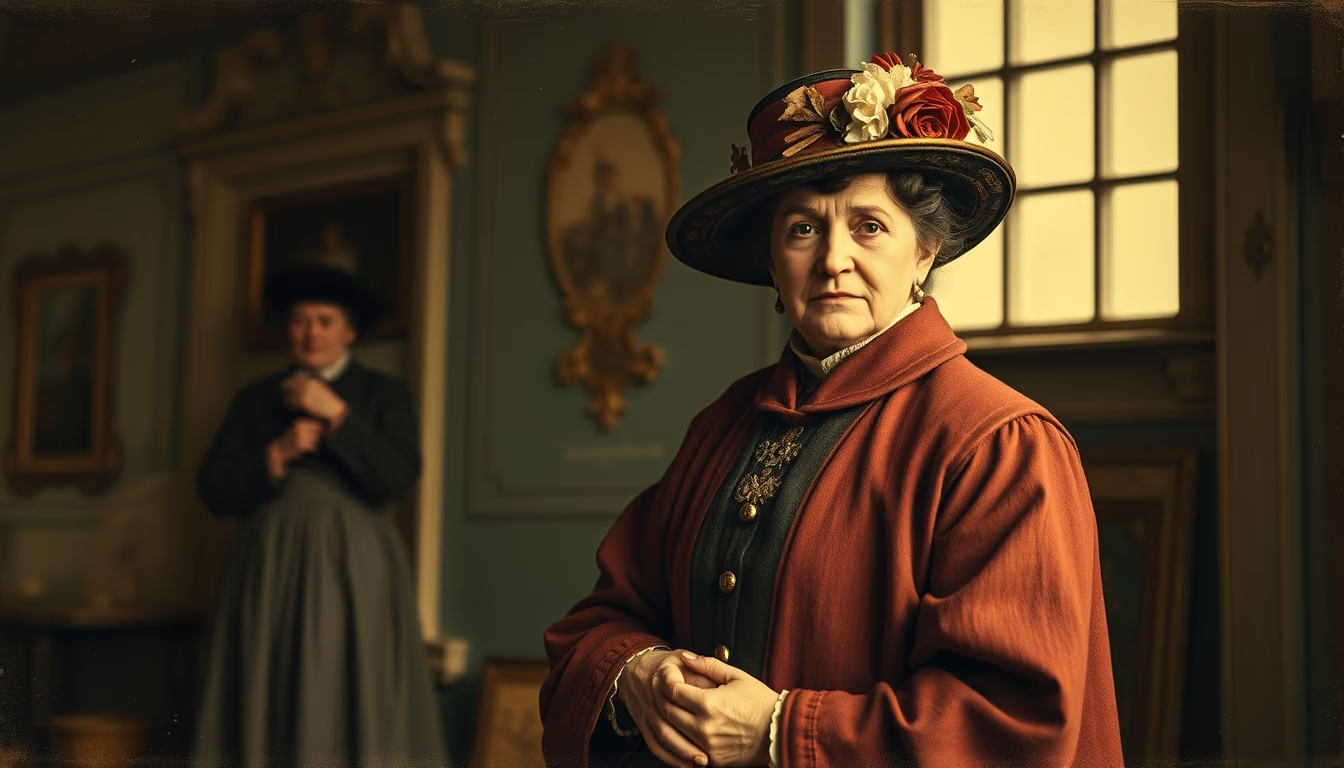
Illustrated postcard from 1900: a visual record of the turn of the century, marked by the peak of global production and consumption.
About this subject
Illustrated postcards reached their peak popularity between 1890 and 1910, with the year 1900 marking a high point in this cultural phenomenon. The invention of chromolithography enabled mass production of colorful, detailed images that were either mailed or collected in albums. Themes ranged from urban and rural landscapes, portraits of famous figures, historical events, humorous scenes, to political propaganda. At that time, mail was the primary long-distance communication, and postcards became an affordable way to share visual experiences.
In Brazil, postcards from the turn of the century mainly depicted Rio de Janeiro, then the federal capital, with its tree-lined streets, Sugarloaf Mountain, and the newly inaugurated Avenida Central. São Paulo also appeared with its streetcars and eclectic buildings. Local production was carried out by studios such as Companhia Lithographica Ypiranga and Photochromia. Postcards were often sent by immigrants to relatives in Europe, serving as evidence of the country's development.
A relevant technical detail is that until 1902, postcards had the entire back reserved for the image, forcing the sender to write the message over the illustration itself. From 1902 onward, the divided back (part for address, part for message) became standard, consolidating the format we know today. Thus, postcards from 1900 belong to the pre-division era, with messages often written along the margins or over the sky area of the image.
Collecting these postcards remains a lasting hobby: they serve as primary sources for historians and visual culture scholars, revealing fashions, architecture, and social values. The value of a 1900 postcard can range from a few dollars to thousands, depending on rarity, condition, and subject. The typical image of this period is characterized by vibrant (though often artificial) colors and an aesthetic that blends realism and idealization.
Frequently Asked Questions
Why are 1900 illustrated postcards so sought after by collectors?
Because they are visual testimonies of a transformative era, featuring unique printing techniques and diverse subjects. Many were destroyed over time, making preserved specimens rare and valuable.
What is the difference between a 1900 postcard and one after 1902?
Until 1902, the back was entirely occupied by the image; the message was written over the illustration. After 1902, the back became divided, with separate spaces for address and message.
Where can I find Brazilian postcards from 1900?
At antique fairs, online auctions (such as Mercado Livre, eBay), and in public archives. Institutions like the National Library of Rio de Janeiro also have digitized collections.
Direct URL
https://pub-c7d6a6ea828543ac903a74a341ccb2e1.r2.dev/imagens/illustrated-postcard-1900-documentary-photography-fresh16.avifHow to credit
Include a visible link back to UtilizAí. Copy one of the snippets below:
<a href="https://xn--utiliza-eza.com/en/midia/imagens/illustrated-postcard-1900-documentary-photography-fresh16">Illustrated postcard 1900</a> by <a href="https://xn--utiliza-eza.com">UtilizAí</a>, licensed under <a href="https://creativecommons.org/licenses/by/4.0/">CC BY 4.0</a>.
[Illustrated postcard 1900](https://xn--utiliza-eza.com/en/midia/imagens/illustrated-postcard-1900-documentary-photography-fresh16) by [UtilizAí](https://xn--utiliza-eza.com), CC BY 4.0
License: CC-BY-4.0