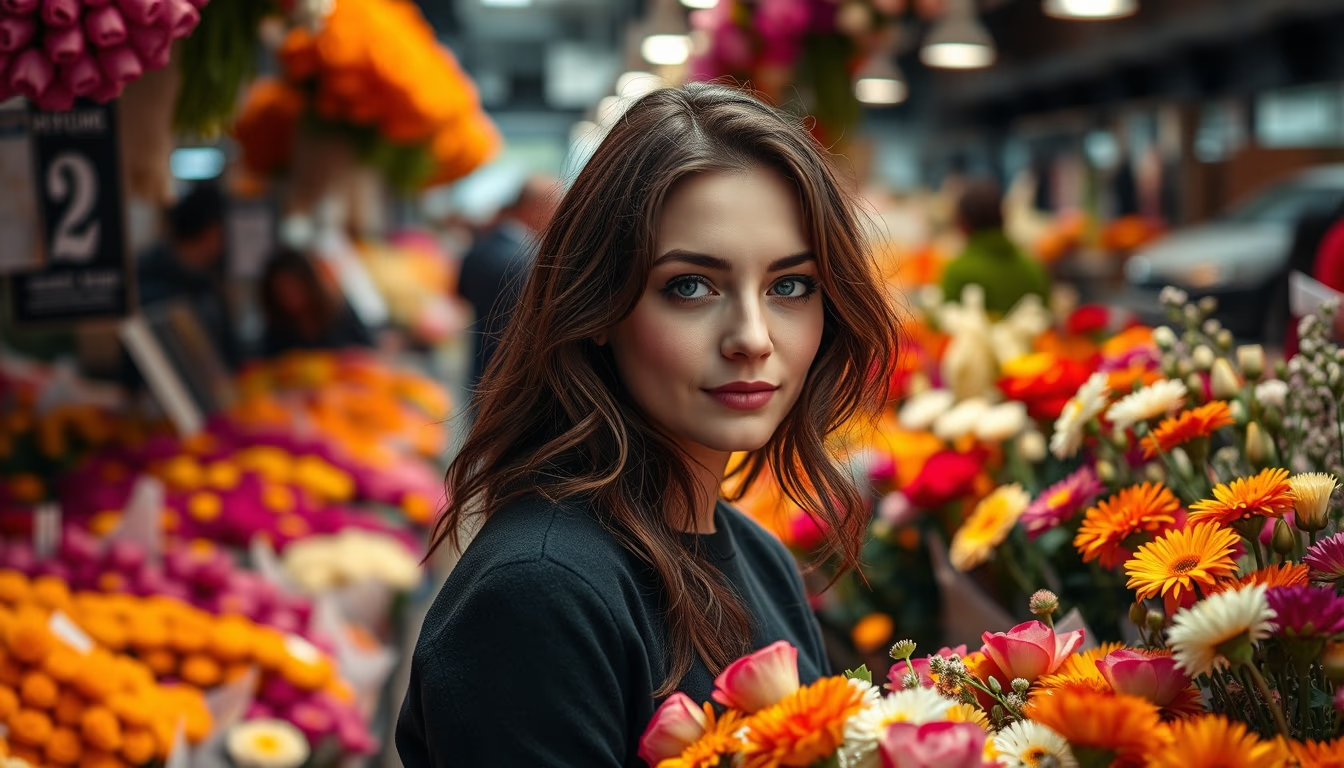
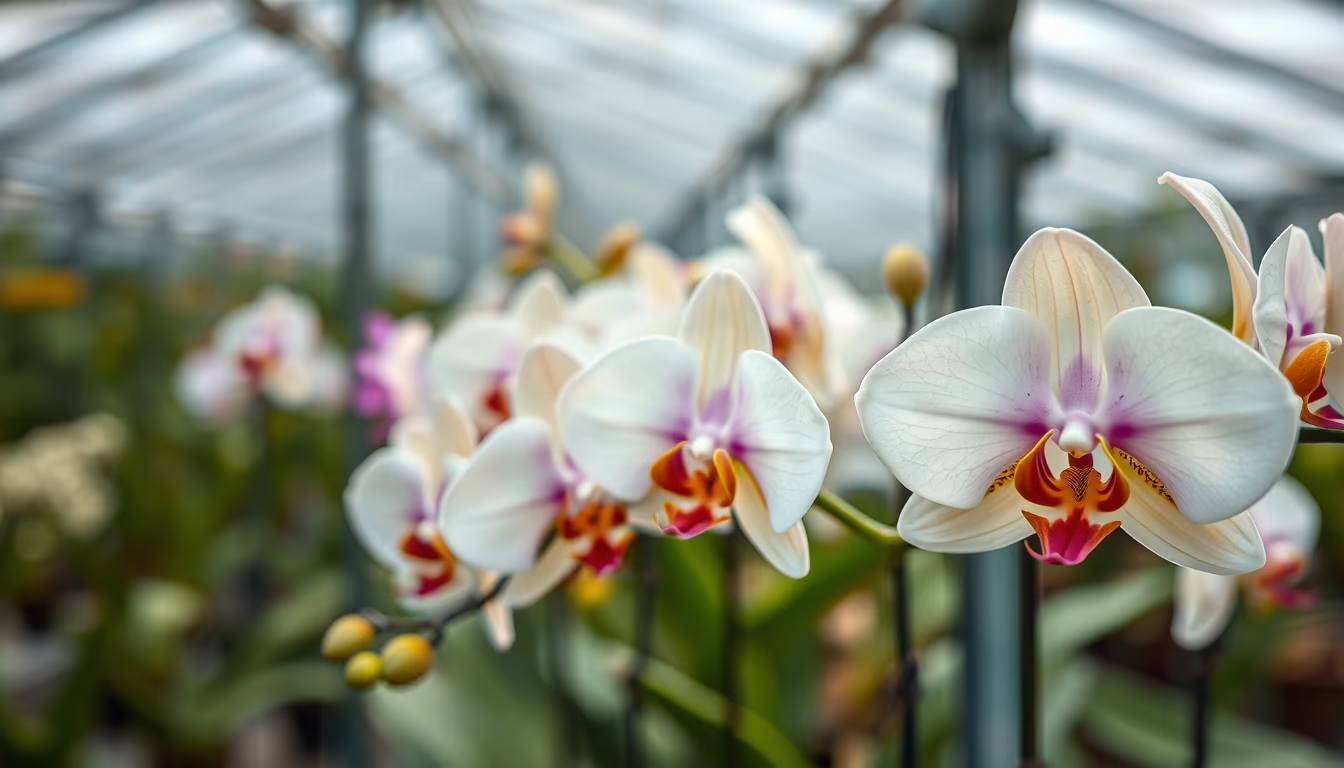
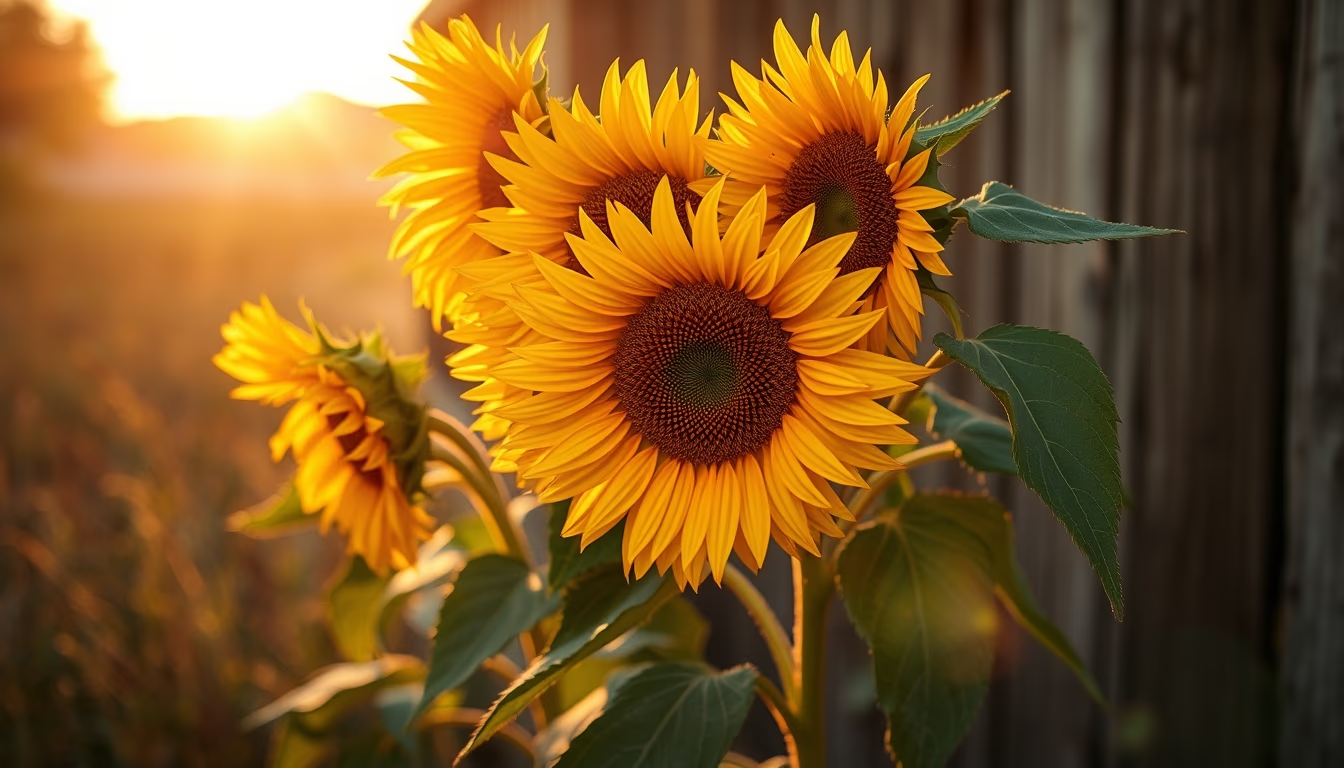
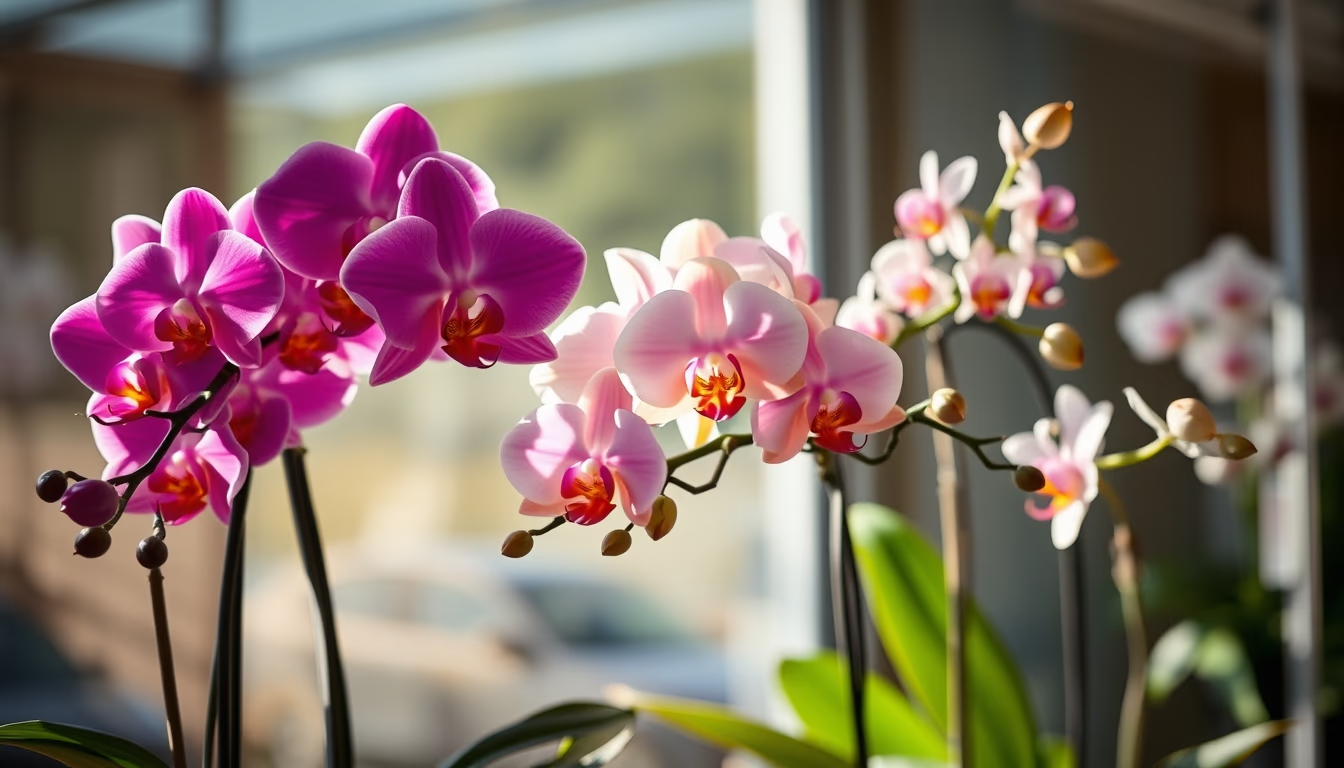
Ikebana japanese arrangement
1344×768 · AVIF · CC BY 4.0
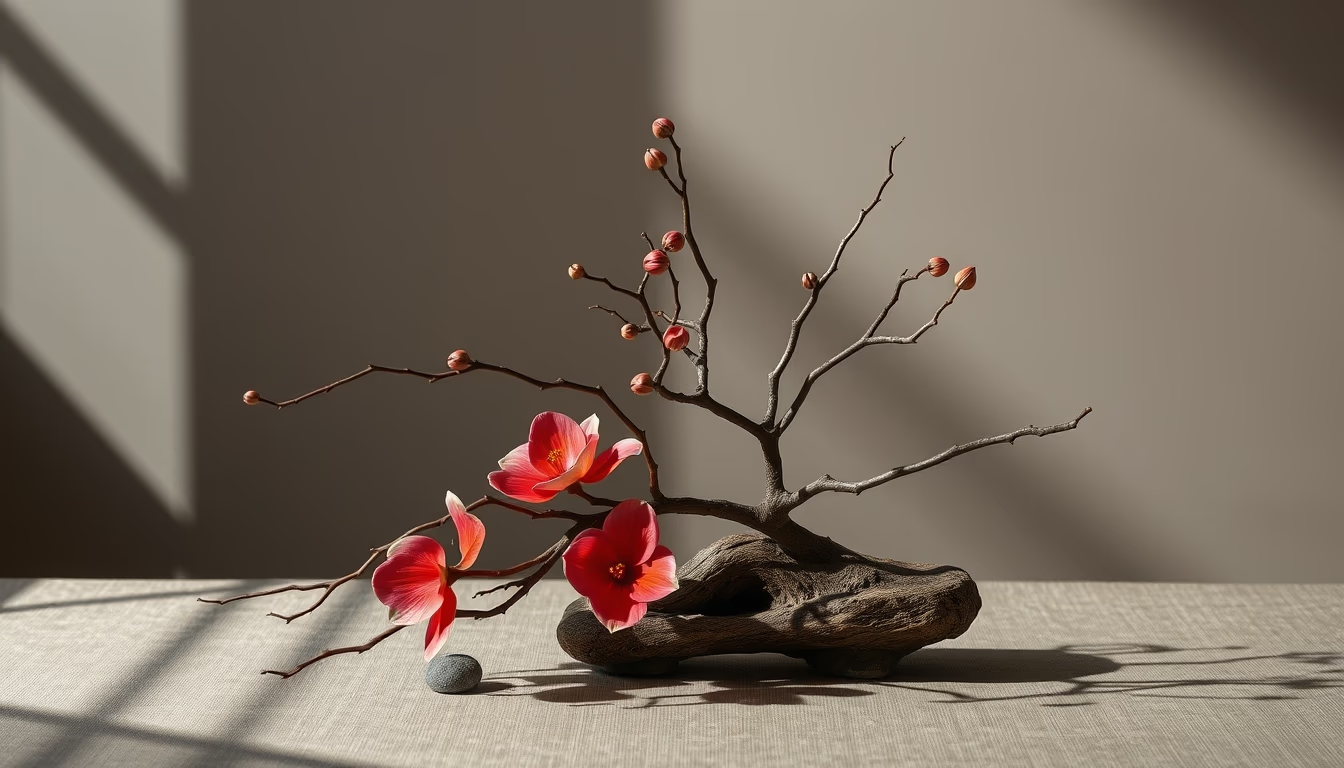
Ikebana is the Japanese art of flower arrangement, emphasizing harmony, balance, and negative space for centuries.
About this subject
Ikebana, also known as kado (the way of flowers), is a centuries-old Japanese art that transforms the arrangement of branches, leaves, and flowers into an aesthetic and spiritual expression. Unlike Western arrangements, which aim for profusion and symmetry, ikebana prioritizes simplicity, asymmetry, and deliberate use of empty space. Every element, line, color, form, and texture, is chosen to create a composition that reflects the passage of time, seasons, and the relationship between heaven, earth, and humanity.
The practice originated in the 6th century with the introduction of Buddhism to Japan, as floral offerings on altars. By the 15th century, it evolved into a secular form with the development of the Ikenobo school, considered the birthplace of ikebana. Other traditional schools include Sogetsu, which encourages free creativity, and Ohara, which focuses on miniature natural landscapes. Classical styles like Rikka (vertical and structured) and Shoka (simpler and linear) are still studied, while Moribana and Nageire are popular in modern practice.
Ikebana is not merely aesthetic: it is a meditative discipline requiring concentration, respect for materials, and spatial understanding. Arrangements are often displayed in tokonoma (alcoves), during tea ceremonies, or at seasonal festivals. Today, Ikebana International promotes the art globally through exhibitions and workshops. Lighting techniques with dramatic shadows, such as chiaroscuro, enhance the depth and three-dimensionality of the works, highlighting each curve and texture.
Frequently Asked Questions
What is Ikebana?
Ikebana is the Japanese art of flower arrangement that seeks harmony among materials, container, and surrounding space, emphasizing simplicity and balance. It is considered a meditative and expressive practice.
What are the fundamental principles of Ikebana?
Principles include asymmetrical lines, use of empty space (ma), emphasis on verticality, representation of seasons, and the trinity of heaven, earth, and humanity. Each arrangement should appear natural and spontaneous.
How does Ikebana differ from Western flower arrangements?
While Western arrangements aim for volume and symmetry, Ikebana focuses on simplicity, the individuality of each stem, and emptiness as an active element, prioritizing asymmetry and line over color.
Direct URL
https://pub-c7d6a6ea828543ac903a74a341ccb2e1.r2.dev/imagens/ikebana-japanese-arrangement-rembrandt-lighting-dramatic-shadows-fresh1.avifHow to credit
Include a visible link back to UtilizAí. Copy one of the snippets below:
<a href="https://xn--utiliza-eza.com/en/midia/imagens/ikebana-japanese-arrangement-rembrandt-lighting-dramatic-shadows-fresh1">Ikebana japanese arrangement</a> by <a href="https://xn--utiliza-eza.com">UtilizAí</a>, licensed under <a href="https://creativecommons.org/licenses/by/4.0/">CC BY 4.0</a>.
[Ikebana japanese arrangement](https://xn--utiliza-eza.com/en/midia/imagens/ikebana-japanese-arrangement-rembrandt-lighting-dramatic-shadows-fresh1) by [UtilizAí](https://xn--utiliza-eza.com), CC BY 4.0
License: CC-BY-4.0