Ikebana japanese arrangement
1344×768 · AVIF · CC BY 4.0
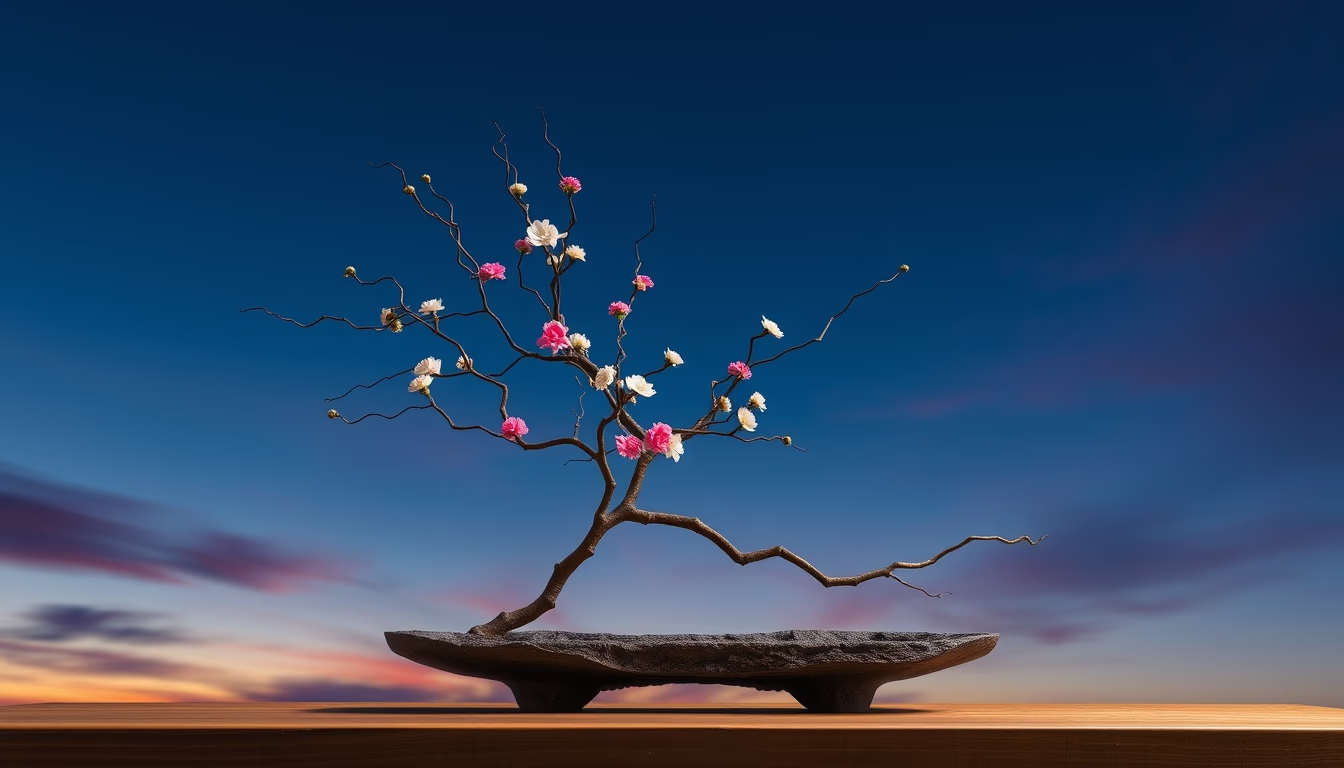
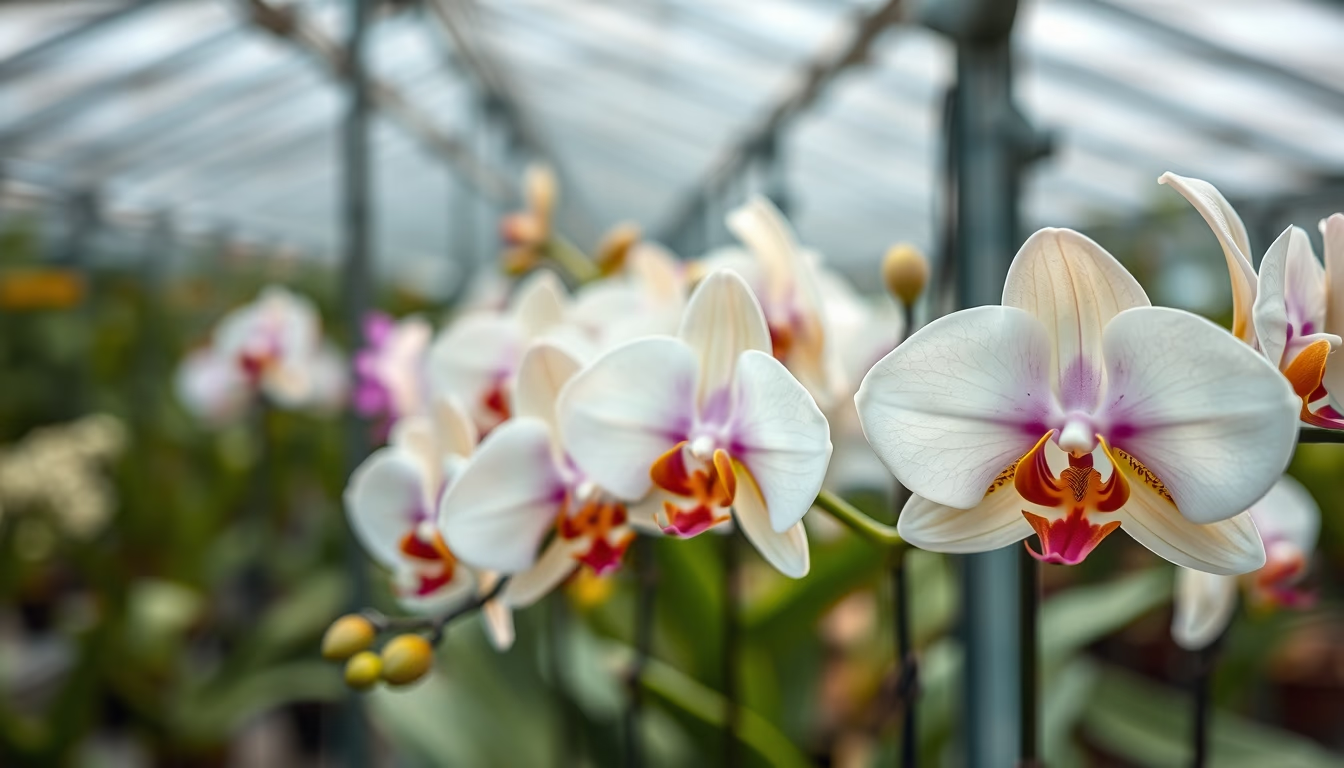
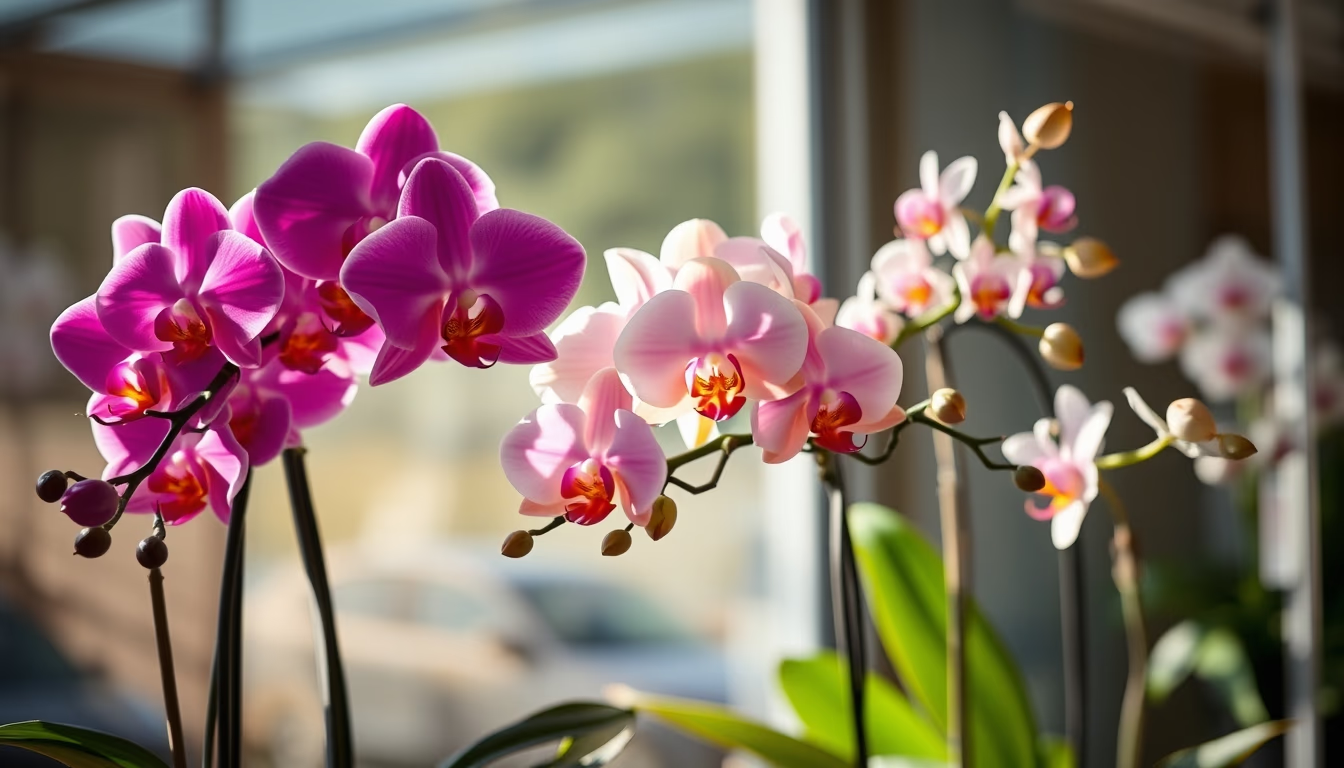
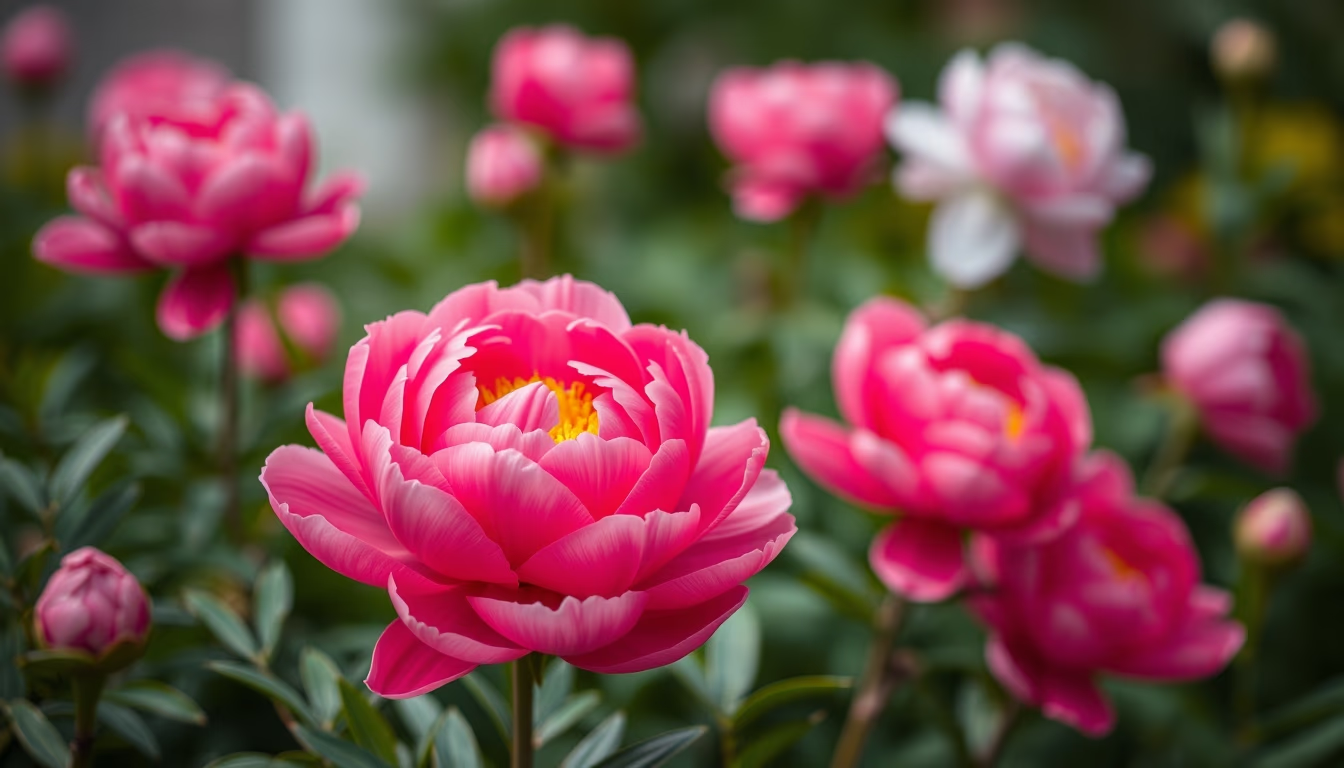
Ikebana is the Japanese art of flower arrangement, with Buddhist origins and principles of harmony and minimalism.
About this subject
Ikebana, known as the way of flowers, is a Japanese art form that goes beyond simple flower arrangement. It originated in the 6th century when flower offerings were made at Buddhist temples. Over time, it evolved into a refined practice with schools such as Ikenobo, Sogetsu, and Ohara. Unlike Western arrangements, which emphasize color and volume, ikebana values lines, balance, and empty space.
Core principles include asymmetry, minimalism, and the use of three main lines: shin (heaven), soe (man), and hikae (earth). The arrangement is often placed in a distinctive vase, and materials like branches, leaves, and even stones are used. The void, or ma, is essential, representing pause and contemplation.
Culturally, ikebana is more than decoration: it is a meditative practice that expresses life's impermanence. In Japan, exhibitions and competitions attract practitioners of all ages. It has influenced interior design and Western gardening, being adopted in countries like Brazil, where the Japanese community keeps the tradition alive.
Fun facts: the word ikebana comes from ikeru (to live) and hana (flower). Typical tools include the kenzan (needle holder) and hasami scissors. Schools like Sogetsu allow more creative freedom, while Ikenobo follows stricter rules. Many practitioners report therapeutic benefits such as stress reduction and improved focus.
Frequently Asked Questions
What is the difference between ikebana and Western flower arrangement?
Ikebana focuses on lines, asymmetry, and empty space, while Western arrangement emphasizes color, volume, and symmetry. Ikebana also has a strong spiritual component and is considered a meditative art.
What are the main styles of ikebana?
The three best-known schools are Ikenobo (traditional, with strict rules), Sogetsu (modern, creative) and Ohara (emphasis on landscapes and use of flat vases). Each has distinct principles and techniques.
Where can I learn ikebana in Brazil?
In Brazil, there are associations such as the Ikebana Association of Brazil, as well as courses at Japanese cultural centers, mainly in São Paulo, Curitiba and Rio de Janeiro. Many schools offer online and in-person classes.
Direct URL
https://pub-c7d6a6ea828543ac903a74a341ccb2e1.r2.dev/imagens/ikebana-japanese-arrangement-long-exposure-fresh17.avifHow to credit
Include a visible link back to UtilizAí. Copy one of the snippets below:
<a href="https://xn--utiliza-eza.com/en/midia/imagens/ikebana-japanese-arrangement-long-exposure-fresh17">Ikebana japanese arrangement</a> by <a href="https://xn--utiliza-eza.com">UtilizAí</a>, licensed under <a href="https://creativecommons.org/licenses/by/4.0/">CC BY 4.0</a>.
[Ikebana japanese arrangement](https://xn--utiliza-eza.com/en/midia/imagens/ikebana-japanese-arrangement-long-exposure-fresh17) by [UtilizAí](https://xn--utiliza-eza.com), CC BY 4.0
License: CC-BY-4.0